Broken Hair or New Growth?

A: Distinguishing between new growth and hair breakage can be tricky, especially around high-friction areas like the hairline, temples, or the nape of the neck. However, examining the physical structure of the hair strands is the most reliable way to tell the difference.
1. Inspect the Tip Structure
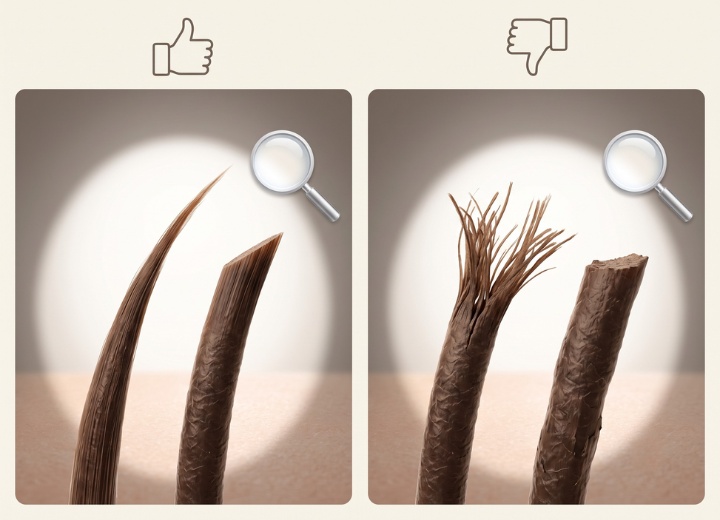
Examine the ends of the short hairs under bright light or with a magnifying glass:• New Growth: A newly emerging hair strand tapers naturally into a fine, soft, pointed tip. (Note: If your hair was recently trimmed, growing hairs may show a neat, clean cut rather than a natural taper.)
• Broken Hair: A broken strand displays a blunt, flat, or frayed end (similar to a frayed rope). You may also notice a tiny white dot along the hair shaft where the keratin structure fractured before snapping.
2. Check for Signs of Hair Stress
Look for general indicators of structural damage, such as split ends, unnatural stretching, or a loss of elasticity. If you see these signs, breakage is the likely cause.Tension is a major factor. If you frequently wear high-tension hairstyles - such as tight ponytails, braids, or buns - and notice short hairs clustered at the forehead and temples, you are likely experiencing tension breakage.
3. Consider Your Chemical & Heat Styling History
Regular exposure to high-heat styling tools or chemical treatments (such as bleaching, permanent color, chemical straightening, or perming) weakens the hair's internal protein and disulfide bonds. This leaves the strands far more vulnerable to snapping mid-shaft, particularly in areas stressed by elastic bands or daily brushing friction.4. Evaluate Where the Hairs Are Located
Breakage is far less likely if the short hairs are scattered across areas of the scalp that experience minimal friction or tension. For example, if you wear your hair loose and notice short strands poking up randomly across your crown rather than along your part or hairline, these are almost certainly new growth strands emerging from follicles that recently completed a hair cycle.5. Understand How Hair Grows
Hair follicles operate on individual, asynchronous growth cycles:• Anagen (Growth Phase): Roughly 85% to 90% of your hair follicles are actively growing at any given time.
• Telogen/Exogen (Resting & Shedding Phase): About 10% to 15% of your hair follicles are resting or shedding naturally.
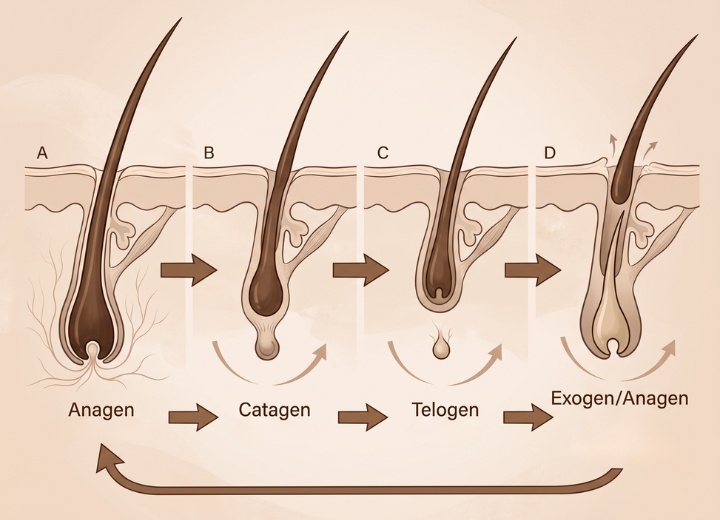
Because each follicle operates on its own timeline, new growth usually appears as subtle, scattered "baby hairs" poking through rather than a sudden mass of short hair; unless you recently experienced a period of increased temporary shedding (such as post-illness, postpartum, or high stress).
How to Protect Your Hair
Whether you are dealing with new growth or recovering from breakage, protecting your hairs ensures they grow in strong and healthy:• Minimize Stress & Friction: Avoid tight, high-tension hairstyles, reduce direct heat usage, and sleep on a silk or satin pillowcase to reduce friction.
• Detangle Gently: Always begin brushing or combing at the ends of your hair, working your way up to the roots to avoid pulling on strands.
• Maintain Protein-Moisture Balance: Keep your hair well-conditioned with products suited to your hair type. A proper balance of hydration and protein reinforces structural elasticity and prevents future snapping.
©Hairfinder.com
See also:
What split ends look like
Chemical processes and hair breakage
I'm having hair breakage. Should I get my hair cut even?