Trimming and Hair Growth
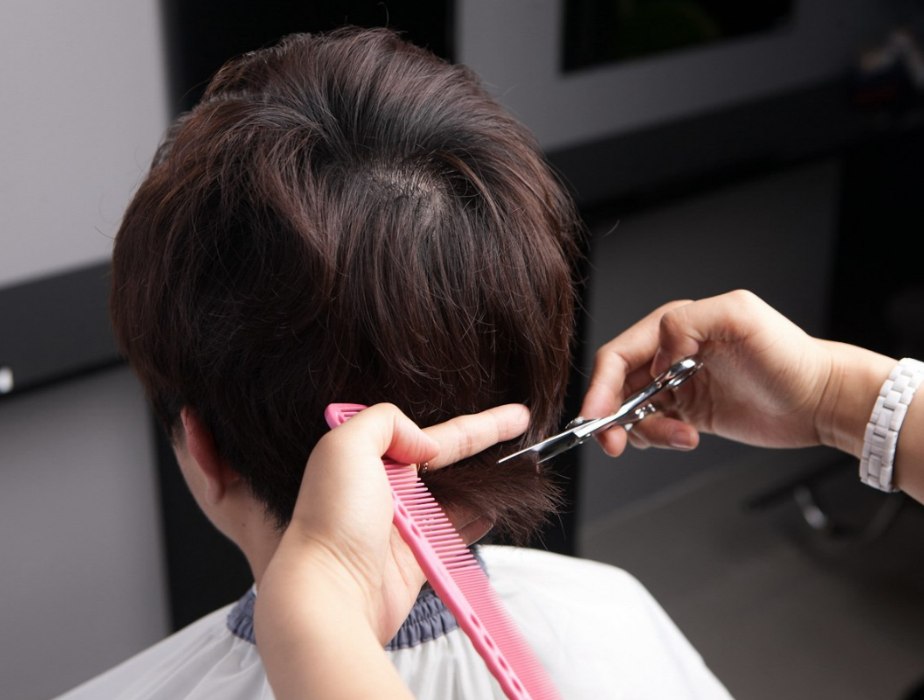
A: No. The longstanding theory that cutting hair makes it grow faster or causes the hair to grow in thicker is a myth. Cutting the ends of the hair does not affect the hair follicles, which are responsible for producing the hair, regardless of where the hair is cut or how much is removed.
All that cutting the hair can do is change the appearance and shape of the hair. A blunt cut can make fine hair appear fuller and give the ends a greater sense of bulk. On the other hand, layering removes weight and can make the hair appear less dense. Neither cutting technique has any effect on the rate at which the hair grows or on the actual thickness of the individual hairs.
There is one benefit to trimming. If the ends of the hair are damaged, splitting, or breaking, removing the damaged portion can reduce further breakage. This does not make the hair grow faster, but it can help the child keep hair length. In other words, the roots may continue producing hair at exactly the same rate, while less of the hair is lost through breakage.
In children, the hair may grow faster or slower at different times, depending on the child's natural hair-growth cycle and other biological factors. Hair follicles go through periods of active growth, transition, and rest. So, there can be times when a child's hair appears to grow quickly and other times when there seems to be very little change in length.
As children grow and mature, their hair can also change in appearance. The texture, thickness, density, or wave pattern may change with age, and hormonal changes during puberty can also have an effect on hair. These changes are related to changes in the hair follicles and the body's hormonal environment, rather than to whether or not the hair has been cut.
©Hairfinder.com
See also:
Will horse shampoo help hair to grow longer and thicker?
Can cutting hair determine how thick it grows back?
Will Biotin help to thicken hair?