How Fast Does Hair Grow?
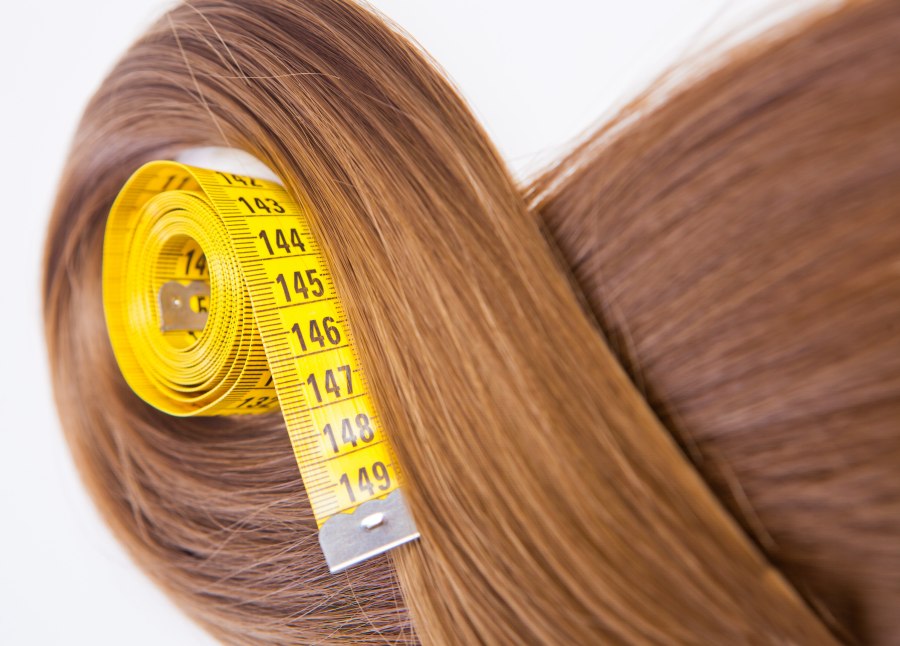
Q: How fast does hair on a person’s head grow?
A: Understanding how fast hair grows means looking at more than just basic biology. It also involves exploring the many internal factors like genetics, metabolism, and hormones that control how fast your hair grows, how thick it gets, and how long it stays on your head.
Ethnicity: Hair growth rates differ across different populations. Studies have found that hair from people of different geographic backgrounds can show differences in average growth rate. People of Asian descent tend to show faster average growth, while hair growth of people of African descent tends to be a bit slower than average. However, these differences vary between individuals and should not be treated as fixed characteristics of a particular ethnicity.
Age Factors: As you get older, your metabolism changes, your body's hair-growth cycle shifts, and hair growth speed can slow down. The active growth phase can become shorter and individual hairs may become finer. Hair density and the maximum length your hair can reach can decline with age. The exact change in growth and growth rate varies from person to person.
How Hair Forms
Hair starts growing inside the hair follicle, which is a tiny, active organ located within your skin. The base of the follicle contains the hair bulb and dermal papilla (1). The dermal papilla provides important signals and nutrients that regulate hair production. Inside the area surrounding the dermal papilla (called the hair matrix), cells divide at a rapid pace.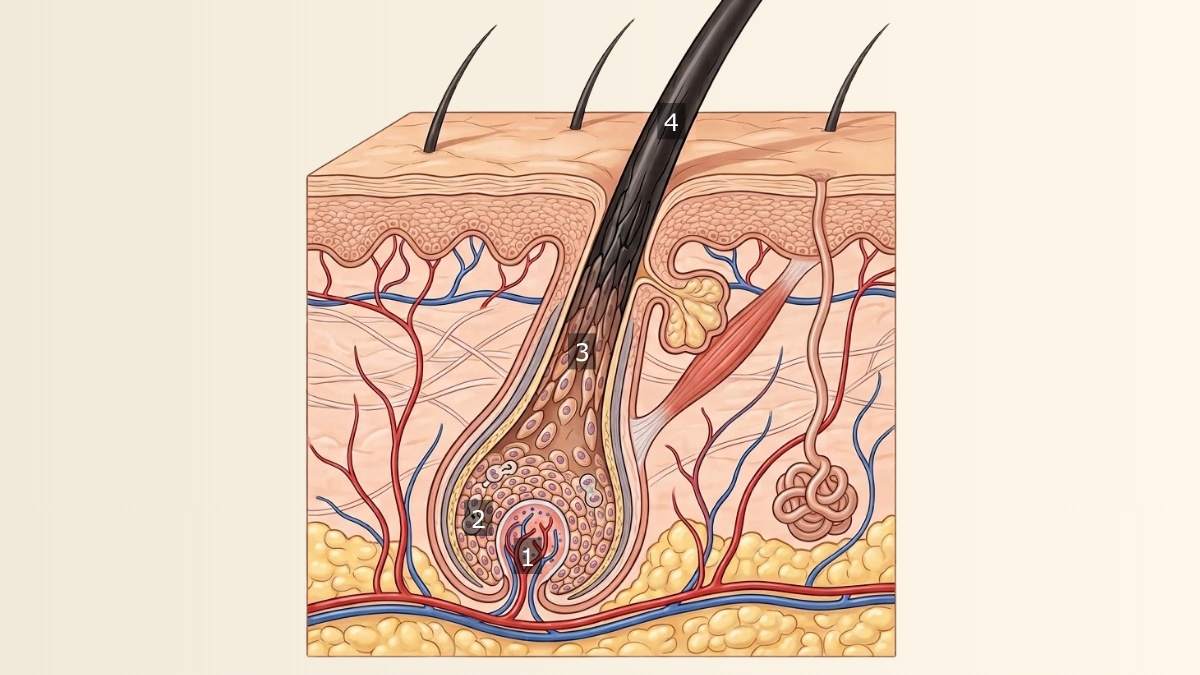
As new cells (2) form, they push older cells upward through the follicle. As these cells travel upward (3), they undergo a hardening process called keratinization. They become filled with hard keratin proteins and form the actual hair shaft (4).
The visible hair shaft extending past the scalp surface consists of fully keratinized, dead cells. Consequently, cutting, trimming, or shaving your hair has zero effect on the living follicle underneath and does not influence growth speed or the thickness of the hair.
The Phases of the Hair Growth Cycle
Hair goes through a continuous cycle made up of four overlapping phases:Phase 1 - Anagen: During the Anagen, or growth phase, matrix cells divide rapidly to build the hair strand. For scalp hair, this phase usually lasts between 2 and 7 years, and even longer for some people. The duration of anagen is one of the main factors determining your maximum possible hair length. About 85% to 90% of scalp hairs are usually in this active growth phase at any given time.
Phase 2 - Catagen: During the Catagen, or transition phase, which lasts roughly 2 to 4 weeks and accounts for only a small percentage of scalp hairs, active cell division slows down and the follicle starts to shrink. The connection between the follicle and dermal papilla changes as the follicle prepares to enter its resting phase.
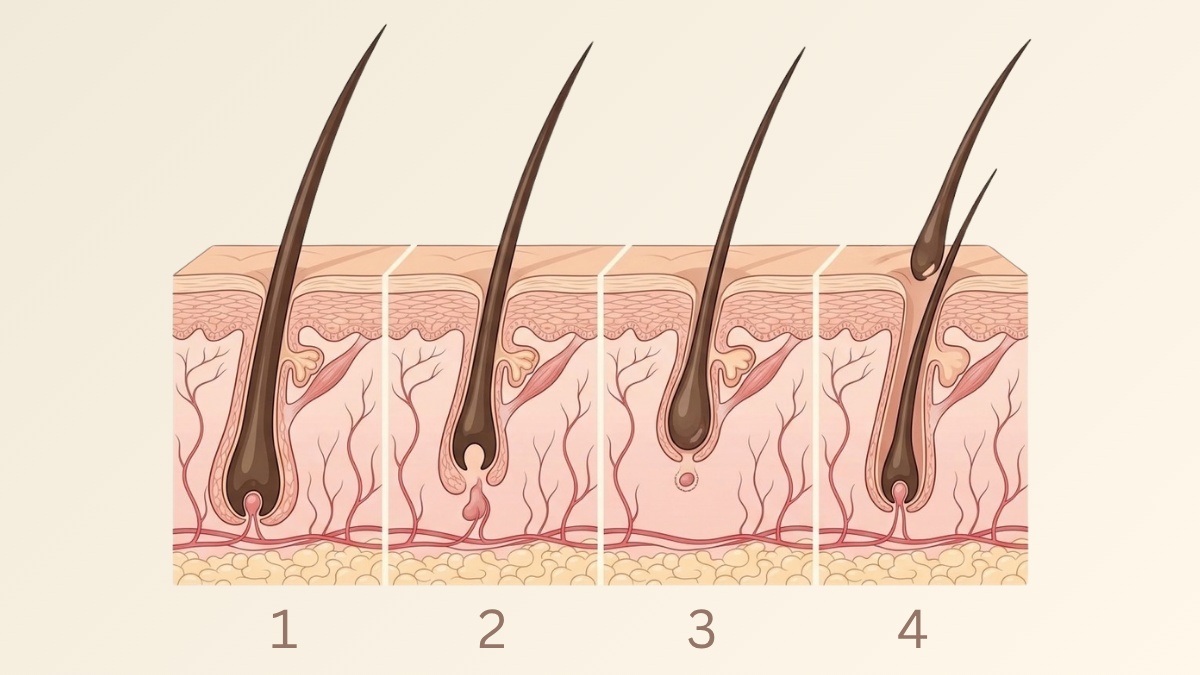
Phase 3 - Telogen: During the Telogen, or resting phase, which lasts about 2 to 3 months for scalp hair and accounts for approximately 10% to 15% of scalp hairs, the follicle remains relatively inactive. Meanwhile, a new hair begins to form underneath.
Phase 4 - Exogen: During the Exogen, or shedding phase, the old hair is released from the follicle and falls out through everyday activities such as washing, brushing, and normal movement. Exogen overlaps with the later part of the resting cycle rather than functioning as a completely separate stage.
Hair Density and Normal Shedding
A healthy human scalp contains around 100,000 or more hairs, but the exact number varies widely between individuals. Hair density depends on genetics, age, gender, hair color, and the specific area of your scalp. Traditional estimates have suggested that blond hair tends to have the highest density and red hair the lowest density. However, these figures should be regarded as estimates rather than fixed biological rules.It is normal to lose 50 to 100 hairs per day and each hair follicle operates on its own independent timeline. If all our follicles followed the exact same cycle, humans would shed their entire coat of hair seasonally, much like many other mammals.
Pattern hair loss, or Androgenetic Alopecia, occurs when male hormones (androgens) interfere with hair follicles that are genetically sensitive to them. Dihydrotestosterone (DHT) plays an important role in this process. Susceptible follicles shrink over time (a process called miniaturization) and produce hairs that become shorter, finer, and less pigmented until they resemble very small vellus-like hairs.
Internal and External Influences
Hair growth rates, cycles and density are regulated by a combination of internal and external influences. Because hair matrix cells are among the more rapidly dividing cells in the body, hair production can be sensitive to changes in your health, hormones, diet, and environment.1. Hormonal Influences
Hormones influence how long hair remains in its active growth phase, how rapidly hair-producing cells divide, and whether susceptible follicles shrink.Androgens (Testosterone & DHT): DHT is a byproduct of testosterone. In people genetically prone to androgenetic hair loss, androgens cause certain scalp follicles to shrink. This results in shorter, thinner hairs over time.
Estrogens: Estrogens influence the hair-growth cycle. During pregnancy, hormonal changes can keep more hairs in the growth phase, and this can make scalp hair appear thicker. After giving birth, estrogen levels drop rapidly and a larger number of follicles can enter the resting phase. This results in widespread temporary hair loss known as postpartum telogen effluvium.
Thyroid Hormones: Thyroid hormones influence metabolism and cellular processes involved in hair production. Both an underactive thyroid (hypothyroidism) and an overactive thyroid (hyperthyroidism) can be associated with changes in the hair cycle, including diffuse thinning, changes in texture, and increased shedding.
2. Physical & Emotional Stress
Severe physical or mental stress can disrupt normal growth patterns and force hair into premature shedding.Mass Shedding: Major physical shocks (such as surgery, severe illness, high fevers, sudden weight loss, or intense psychological distress) can cause an increased proportion of growing hairs to prematurely enter the resting phase. The resulting hair loss is usually delayed, commonly becoming noticeable around 2 to 3 months after the stressful event took place. While emotional stress also affects your immune system and hormones, scientists are still studying the exact biological path that connects mental stress to hair loss.
Scalp Inflammation: Conditions that cause inflammation on the scalp can interfere with normal follicular activity and contribute to hair loss.
3. Essential Nutrients for Growth
Your hair relies on key nutrients from your diet to build strong strands and grow properly:Protein and Amino Acids: Protein and amino acids provide the building blocks needed to make keratin, the primary structural protein in hair. Severe protein deficiency or significant nutritional restriction can cause hair strands to become weak and fragile and can trigger increased shedding.
Iron: Iron is essential for hair growth because it helps in DNA synthesis within hair-producing cells. Significant iron deficiency can lead to diffuse hair shedding and may interfere with normal hair production. However, there is no single universally accepted ferritin level below which hair growth slows.
Zinc: Zinc helps repair hair tissue, build proteins, and regulate key enzymes in the follicle. Major zinc deficiency can lead to delayed hair growth, brittle and fragile hair strands, and patchy hair loss.
Vitamin D3: Vitamin D3 plays a critical role in hair health by regulating gene activity in follicle cells and helping to trigger new hair growth cycles. When vitamin D levels drop too low, these growth cycles become disrupted.
4. Supplements: Evidence vs. Reality
Supplements only work if you actually have a nutritional deficiency. Extra doses will not make healthy hair grow faster.Biotin (Vitamin B7): Widely advertised for hair growth, but taking extra biotin offers no benefit if your biotin levels are already normal. It only helps in rare cases of actual clinical deficiency.
Collagen & Keratin Peptides: While these supplements supply amino acids that support general hair structure, there is currently not enough solid scientific evidence to prove they make scalp hair grow faster.
Saw Palmetto & Botanicals: Plant extracts like saw palmetto and pumpkin seed oil have been studied for pattern hair loss. While some studies show potential benefits, the results are less consistent than standard medical treatments. They should be considered potential helpers, not proven growth accelerators.
Toxicity Warning: Taking too much of certain vitamins - especially vitamin A and selenium - can result in toxicity and trigger hair loss. More is not necessarily better when it comes to supplements.
5. Environmental & Physical Factors
Sunlight (UV Light): UV rays can damage the protein structure of the hair shaft. This may contribute to dryness, brittleness, and changes in hair color.Scalp Massages & Blood Flow: Hair follicles depend on an adequate local blood supply for oxygen and nutrients. While a small study found that regular scalp massages improved hair thickness, proof that massage speeds up hair growth is still limited.
Chemicals & Heat Damage: Bleaching, chemical treatments, and hot irons damage the hair strand itself, not the living root underneath. However, they can weaken the protein structure of the shaft, increasing breakage. This breakage makes it seem like your hair isn't growing, even though it is.

Perceptual Illusions
Even though hair across your scalp grows at roughly the same speed, certain visual tricks can make it look like specific sections are growing much faster:The Bangs Illusion: Because bangs are cut close to fixed facial features (such as eyebrows and eyes), a small growth increment of just 2 to 3 millimeters makes it instantly noticeable. This is purely a visual effect, not proof that bangs themselves grow faster than hair elsewhere on the scalp.
The Turtleneck Effect: High-collared clothing, such as a turtleneck, creates a sharp, horizontal line across the neck. This hides part of your neck length, making hair that rests against the fabric look suddenly longer and giving the illusion of rapid growth.
©Hairfinder.com
See also:
Hair growth calculation
What exactly is hair made of and how does it grow?