Cutting an Angled bob
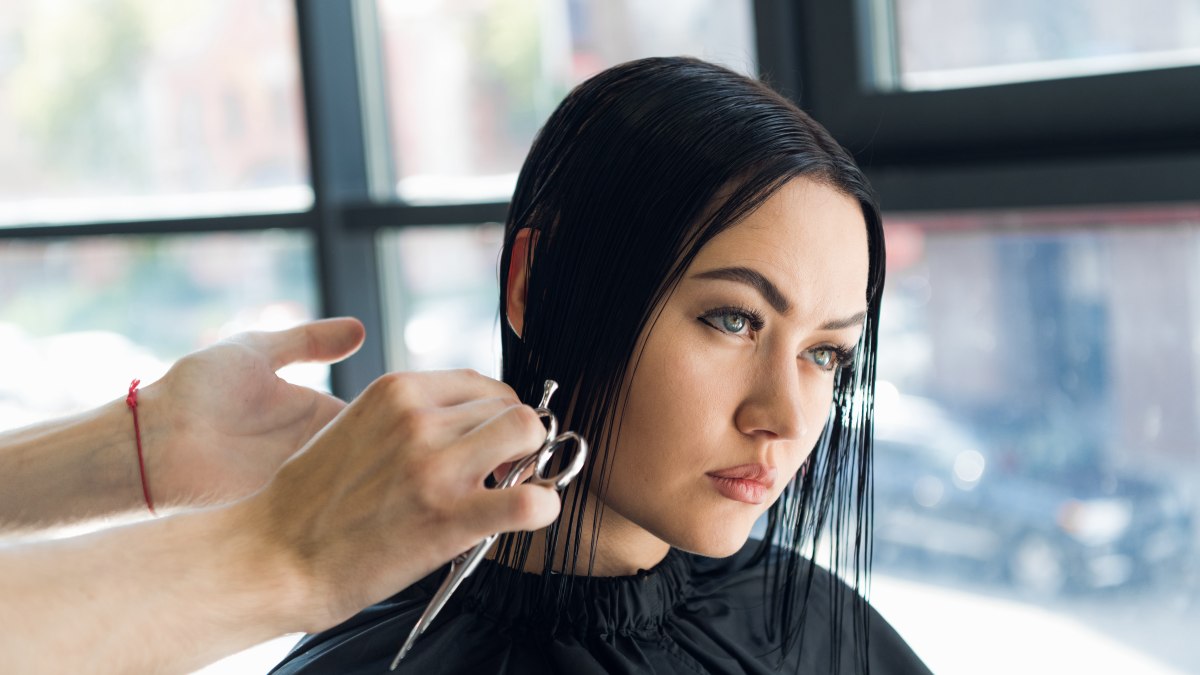
A: To achieve a classic angled bob (often called an A-line or inverted bob), you should remain standing directly behind the center-back of the head and over-direct the side sections back to your position.
Using a stationary guide is the defining characteristic of a classic angled bob. As each side section is combed smoothly back to the center guide, it is subjected to over-direction. Because the hair from the front must travel a greater distance to reach the back, it naturally remains longer when it falls back into its natural position. This creates the signature angled appearance, with the hair gradually increasing in length from the nape toward the face. The farther forward the section originates, the greater the increase in length will be.
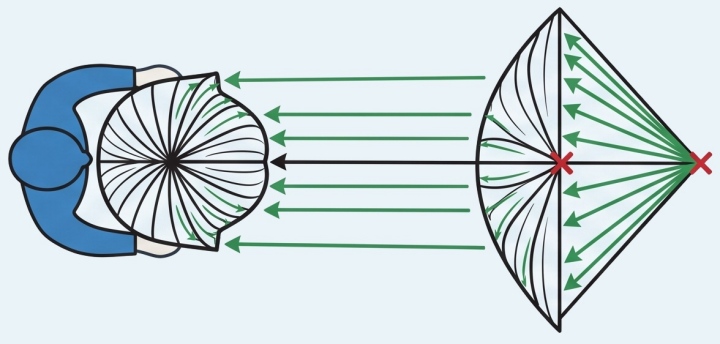
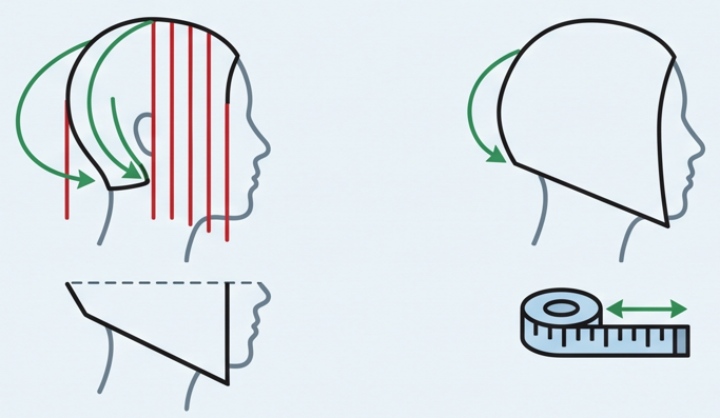
Because you are using a stationary guide, your body position must remain consistently anchored directly behind the client. Moving your body to stand in front of the side sections will accidentally change your angle of over-direction or turn your stationary guide into a traveling guide, resulting in a rounder shape or an asymmetrical cut. Keep your feet planted centrally behind your guide, and rely on your mirror to check balance and symmetry.
When bringing the hair back to the center, be careful to maintain the same amount of tension with every section. Inconsistent tension can result in uneven lengths or an angle that appears choppy rather than smooth. The hair should follow the exact same path each time so that the finished perimeter remains balanced on both sides.
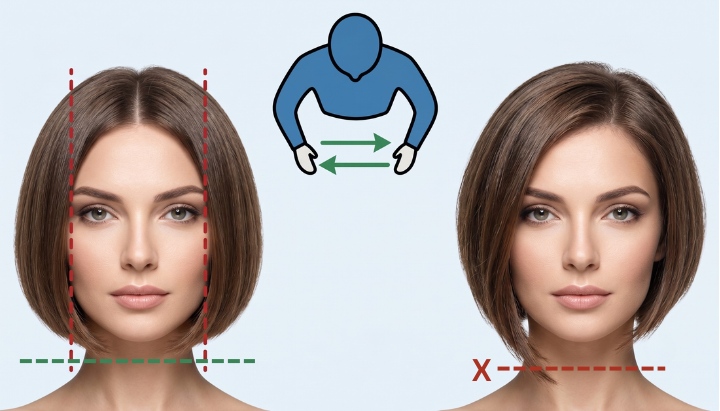
As you complete the haircut, always cross-check your work. Compare both sides of the bob to ensure the angle is balanced and that the perimeter is even. Have the client hold her head in a natural, upright position while you evaluate the finished shape, since even a slight tilt of the head can make one side appear longer than the other. A careful cross-check at the end will help you identify any small inconsistencies before the haircut is finished.
©Hairfinder.com
See also:
How to cut hair
Back-angled bob with long hair
How to cut a blunt haircut or bob haircut
How to cut a stacked bob