Cowl-Neck Tops
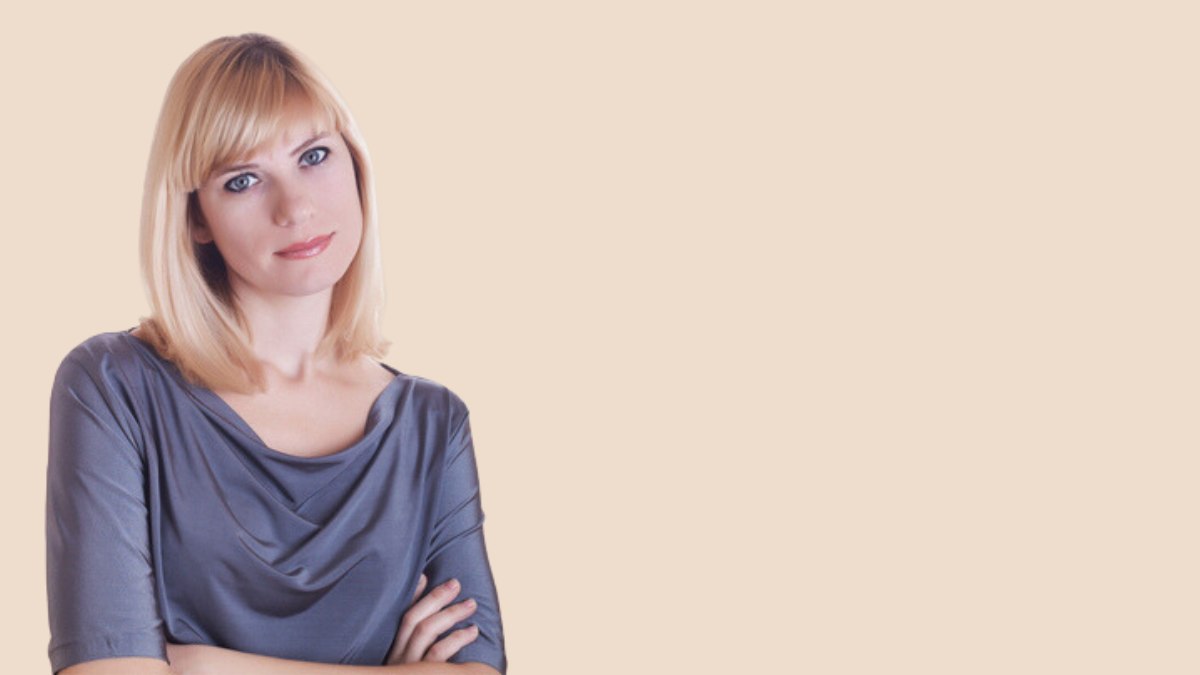
A: Here's a simple way to think about what a particular look is likely to do for you. Consider the ways you would describe the garment in question, and then think about the ways you would describe your own body and features. If there is an overlap in these terms, the garment may emphasize those specific characteristics.
For instance, if you have a fuller figure and wear a very soft, voluminous garment with a loose, billowy collar or a great deal of fabric around the neckline, that additional volume can make your upper body look fuller. On the other hand, someone who is lean and slender may find that a close-fitting, slim-cut garment emphasizes her naturally narrow silhouette.
And if you are petite and slender and opt for something very loose, thick, and fluffy, you could easily find that the garment overwhelms your figure rather than complementing it. In that case, a smaller, more controlled cowl-neck may be more proportionate.
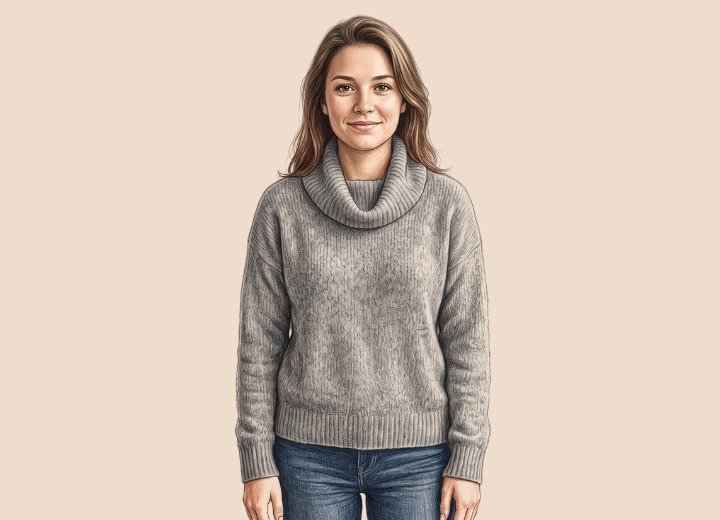
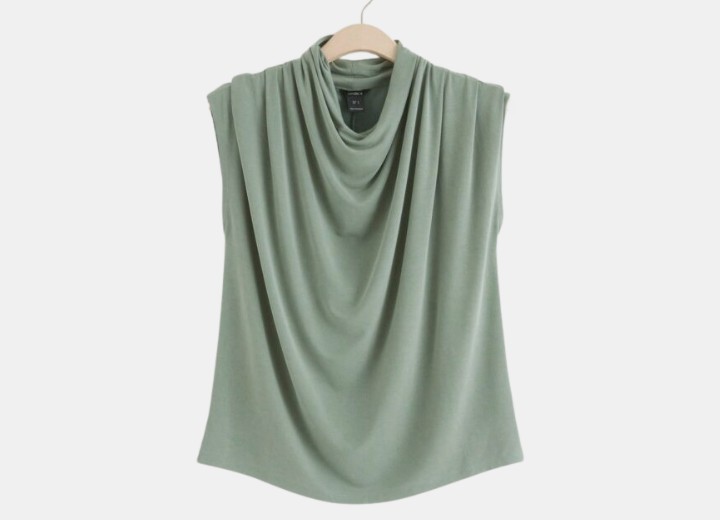
Because of this, a cowl-neck top isn't automatically a good or bad look for any particular body type or face shape. What truly matters is the size and shape of the collar, the weight and fluidity of the fabric, and how much volume the garment creates around your neckline and upper body. A deep, wide, or heavily draped cowl-neck can add softness and visual width around the chest and shoulders. A smaller, shallower cowl-neck can give you the same classic draped neckline without adding as much volume. And depending on how it falls, the folds of the fabric can either draw attention to or away from the bust and upper body.
Practical Styling Guidelines
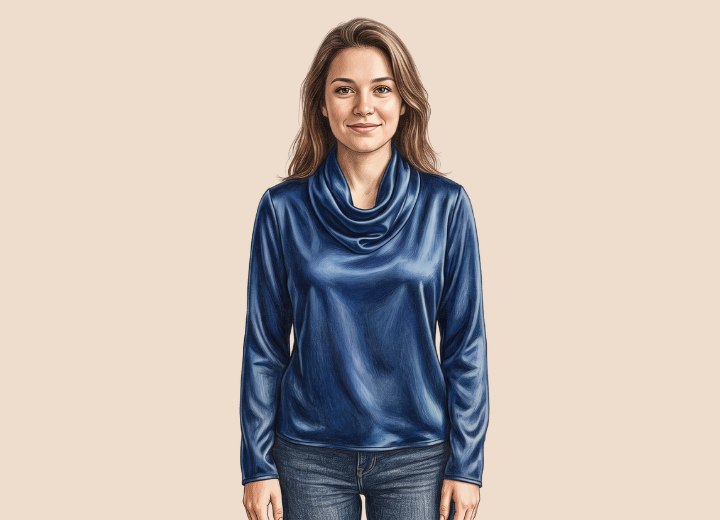
To make the most of a cowl-neck for your specific silhouette, keep these practical styling guidelines in mind:• Bust Size and Depth: If you have a larger bust and want a slimming effect, choose a deep V-shaped cowl-neck in a thin, fluid fabric (such as silk, satin, or rayon jersey). A deep vertical drape elongates the torso and draws the eye down, whereas a high, horizontal cowl-neck adds bulk across the chest. On the flip side, if you have a smaller bust and want to create the illusion of fullness, a higher cowl-neck with soft folds adds great shape and volume.
• Shoulder Proportions: If your shoulders are narrow or sloped, a wide or off-the-shoulder cowl-neck top broadens the upper body. This helps balance wider hips (pear shapes). If you have broad shoulders (inverted triangle shapes), opt for narrow, central cowl-necks that drape downward rather than spreading wide across the collarbone.
• Neck Length and Face Shape: The same principle applies to the face and neck. You do not need to avoid cowl-necks just because you have a rounder face, a softer jawline, or a shorter neck. However, if you want to elongate that area, opt for a cowl-neck that sits lower below the collarbone to show more skin. High, thick cowl-necks that sit right under the chin make the neck visually shorter.
• Fabric Choice: Heavy knits (like chunky wool) hold their structure and add noticeable volume. Lightweight, fluid fabrics (like modal, viscose, or silk) lie flat against the body and create a sleek, streamlined drape that glides over your body rather than adding thickness.
Always keep in mind that looking good and choosing the right clothing comes down to keeping proportion and balance in mind. Instead of asking whether a particular neckline is "right" or "wrong" for your body, look at the scale, shape, fabric drape, and amount of volume involved. When those factors match your personal features and create the overall silhouette you want, you can make flattering style choices every time.
©Hairfinder.com
See also:
The positive and negative effects of turtlenecks
The neckline language decoded
How to dress to look slim