Reverse Bob for Curly Hair
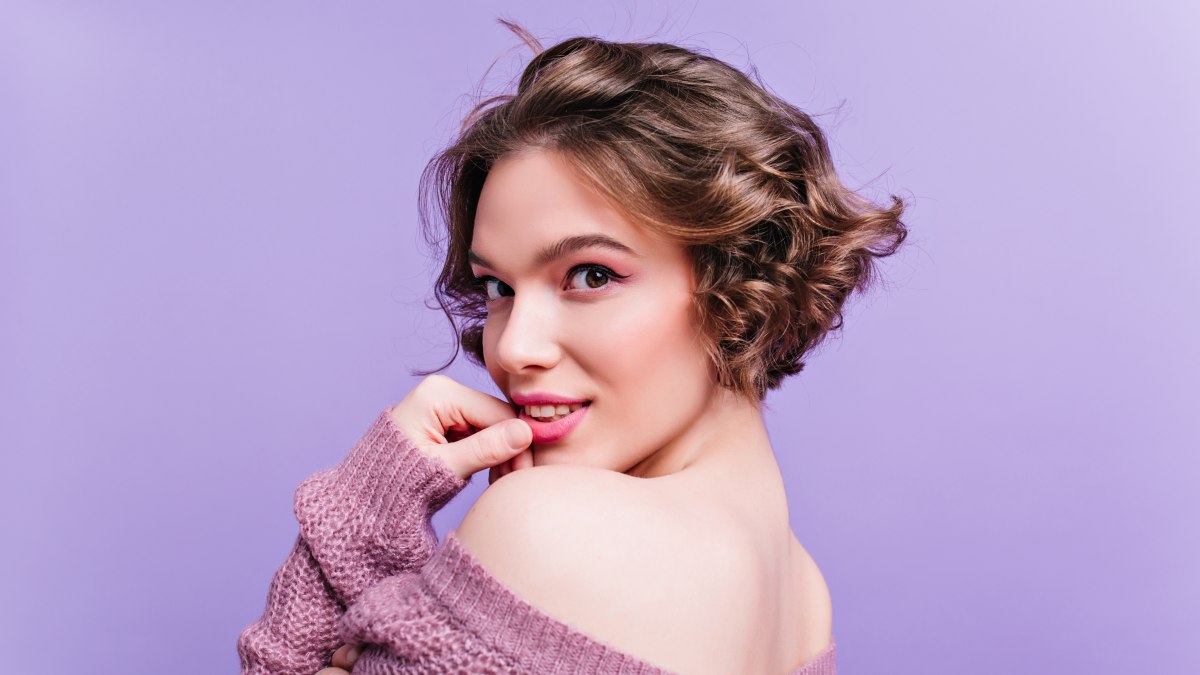
I've seen posts online from people with curly hair who have gotten a reverse bob, and they all say it looks great whether they wear their hair curly or straight. Unfortunately, I haven't been able to find many good examples of this haircut on people with hair similar to mine.
Does a reverse bob work well on very thick, curly hair, or is it likely to create even more volume? Are there any special considerations I should know of before making such a big change?
However, the term "curly hair" covers a wide spectrum of hair textures. Waves, springy ringlets, tight corkscrews, and coily curls all behave very differently, especially when cut short. A reverse bob that looks great on one curl type can produce a completely different result on someone with higher hair density or a tighter curl pattern.

Cutting Techniques and Considerations
For very thick, poofy hair, a reverse bob can expand outward into excessive volume if it isn't cut correctly. To avoid the hair flaring out into a stiff, topiary-like shape, keep some essential considerations in mind:• Dry Cutting is Crucial: Curly hair shrinks drastically as it dries. A stylist who cuts your hair while it's dry and in its natural curl state can see exactly where each curl falls and how much it springs up, preventing accidental over-shortening.
• Internal Layering, No Thinning Shears: To manage density, your stylist must remove weight internally using specialized cutting techniques. Avoid standard thinning or texturizing shears, as they create short, choppy hairs within the curl pattern that push the rest of the hair outward and cause frizz. Curl specialists sometimes use slide-cutting or channel-cutting with straight shears to de-bulk without creating frizz.
• The Dual-Styling Trap: A steeply angled bob, cut specifically to look perfect on natural curls may look uneven and weird when flat-ironed. If you plan to blow-dry or straighten your hair often, let your stylist know so they can strike a balance in the perimeter lines that flatters both worn-curly and worn-straight styles.
• Keep the Angle Subtle: A dramatic, steep angle concentrates a lot of weight right under the chin and around the jaw. A gentler, softer forward angle usually distributes curl density much better.
Since your main goal is easier styling and reduced puffiness, you may also want to discuss smoothing or texture-softening treatments with your stylist. Modern treatments can temporarily smooth or reshape curly hair, making it less voluminous and easier to manage. These services vary in strength and longevity, so your stylist can recommend one that best suits your hair type and budget.
©Hairfinder.com
See also:
Pictures of reversed bob haircuts
How to cut a short stacked bob
Would an inverted V haircut work with curly hair?