The Meaning of Layered Hair
A: To a hairstylist, "layered hair" means the hair has been cut so that the ends of the individual strands fall at different points rather than all ending at the same baseline. This creates the visual effect - and in most cases, the structural reality - of hair being different lengths throughout the style. Layers change how the hair moves, lies, and responds to styling, making them one of the most versatile cutting techniques in modern hair design.
By contrast, a blunt haircut (a 0-degree elevation cut) creates the appearance that all of the hair is one uniform length because every strand reaches the same bottom perimeter line. To achieve this solid line, however, the strands growing from the top of the head must actually be cut much longer than those growing near the nape. The result is a dense, clean edge that makes the perimeter look thicker and heavier.
Uses and Benefits of Layering
Layering is often used to solve specific styling challenges: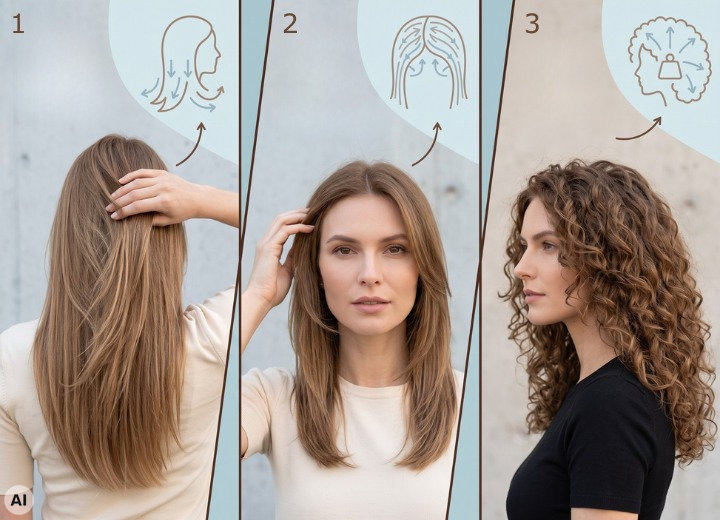
1. Removing Weight for Volume: On long, heavy hair, adding layers removes interior weight that would otherwise pull the hair flat against the scalp. This allows the roots to lift more easily, creating additional body, movement, and fullness.
2. Managing Fine Hair: People with fine hair can benefit from carefully placed layers to build texture. However, stylists must be cautious. Adding too many layers can strip away perimeter density, making fine hair look thin or wispy at the ends.
3. Taming Bulk and Curls: Layers redistribute weight throughout thick or curly hair. Instead of allowing volume to build up into a heavy mass at the bottom - which often causes curly hair to flare into a triangle" shape - layers collapse that bulk, letting curls form more naturally.
Types of Layers and Customization
Not all layers are created equal. Long layers preserve overall length while offering soft, subtle movement, making them a standard choice for medium and long styles. Shorter layers create maximum lift, texture, and volume, particularly around the crown. Face-framing layers are sculpted specifically to highlight features like the cheekbones, lips, or jawline.A stylist selects the precise elevation and placement of layers based on the client's hair density, texture, face shape, and styling preferences.
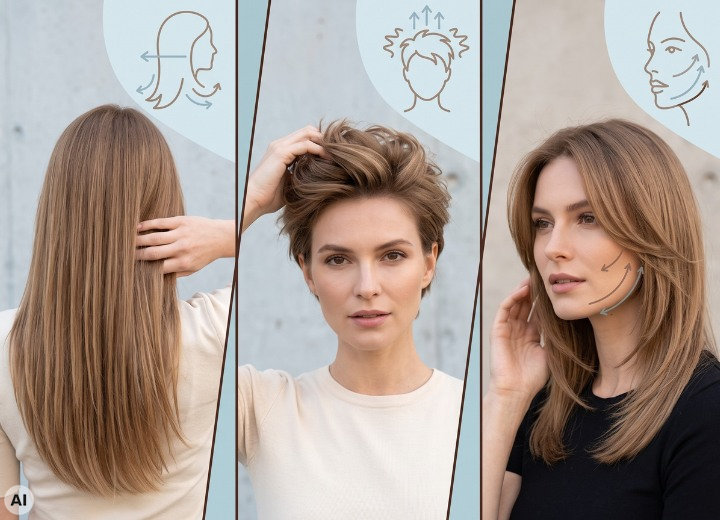
It is also very common to combine layered and blunt techniques in a single haircut. For example, a style may feature a sharp, blunt baseline to maintain a thick-looking outline, paired with soft internal layers to remove bulk and add movement.
Layering is less about simply cutting hair into different lengths and more about controlling how the hair behaves. By strategically placing layers, a hairstylist can masterfully adjust volume, shape, texture, and flow - delivering a style tailored to the client's natural hair behavior.
©Hairfinder.com
See also:
The pros and cons of layered hair
How to layer long hair
How to cut square layers or box layers