Pros and Cons of Layered Hair
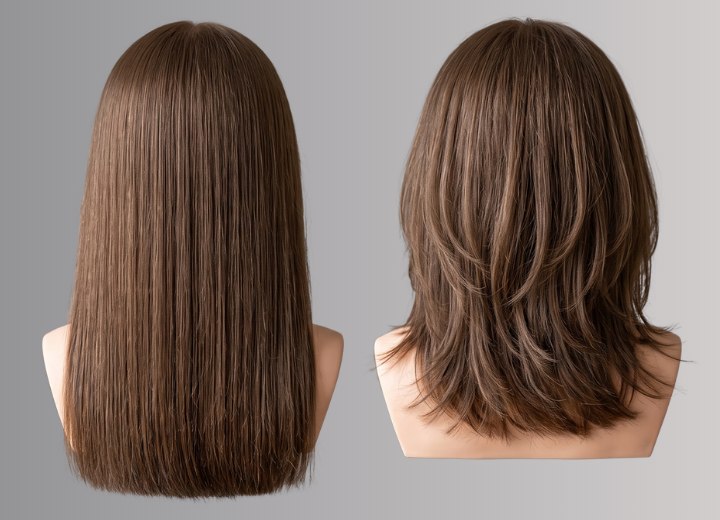
A: The pros and cons associated with layering hair depend on the texture, density, natural wave or curl pattern and overall characteristics of the hair.
The Main Pros
• Weight Reduction and Shape Control: Layering is a good way to balance the bulk (or weight) in hair. This reduces excessive fullness as hair grows longer. For instance, when someone with curly or wavy hair grows it to shoulder length, the weight distribution can cause the ends to flare out into a pyramid shape. Layering removes bulk from the mid-lengths and ends to create a balanced, flattering outline.• Movement, Volume, and Texture: Layers add bounce, life, and flow to hair that might otherwise look flat or stiff. They also create extra depth, highlighting the contrasts in colored or highlighted hair.
• Face Framing: Cutting layers around the face can draw attention to specific features, such as the cheekbones, jawline, or eyes.
• Faster Dry Time: Because removing internal weight means your hair retains less water, it dries faster. This reduces the time it takes to wash and blow-dry your hair.
The Main Cons
• Styling and Updo Limitations: Short layers can make certain hairstyles, like updos, braids, and ponytails harder to achieve. Shorter pieces of hair can stick out or require extra bobby pins and hairspray to keep in place.• Higher Maintenance: Layered cuts usually require more frequent trims (every 6 to 8 weeks) to keep the intended shape and structural balance compared to blunt, one-length cuts.
• Longer Growing-Out Process: If you decide to return to an all-one-length cut, growing out layers takes time. It requires trimming the bottom length every so often until the shortest layers catch up with the rest.
• Requires Proper Technique: Removing too much weight from fine or low-density hair can weaken the ends, while insufficient layering in fuller or bulkier hair can leave too much weight in the lower portions of the hairstyle.
Overall, there are far more potential benefits than drawbacks to layering when the technique and placement are tailored appropriately to the hair type, density, and the person’s lifestyle. The real question is not whether layering has more pros than cons, but whether the specific type and placement of layers is suited to the hair being cut.
©Hairfinder.com
See also:
The difference between styling hair with and without layering
What does layered mean to a hair stylist?
What is the difference between a beveled cut and a layered cut?