Hairstyle Tips for Eyeglass Wearers
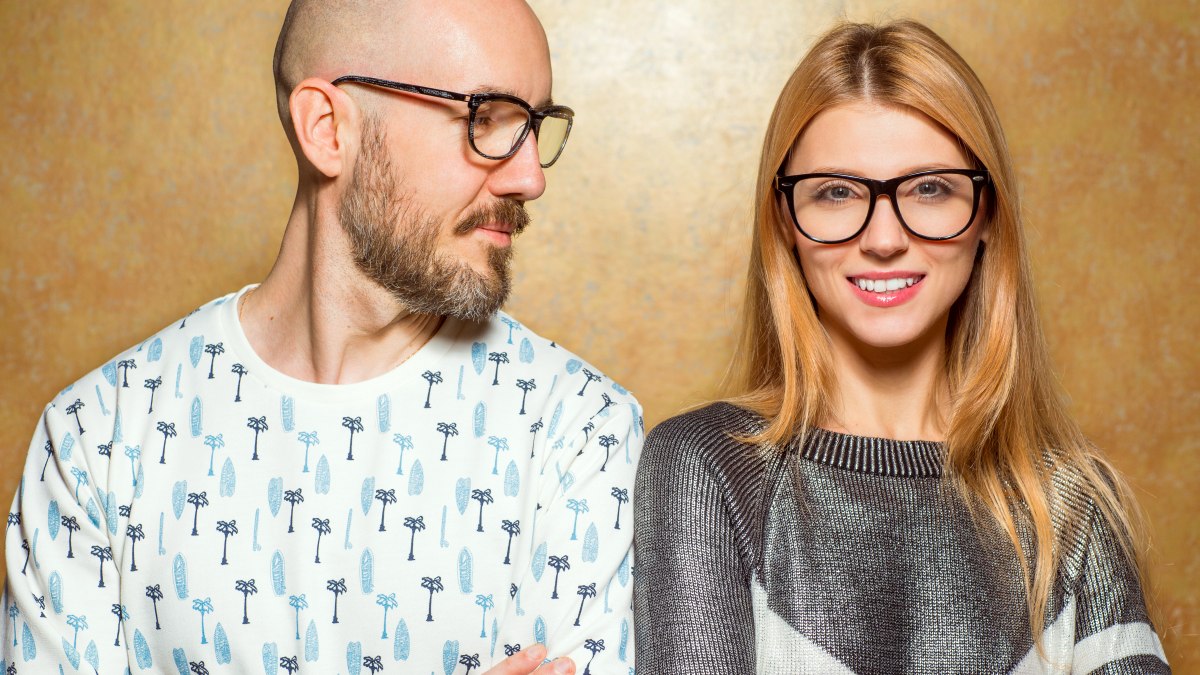
Today's lightweight lenses and designer frames look nothing like the thick, heavy lenses and blocky, utilitarian frame styles of years ago. These new styles are designed to be unobtrusive and attractive, even flattering. However, like every fashion trend, eyeglass styles evolve. In the 1970s, women's eyewear styles were large and rounded. By the 1980s, the trend shifted to shorter but wider glasses. In the 1990s, there was a movement towards small, narrow eyeglasses.
The main point of choosing a hairstyle is to establish balance and harmony in your facial features. Eyeglasses add another element to think about, but that doesn't necessarily mean there's a need for a drastic change in your hairstyle. Here is a simple breakdown of the three main categories of glasses and how you can style your hair for each.
Wide-Framed Eyeglasses
The lenses of wide-framed eyeglasses are significantly wider than they are tall. This results in eyeglasses that extend past the outer corners of the eyes and create a distinct horizontal line at the temples. This style is often chosen by people with longer or narrower faces (like rectangular or oval face shapes) to add horizontal balance, or by those with wider face shapes (like square or heart-shaped faces) who opt for frames that extend slightly beyond the widest part of their face for a comfortable fit.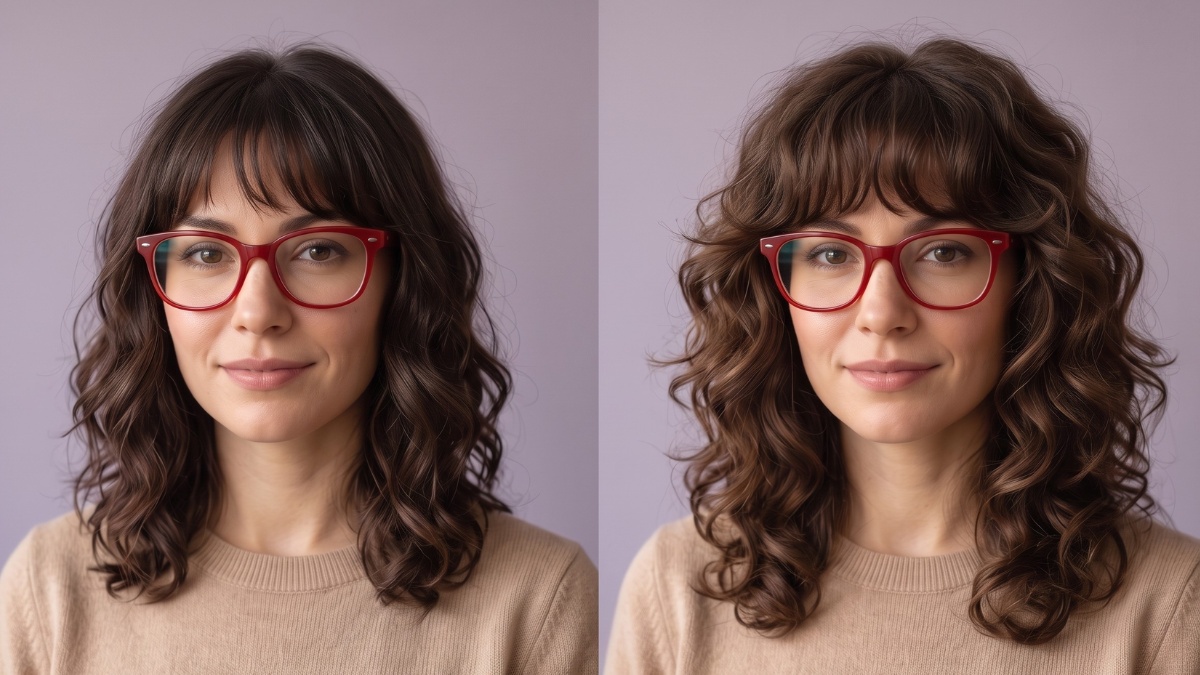
The challenge in choosing hairstyles for this style of glasses is avoiding making the top half of your head look too wide. Adding heavy side volume at the temple level can make the upper face appear disproportionately wide when combined with wide frames.
To counteract this:
• Add Vertical Balance: Select a hairstyle that adds a little height on top of your head.
• Smart Bangs: Opt for side-swept bangs or curtain bangs rather than blunt, wide bangs. Heavy, straight-across bangs cut right at frame height can create a harsh horizontal line across the face.
• Length and Volume: Keep the volume minimal along the sides of your head, but let the length flow downward with subtle fullness around your jawline or collarbone. This makes your face look longer and more balanced.
• Short Cuts: If you prefer short hair, go for styles with clear vertical lines and minimal side volume to balance out the extra width of the frames.
Large-Framed Eyeglasses
Large-framed eyeglasses cover a substantial portion of the eye area, often spanning from the upper cheek to at or above the eyebrow. When the frame is colorful or thick, these eyeglasses become the prominent focal point of the face. The lenses themselves can be round, aviator-style, or square. This style is often chosen by people who want to make a strong fashion statement, soften sharp facial features, or draw attention upward toward the eyes.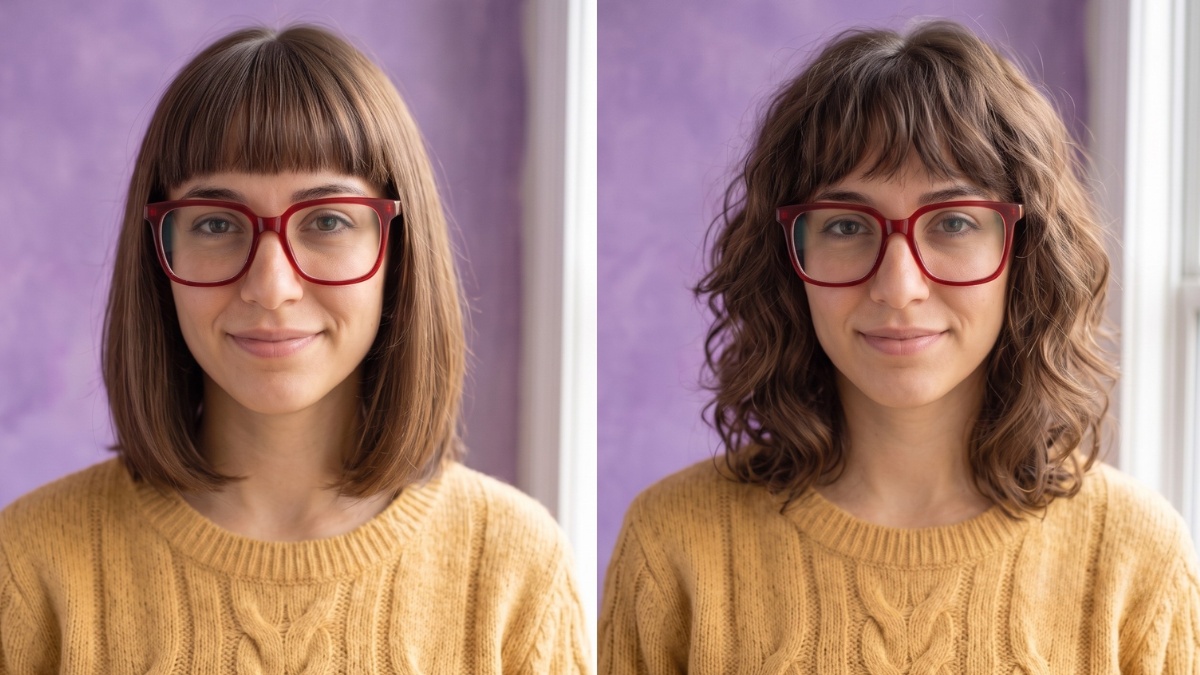
When choosing a hairstyle to complement large eyeglasses, proportion is key. A long, flat, low-volume, or pin-straight hairstyle can make the eyeglasses stand out too starkly, often to the point of overpowering your face. On the flip side, short pixie cuts can look high-fashion, but without sufficient top volume or texture, they may make the eyeglasses look disproportionately large.
The best choice is a hairstyle that is strong enough to hold its own against the large-framed glasses.
• Layered Volume: A medium-to-long layered style with soft volume on the sides and top puts large-framed glasses into proper proportion.
• Soft Framing: Soft waves, short arched bangs or curtain bangs that gently curve outward help break up the heavy geometry of large frames.
• Color Balance: If you wear dark or heavy frames, avoid pairing them with extremely harsh, solid hair colors right around the face unless you are intentionally aiming for an avant-garde contrast. Soft highlights around the face can lighten the overall look.
Small-Framed Eyeglasses
Small-framed eyeglasses remain a popular and practical choice. The lenses are usually just large enough to cover the eyes themselves, with thin, light, or rimless frames. These glasses often look best on petite women with narrow or smaller faces, as large frames would overwhelm them. They are also a practical choice for those who only need glasses for specific tasks (like reading or driving) because their compact size makes them easy to carry.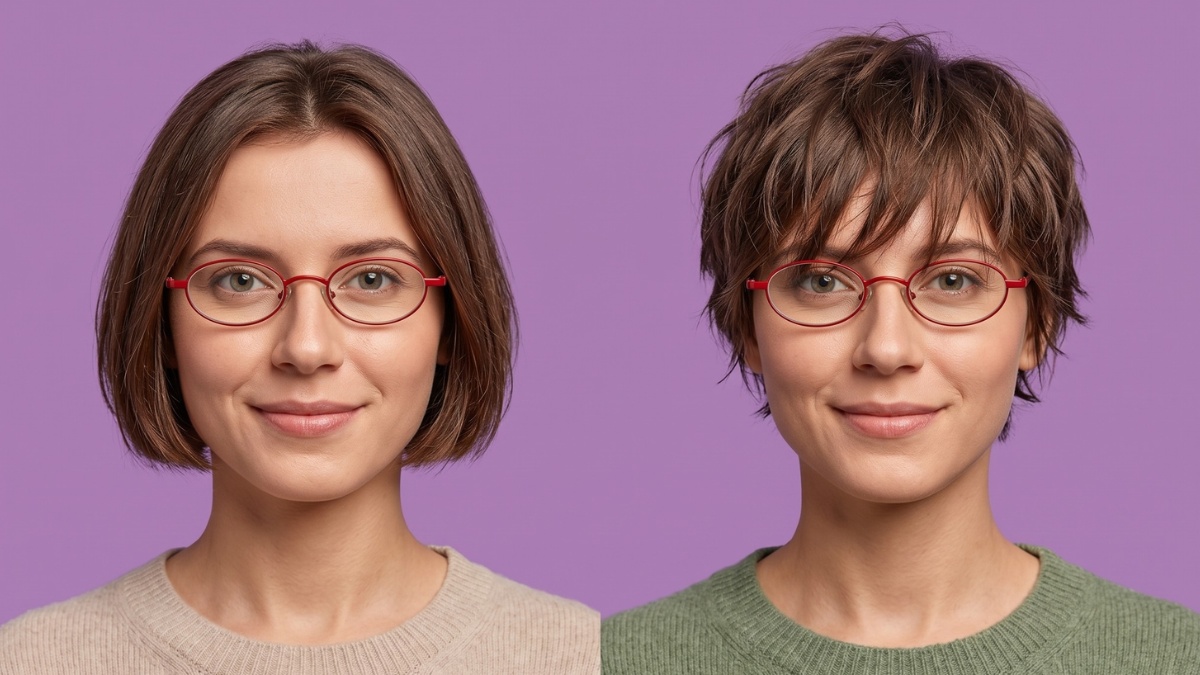
When choosing a hairstyle, the primary concern is avoiding boxing in the facial features, which can make the face seem smaller and result in a strict or overly traditional look.
To achieve the best look:
• Open Up the Face: Look for styles that leave your forehead and cheekbones visible. A short, wavy, or textured pixie cut highlights the face while keeping it open.
• Avoid Heavy Hair Sections Around the Face: A classic, chin-length blunt bob with heavy front sections can act like a tight frame inside a frame, trapping your features and emphasizing the glasses.
• Options for Non-Petite Wearers: If you are not petite but still love small glasses, try long layered cuts or soft shoulder-length hairstyles. This keeps your overall body proportions natural without making your face look short.
Sunglasses & Frame Details
These guidelines also apply to sunglasses. In fact, many people invest heavily in high-end designer sunglasses. Because sunglasses use dark lenses and bold shapes, they always act like large-framed glasses, no matter their actual shape.When wearing sunglasses outdoors for long periods - like at the beach, outdoor parties, or sports events - consider subtle styling adjustments. Wearing your hair in a high ponytail or adding a little volume at the crown keeps your look balanced.
And do not forget the arms of your glasses (the temples):
• Tucking Hair: If you like tucking your hair behind your ears, make sure the arms of your glasses lie flat against your head so your ears are not pushed outward at an awkward angle.
• Updos: When wearing your hair up, leave a few soft, face-framing tendrils loose around the ears and temples. This softens the hard line where the arm of your glasses rests on top of your ear.
©Hairfinder.com