Hair Color and Sunshine
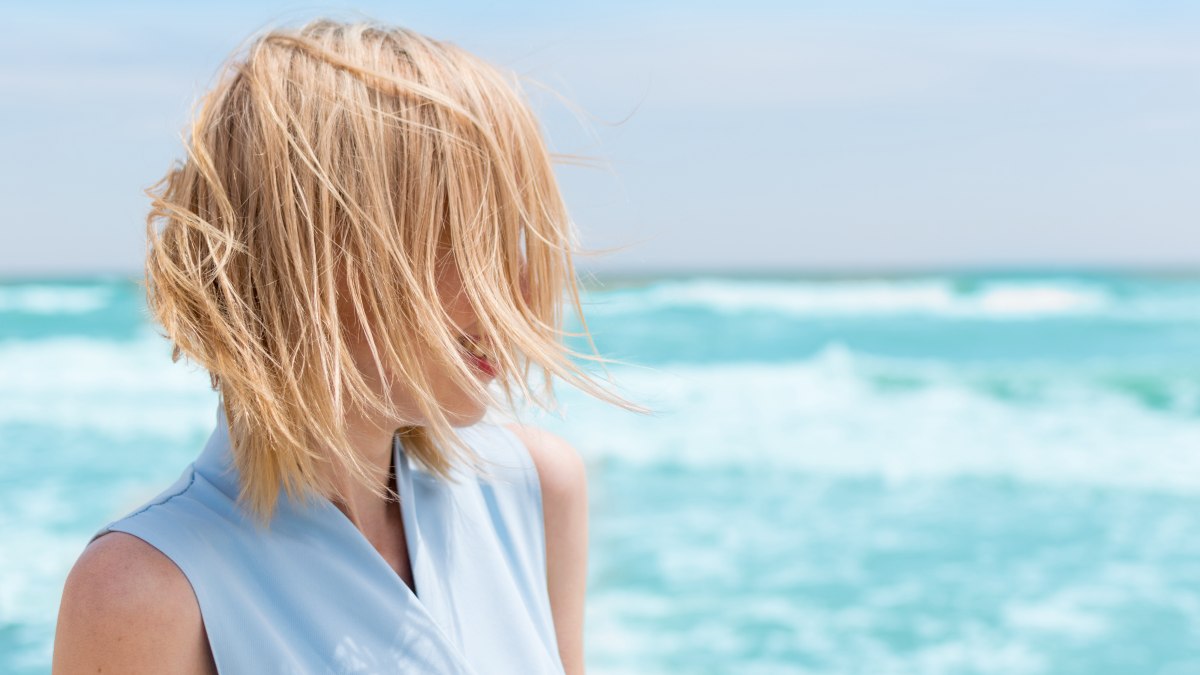
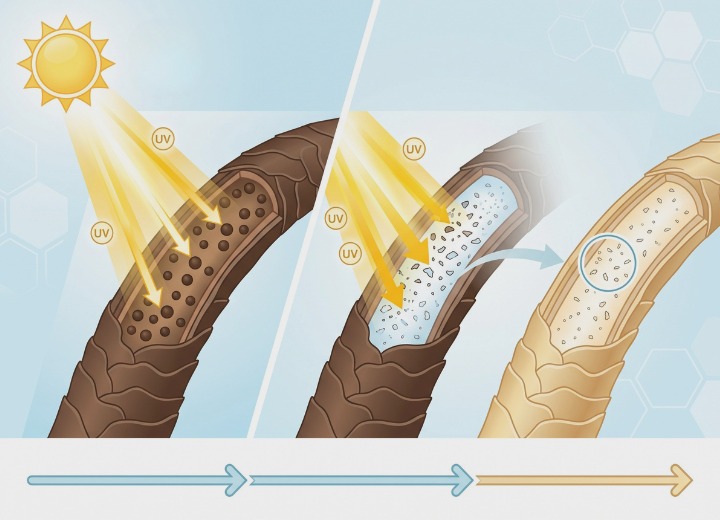
A: Hair indeed becomes lighter when exposed to sunshine. UV radiation from the sun breaks down the natural melanin pigment in hair fibers through a process called photobleaching. Because hair shaft cells are dead and cannot produce new melanin to tan (like skin does), the pigment fades. This is how people get what is known as the “sun-kissed” look.
Accelerating the Lightening Effect
Many people spend extra time and effort to enhance the sun’s effects on their hair. There are specialized lightening sprays, and an old standard is lemon juice. The citric acid in lemon juice acts as an oxidizing agent when activated by UV light, accelerating pigment breakdown.However, not everyone wants their hair color altered by the sun. People who invest time and money in salon color often look for ways to protect their hair from fading. Natural hair colors are also affected: brunettes often notice underlying warm or reddish tones as dark eumelanin breaks down, while redheads and blondes find their hair becomes brassy or washed out.
Prevention Methods
Preventing sun damage on hair requires UV protection, but do not apply regular skin sunscreen to your hair. Skin lotions are formulated with heavy oils and emulsions for skin absorption. Applying them to hair leaves it greasy and it is difficult to wash out. And it does not provide an even protective coating on hair strands.Instead, follow these prevention methods:
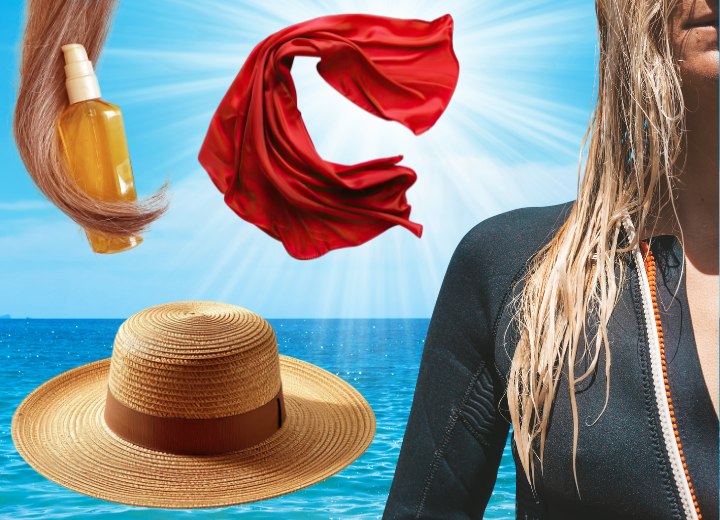
• Use Leave-in UV Protectants: Look for leave-in conditioners, hair oils, or specialized hair sunscreen sprays containing UV filters (such as Benzophenone-4 or Ethylhexyl Methoxycinnamate). Leave-in products remain on the hair shaft to provide a barrier against UV rays. Note: UV-protectant shampoos and wash-out conditioners offer minimal protection, as the active filters mostly wash down the drain.
• Wear Physical Coverage: A wide-brimmed hat or headscarf remains the most reliable way to shield hair completely from sun exposure.
• Protect Against Water & Sun Combined: Before swimming in seawater or chlorinated pools, saturate your hair with clean tap water and coat it with a leave-in conditioner or protective oil. This prevents the hair shaft from absorbing a lot of salt and chlorine. Salt and chlorine amplify UV-induced pigment degradation.
©hairfinder.com
See also:
Fading hair color
Sunscreen for hair
How hair responds to sun exposure