Blondes, Redheads and Hair Density
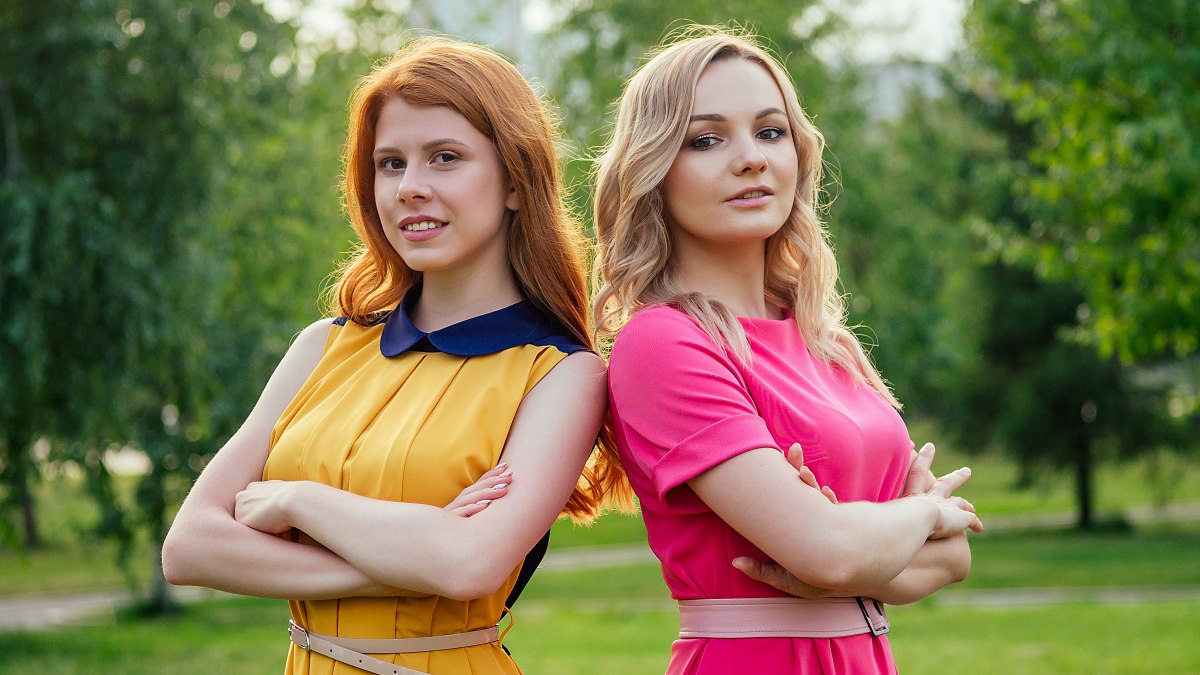
A: This is a particularly difficult question to answer because very few scientific resources discuss the exact "cause and effect" behind the differences in hair density between people with different natural hair colors. While there is plenty of information about average hair counts, shaft diameter, and pigmentation, there is surprisingly little research that explains why these differences developed.
While the average human head has between 100,000 and 150,000 individual hairs, the group averages vary noticeably by color:
• Blondes: 140,000 to 150,000 strands
• Brunettes/Black Hair: 100,000 to 110,000 strands
• Redheads: 90,000 strands
Hair density is typically measured as the number of hairs growing within a square centimeter of the scalp. On a healthy young adult, this average density ranges from about 175 to 300 hairs per square centimeter, though it naturally varies depending on the region of the scalp; with the crown typically being much denser than the sides.
Because this wide range exists, there are certainly exceptions to the rule. It is not unusual to find a blonde with fewer hairs per square centimeter than a redhead, brunette, or person with black hair. Likewise, many people with darker hair naturally have exceptionally dense hair despite belonging to a group with a lower statistical average.
The same level of variation applies to hair shaft diameter. In general, redheads are known for having the thickest individual hair strands, while blondes tend to have the finest. However, some redheads have very fine hair, while some blondes have surprisingly coarse, thick strands. Genetics is highly individual, and no single characteristic can accurately predict another.
One reason these averages can be misleading is that hair density and hair thickness are two completely different measurements:
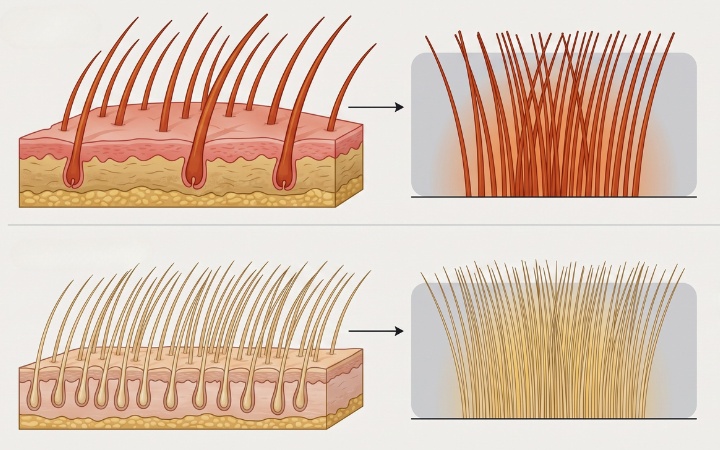
Density vs. Diameter
• Hair density refers to how many hair follicles are growing within a specific area of the scalp.• Hair diameter refers to the width or thickness of each individual hair shaft.
Because red hair strands have a larger cross-sectional area, fewer hairs are required to achieve the same visual coverage and volume. Conversely, someone with a very high hair count but fine strands - like many blondes - may have hair that looks lighter despite having significantly more individual hairs.
Hair color itself is determined by the amount and type of melanin produced within the hair follicle. Blonde hair contains relatively little pigment, while red hair gets its distinctive color from higher levels of pheomelanin. The genes that influence hair color are also involved in many other characteristics of the hair follicle, including growth patterns, strand shape, and shaft diameter. However, genome-wide studies have not yet established a direct genetic mechanism showing that a specific hair color gene mechanically dictates follicle count.
Evolutionary Adaptation
As for the potential reasons behind these general trends, the most reasonable explanation is evolutionary adaptation. While this remains largely theoretical, the logic behind it is sound.Because blonde hair shafts tend to be finer, more individual hairs were likely needed over generations to provide adequate scalp coverage, thermal regulation, and protection from UV radiation as human populations migrated to higher latitudes. Red hair, typically having a larger diameter, required fewer hairs to achieve similar environmental shielding. Over thousands of years, these complementary characteristics likely developed together.
Thus, while these statistical trends are fascinating, they should not be taken as absolute rules. Natural hair color can provide clues about what is typical within a population, but the appearance and characteristics of any one person's hair are ultimately determined by a unique, complex combination of genetics and lifestyle.
©hairfinder.com
See also:
How to analyze your hair
Hereditary hair color
Psychology of hair colors
How many bonds are there in our hair?