Comparing Hair Colors
A Guide to Color Families, Levels, and Tones
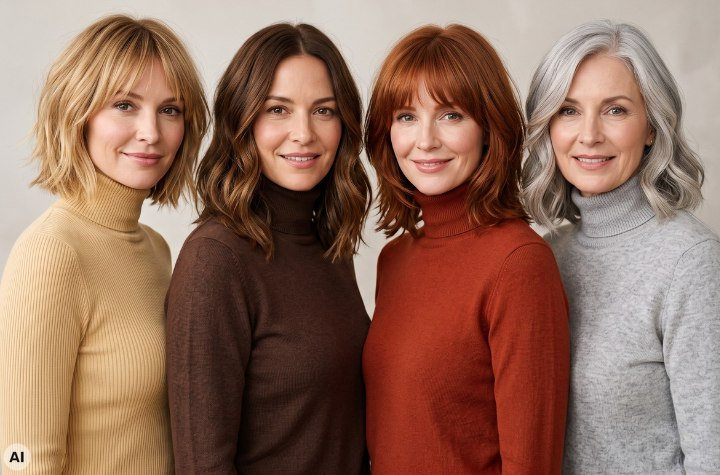
Hair color is one of the first things people notice. It highlights facial features, complements skin tone, expresses personality, and can completely transform the silhouette of a haircut. Whether your hair is naturally dark, light, red, gray, or somewhere in between, every shade carries its own unique characteristics.The Four Main Hair Color Families
Although there are hundreds of individual shades, nearly every natural hair color belongs to one of four primary groups:• Blonde
• Brown (Brunette)
• Red
• Gray or White
Within each family, you will find lighter and darker variations, as well as warm, cool, and neutral undertones. Some hair colors even combine characteristics from two different families, creating dimensional shades like strawberry blonde or auburn.
What Determines Natural Hair Color?
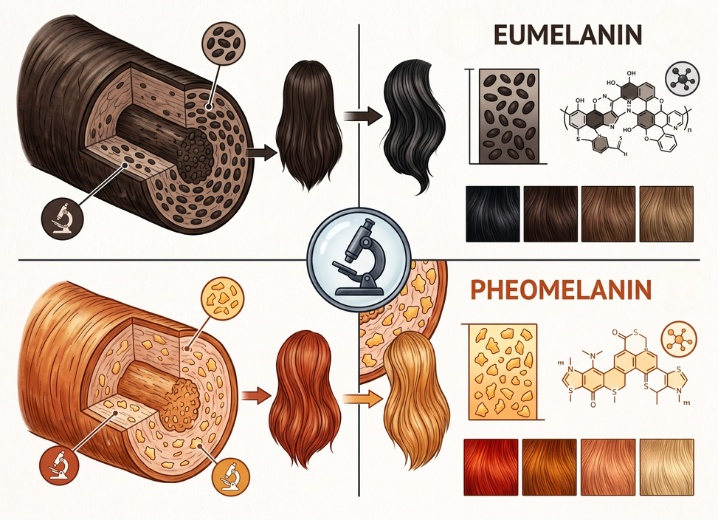
Natural hair color comes from pigments called melanin, which are produced inside the hair follicle. There are two primary types of melanin that dictate your natural shade:
• Eumelanin: Creates black and brown hair.
• Pheomelanin: Creates red, orange, and yellow tones.
Everyone possesses a unique combination of these pigments. The specific amount and ratio of each determine whether someone's hair appears jet black, medium brown, golden blonde, copper red, or any shade in between.
As people age, melanin production gradually slows down. When pigment production decreases, hair turns gray. Once melanin stops being produced altogether, the hair grows in white.
Understanding Hair Color Levels
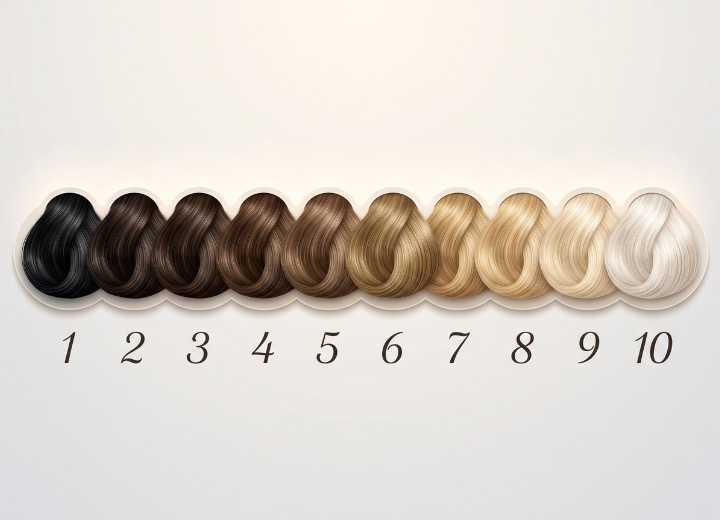
Professional stylists describe hair color using a standardized Level System rather than vague descriptors like "light" or "dark." This scale generally ranges from 1 to 10:
• Level 1: Black
• Level 2: Very dark brown
• Level 3: Dark brown
• Level 4: Medium brown
• Level 5: Light brown
• Level 6: Dark blonde
• Level 7: Medium blonde
• Level 8: Light blonde
• Level 9: Very light blonde
• Level 10: Platinum or palest blonde
Note: The level refers strictly to how light or dark the hair is, independent of whether it is warm, cool, or neutral.
Blonde Hair
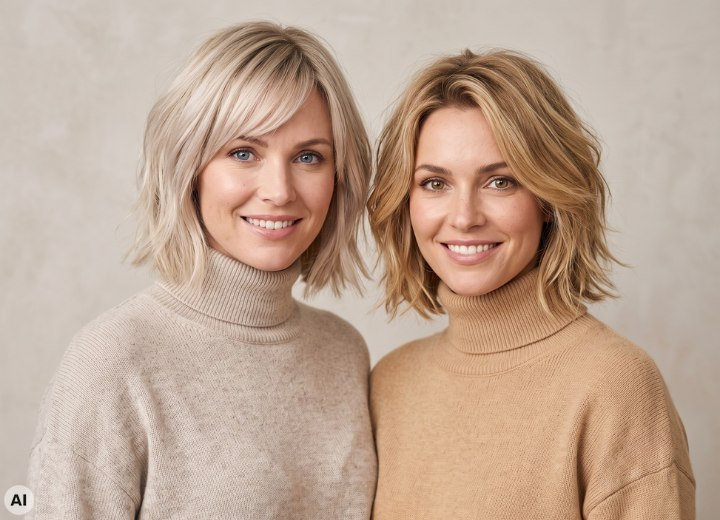
Blonde hair is celebrated for its brightness and variety. Rather than being a single, flat color, it encompasses dozens of distinct shades categorized by temperature:
Cool Blonde Shades
Cool blondes contain very little yellow or gold, featuring silver, beige, or slightly gray undertones for a sophisticated, modern appearance.Examples: Platinum, Ice blonde, Ash blonde, Pearl blonde, Silver blonde
Warm Blonde Shades
Warm blondes feature golden, yellow, or slightly copper tones that create a softer, sun-kissed look.Examples: Honey blonde, Golden blonde, Caramel blonde, Butter blonde, Sandy blonde
Brown Hair (Brunette)
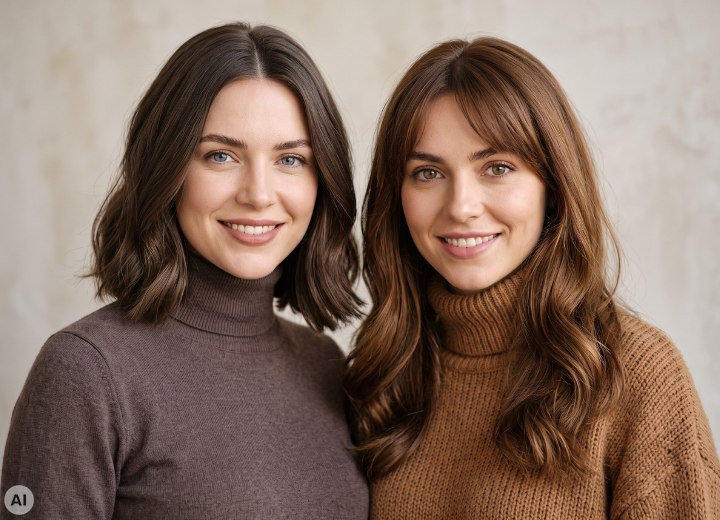
Brown hair is the most common natural hair color worldwide. It ranges from nearly black to soft, light brown, offering incredible versatility.
Cool Browns
Cool brown shades have little to no red or gold undertones, appearing rich, smoky, and understated.Examples: Espresso, Soft black, Ash brown, Mushroom brown, Cool mocha
Warm Browns
Warm brunette shades contain distinct hints of gold, caramel, copper, or red, adding vibrant dimension to the hair.Examples: Chestnut, Dark chocolate, Chocolate brown, Cinnamon brown, Golden brown, Caramel brown, Walnut, Cocoa
Red Hair
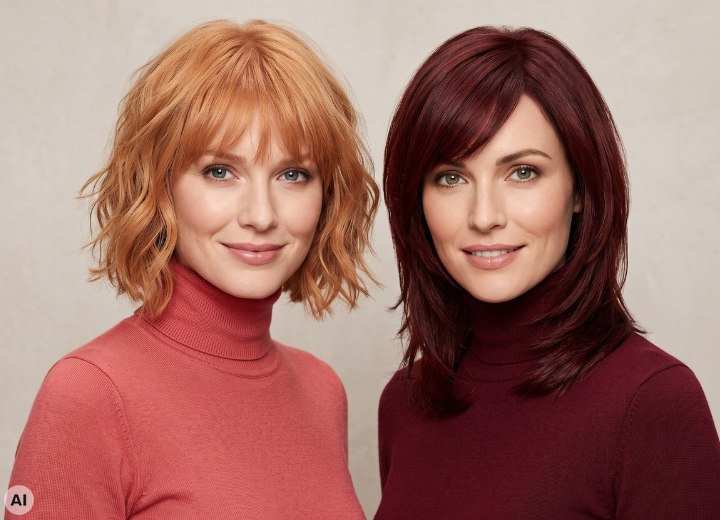
Natural red hair is the rarest hair color in the world, making red shades incredibly popular for those seeking a striking, high-impact look. It spans a vast spectrum from soft copper to deep burgundy.
Light Reds
Lighter reds contain a higher ratio of orange or golden pigments, making them look bright and energetic.Examples: Ginger, Copper, Bright copper, Strawberry blonde
Dark Reds
Darker reds combine rich red pigments with deep brown or violet undertones for a dramatic, elegant appearance.Examples: Auburn, Dark auburn, Cinnamon, Mahogany, Cherry red, Deep burgundy
Gray and White Hair
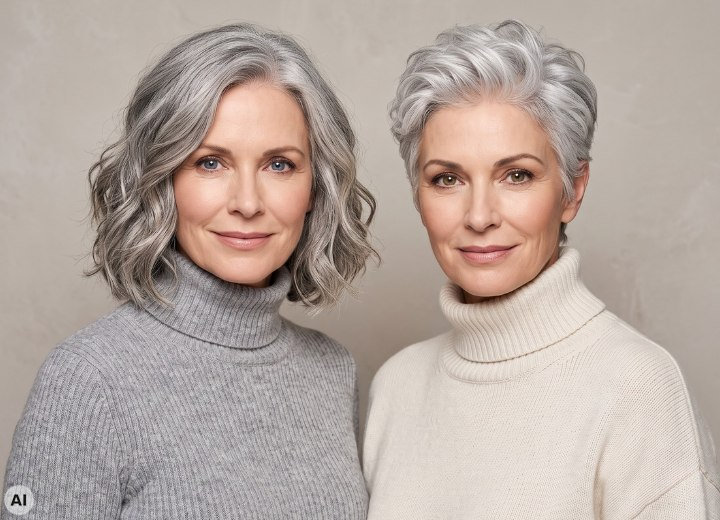
Gray hair develops naturally as pigment production slows with age. While some people begin graying in their twenties, others retain their natural color much longer. In the salon, gray hair is often described by the percentage of pigmented hair remaining rather than by traditional color levels:
• 25% Gray: Most of the natural, original color remains.
• 50% Gray: Creates a classic "salt-and-pepper" appearance.
• 75% Gray: The hair overall appears silver.
• Nearly 100% Gray: The hair typically looks pure white.
Modern Trend Note: Intentionally coloring the hair silver, platinum gray, smoky gray, or steel gray has become highly popular across all age groups.
Hair Tone: Warm, Cool, and Neutral
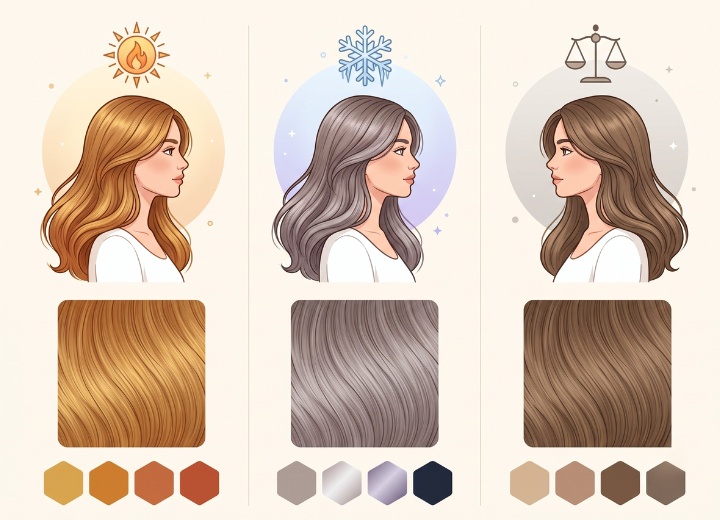
Two people can have hair at the exact same lightness level for instance, a medium blonde - yet look completely different because of tone. While the level determines how light or dark your hair is, the tone determines its "temperature" or hue.
Tones generally fall into three distinct categories:
• Warm Tones: These shades contain dominant pigments of gold, yellow, copper, orange, or red. Warm tones interact with light to look highly vibrant, bright, and reflection-rich, often giving a sun-bathed or fiery effect.
• Cool Tones: These shades feature underlying hints of ash, blue, violet, silver, or gray. Instead of reflecting light heavily, cool tones absorb it slightly, creating a softer, smoky look. In hair coloring, cool tones are frequently used to neutralize unwanted brassy or orange reflecting pigments.
• Neutral Tones: These shades maintain an even balance of both warm and cool pigments. Because neither temperature dominates, neutral tones look exceptionally organic and effortlessly complement almost any skin tone or eye color.
Blending the Families
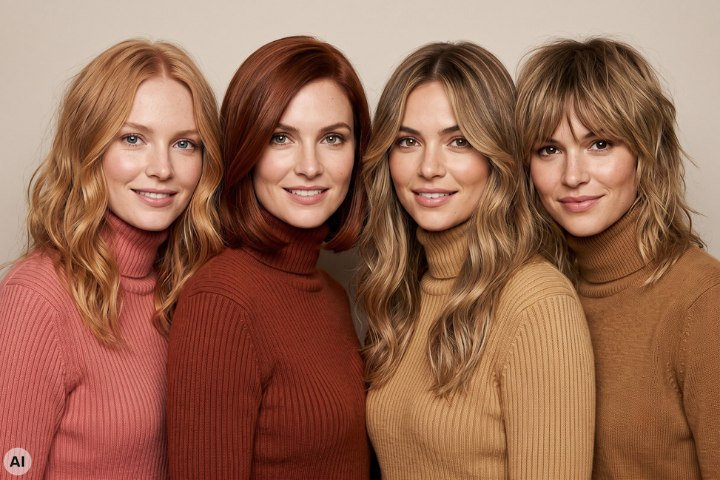
Many of the most beautiful, modern hair colors do not fit neatly into a single category. Instead, they seamlessly blend characteristics from two different color families:
• Strawberry Blonde: A beautiful mix of blonde and red with soft golden-copper highlights.
• Auburn: A rich combination of brown and red that ranges from subtle to highly vibrant.
• Bronde: A custom blend of blonde and brunette that creates natural-looking, sun-bleached dimension.
• Dark Blonde: Sitting perfectly on the border between blonde and light brown, this is one of the most versatile natural shades in existence.
Comparing hair colors becomes simple once you master the basic triad: Family, Level, and Tone. While salons and retail brands will always invent creative names for their dyes, nearly every color can be traced back to blonde, brunette, red, or gray; with an infinite array of beautiful blends waiting in between.
©Hairfinder.com
See also:
Genes and hair color
Psychology of hair colors
Hair colors and our color palette