Sand Can Damage Hair

Q: My mom claims that sand can damage my hair and that I should avoid getting sand in my hair. Is she right? How can sand damage my hair when it feels so soft?
A: Your mom is right. While it feels soft, sand can damage your hair if left untreated. Unlike bleach or hair dyes, sand won't react with the keratin proteins that make up your hair. Instead, sand damages hair through friction, abrasion, and moisture absorption. This especially happens if it stays in your hair while you brush or rub it.
Why Sand Can Damage Hair
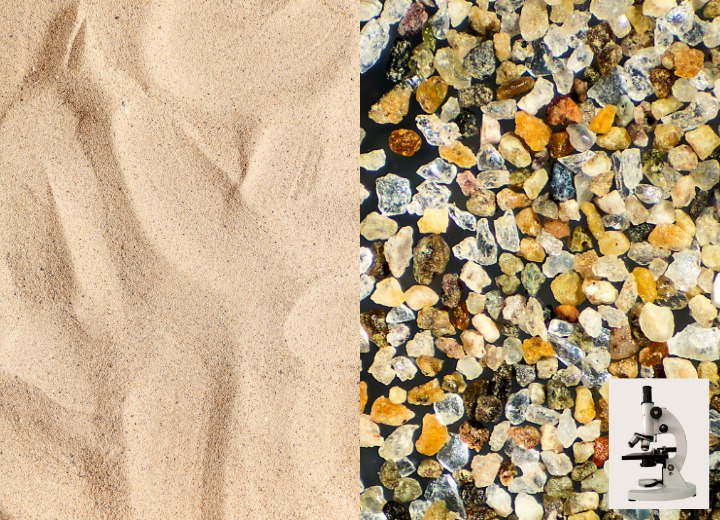
Beach sand is created over thousands of years as ocean waves break down rocks, shells, and coral into microscopic grains. Depending on where you are, beach sand may contain sharp quartz crystals, shell fragments, or volcanic minerals. Desert sand, on the other hand, is created by rocks, eroded by wind over vast distances, making its grains slightly rounder and smoother; though still abrasive enough to damage soft surfaces like hair.Individual grains feel soft in your hand because they are tiny and loose, sliding past each other easily. However, individual quartz grains have a Mohs hardness score of 7, whereas human hair is far softer. Think of it like sandpaper. When trapped in your hair, the tiny, hard edges scrape against your strands.
When sand settles into your hair, a few processes take place:
• Cuticle Damage: Your hair shaft is protected by an outer layer of shingle-like scales called the cuticle. As wind moves your hair, or when you touch your hair, the abrasive sand grains rub against these scales, damaging them. This leaves the inner core exposed, leading to dull hair and potential split ends.
• Moisture Deprivation: Sand is highly porous and draws moisture out of its environment. When sand sits on your scalp and hair shafts, it absorbs natural oils and moisture, leaving your hair dry and prone to snapping.
• Friction and Knots: Sand grains get trapped between hair strands, acting like microscopic wedges that ruin your hair's smoothness. This increase in friction can lead to stubborn tangles.
• "Salt and Sand" Combination: At the beach, sand rarely arrives alone. It often comes coated in saltwater, and microscopic salt crystals bind with the sand grains. This creates a rough coating that clings tightly to hair shafts, making damage even worse if you try to comb it out dry.
How to Safely Remove Sand and Protect Your Hair
You don't need to give up beach days, but you can take a few precautions:• Rinse Before You Rub: Never try to brush or towel-dry hair with sand in it. Rubbing a towel over sand acts like sandpaper against your hair shaft. Instead, flush your hair thoroughly with cool, fresh water first.
• Use Conditioner as a Slip Agent: If sand is stubbornly trapped, saturate your hair with a generous amount of rinse-out conditioner. The conditioner coats the sand grains and lubricates the hair shaft, letting the sand slide out without tearing the cuticle.
• Wear Protective Styles: Tie hair into a loose braid or a bun or cover it with a scarf or wide-brimmed hat. This minimizes the surface area exposed to sand.
• Coat Hair Before Swimming: Dampen your hair with fresh water and apply a light layer of hair oil or leave-in conditioner before heading to the beach. This fills the hair cuticle so sand and saltwater can't cling as easily.
Should You Worry?
A little sand in your hair isn't going to cause sudden disaster. The real concern comes from prolonged exposure: leaving sand in your hair overnight, aggressively brushing through knots, or repeatedly spending time on the beach without thoroughly rinsing your hair afterward.A few hair types are especially vulnerable to sand:
• Fine hair: Thinner strands break much faster under abrasive friction of sand.
• Bleached, dyed, or chemically treated hair: The protective cuticle layer is raised or porous, making it easier for sand grains to tear the inner structure.
• Curly hair: Naturally drier and prone to catching fine grains of sand in tighter curl patterns, requiring extra conditioner to flush grains out smoothly.
Healthy, untreated hair withstands the damaging effects of sand reasonably well. If you rinse thoroughly with fresh water and treat tangled hair gently, you can enjoy the beach worry-free.
©Hairfinder.com
See also: How to recognize damaged hair