Bleaching Retouch & Hair Breakage
A: It's very true.
The bleaching process results from the combination of hydrogen peroxide developer with the alkali of bleaching agents releasing nascent oxygen, which is what affects the pigment molecules, lightening the hair color by turning the colored melanin into oxymelanin (colorless).
The Danger of Overlapping
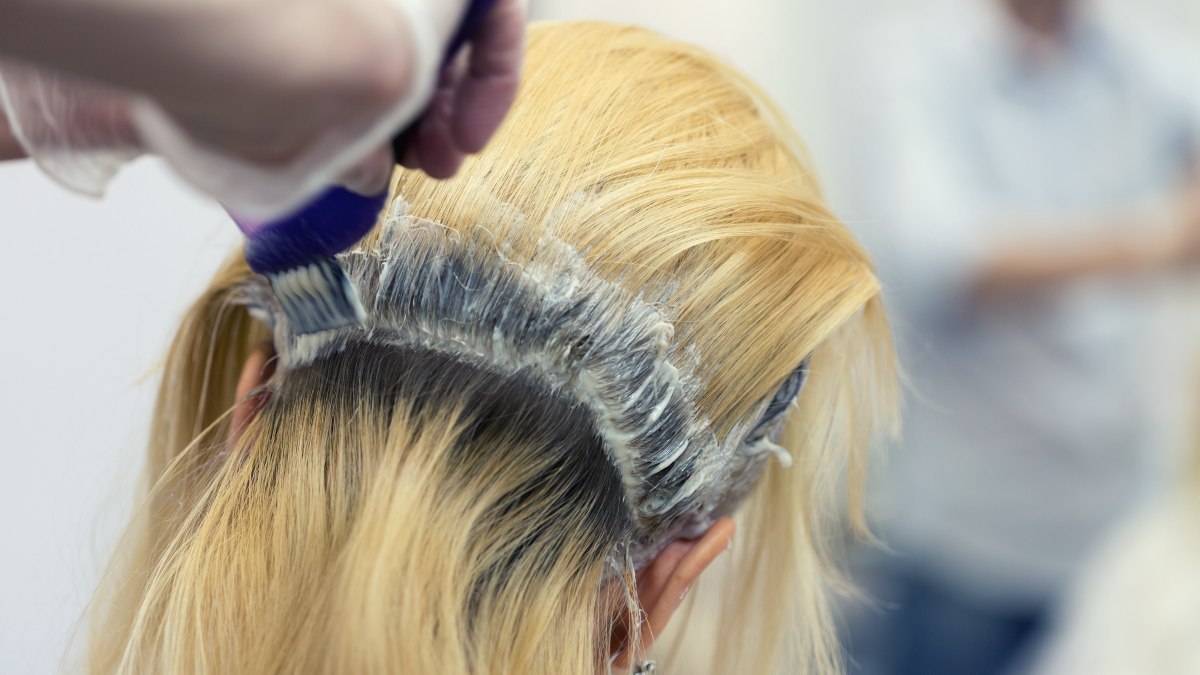
When a retouch service is performed, care is taken to prevent overlap, because the effect of bleaching (and therefore the damage) is cumulative. Above all else, the primary goal is to preserve the structural integrity of the hair shaft and avoid a "chemical cut," while also maintaining an even tone without creating a line of demarcation.Yet, an equally significant concern is having a segment of the hair shaft that has been doubly processed and doubly affected by the chemical stresses of the lightening process. Depending on the condition of the hair at the start and the level of care received by the previously lightened hair, you could end up with hair that is significantly more fragile at the point where the bleaching processes overlapped.
This weakened section often becomes the breaking point of the hair. Because the overlap usually occurs in the same area during repeated touch-up services, that portion of the hair may gradually lose more strength with each additional bleaching. Eventually, the hair may snap during brushing, styling, or even normal washing, leaving shorter, broken pieces around the scalp.
Factors That Increase Breakage Risk
The risk of breakage depends on several factors, including:• The strength of the bleach formula and the volume of developer used.
• Processing time.
• The natural condition of the hair.
• Prior exposure to other chemical services (e.g., permanent coloring, chemical straightening, or perming).
• External stressors such as heat styling and excessive sun exposure.
Professional Application
Experienced colorists carefully apply bleach only to the new growth whenever possible. They work methodically to avoid touching the previously lightened hair and may even leave a tiny margin near the line of demarcation until the final minutes of processing, or apply a protective barrier cream to the previously lightened hair to minimize overlap. This precise application is one of the reasons why bleaching retouches require both skill and patience.Clients can also help reduce the risk of breakage by scheduling regular retouch appointments before the new growth becomes excessively long. Smaller amounts of regrowth are generally easier to lighten accurately, making it less likely that bleach will accidentally overlap onto previously processed hair.
Maintaining the hair with moisturizing treatments, bond-building products, and gentle handling between salon visits can also help preserve its strength.
©Hairfinder.com
See also:
The hair bleaching process
Is it ok to re-bleach my entire head?
Where does the color go when you bleach hair?