Hair Bleaching
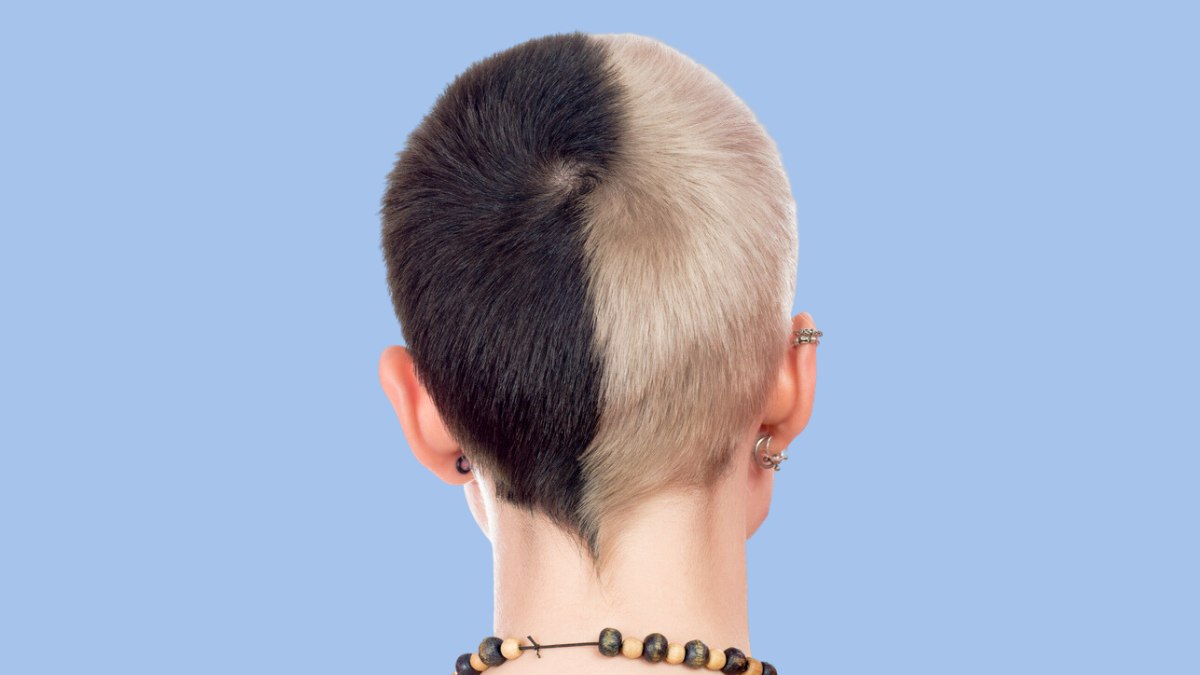
A: As you may know, the color of your hair is the result of a natural pigment called melanin. The amount and type of melanin present in the hair determine its exact color. In general, the darker the hair, the more melanin it contains. Black and dark brown hair have a high concentration of eumelanin, while blonde and red hair contain less melanin overall or different types of melanin.
How a Bleaching Agent Lightens Hair
Here's a more detailed explanation of how a bleaching agent, such as hydrogen peroxide, lightens the hair:Most professional lighteners contain hydrogen peroxide combined with alkaline ingredients, such as ammonia or other alkalizing agents. The alkaline formula raises and softens the cuticle, which is the hair's protective outer layer. This allows the bleaching mixture to penetrate deep into the hair shaft, where the melanin is located.
Once inside the hair, the hydrogen peroxide reacts with the melanin through a chemical process called oxidation. During oxidation, the melanin molecules are broken down into smaller, colorless compounds. In other words, the pigment doesn't disappear. It is chemically transformed into substances that no longer absorb visible light in the same way. Because the natural pigment has been altered, the hair appears lighter.
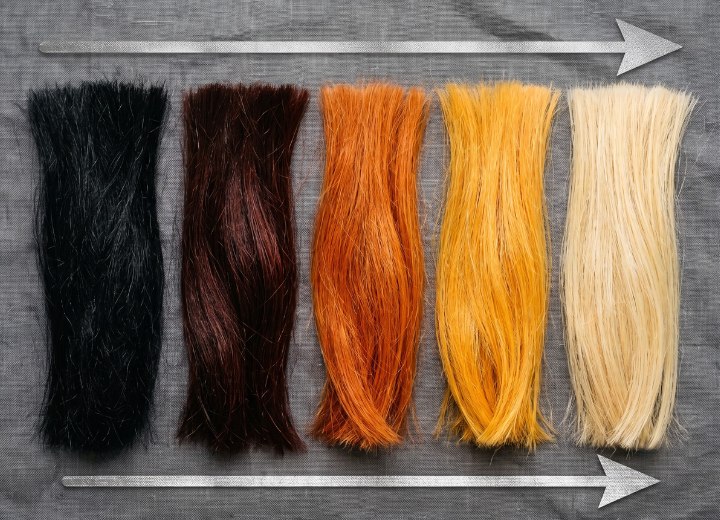
This process doesn't happen all at once. As melanin is gradually oxidized, dark hair typically passes through several underlying stages of warmth. Very dark hair often lightens from black or dark brown to red, then orange, then yellow, and finally pale yellow before it reaches the lightest blonde.
These warm tones are not created by the bleach; they are the natural underlying pigments that become visible as the darker melanin is broken down.
©Hairfinder.com
See also:
How does bleaching hair work?
How often can you bleach your hair?
Is it safe to use a home bleaching kit?