Ponytail and Hair Length
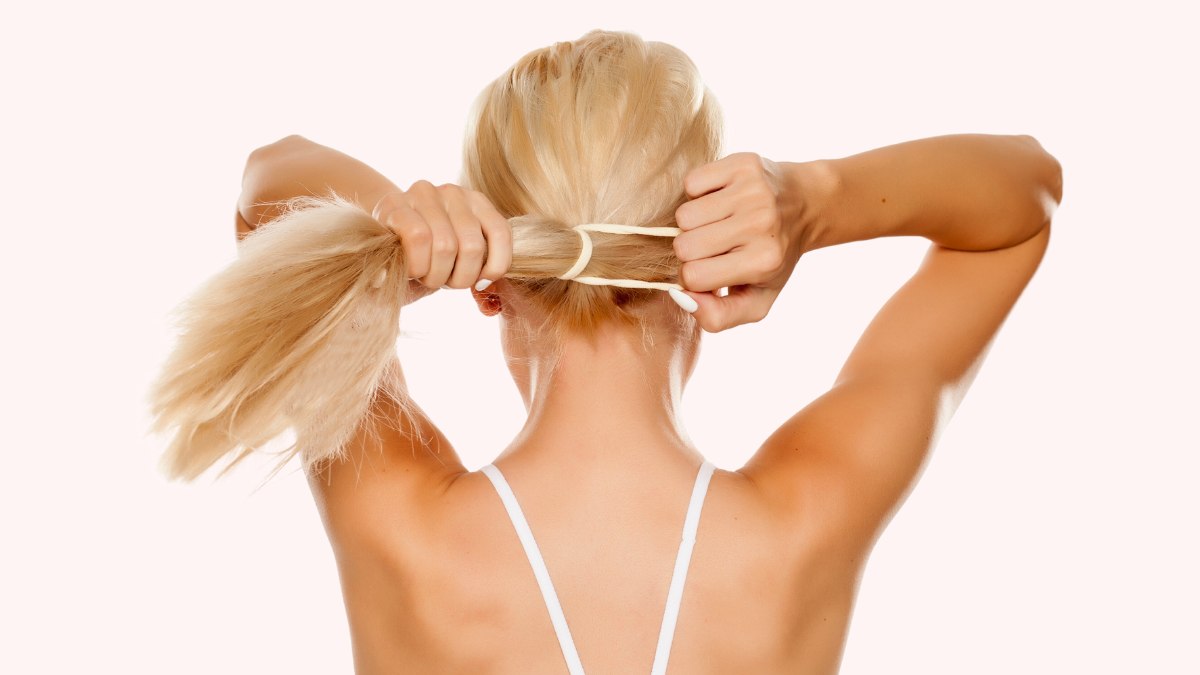
A: Well, at least this is a simple question.
In order to tie the hair back into a ponytail, it has to be long enough that the hair furthest from the point at which you want the ponytail to be located will reach beyond that point.
The hair at the back of the head, in this case, doesn't have to be as long as the hair in front, but it should still be long enough that you can direct it to and beyond the point at which you form the ponytail. Likewise, if you prefer a higher ponytail positioned near the crown of the head, the hair at the nape of the neck must be long enough to travel upward to that location. The higher the ponytail, the more length is generally required from the hair closest to the neckline.
Benchmarks and Hair Thickness
As a general rule, most people find that hair around chin length or a little longer can usually be gathered into a small ponytail, although the result may include shorter layers or wispy pieces around the face and neck. Hair that reaches the shoulders or beyond is typically much easier to pull back neatly into a full ponytail.Hair density and thickness also play a subtle role here. Thick or high-density hair creates a larger circumference at the base of the ponytail, meaning you actually need a bit of extra length just to pull the bulk of the hair through the elastic. If your hair is on the shorter side, styling products like pomade, hairspray, or bobby pins can help secure those stubborn pieces that don't quite reach.
How the Haircut Shapes the Ponytail
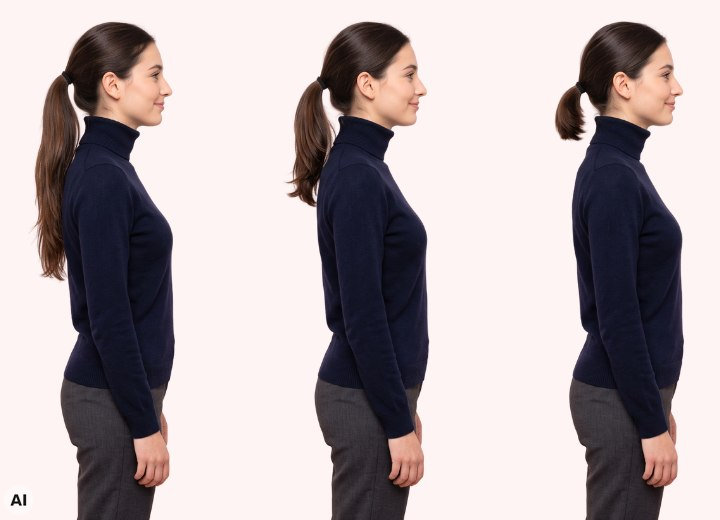
The length of the hair at the various points on the head will determine the finished look of the ponytail, of course. If your hair is shorter in back and long enough in front to pull back into a ponytail, you'll end up with a stubby, short ponytail. This is common with graduated haircuts, where the back is intentionally cut much shorter than the front.If your hair is all one uniform length over the entire head and you pull it back, the ponytail will naturally taper toward the ends. On the other hand, if the hair is cut in a blunt line with longer lengths toward the front, you may end up with a ponytail that has a thicker, more blunt-looking end. Layered hair will usually produce a softer ponytail, with shorter pieces creating volume rather than a perfectly smooth appearance.
The Impact of Hair Texture
Hair texture also plays a role. Straight hair generally slips into a ponytail more easily, while curly hair may appear shorter because of shrinkage, even though it has enough actual length to be tied back.Wavy and curly hair often benefits from gently stretching or smoothing the hair before gathering it, although many people prefer to embrace the natural texture for a fuller-looking ponytail.
Hair Health
Use snag-free ponytail elastics or fabric scrunchies to prevent pulling and breaking the hair. Avoid wrapping the elastic too tightly, and try not to wear your ponytail in exactly the same position every day. Repeated tension in one area can contribute to hair breakage and, over time, a form of hair loss along the hairline known as traction alopecia.©Hairfinder.com
See also:
How to make a ponytail with poof
Is wearing your hair in a ponytail bad for your hair?
How to keep a high ponytail up all day long