Hair Structure & Blow Drying
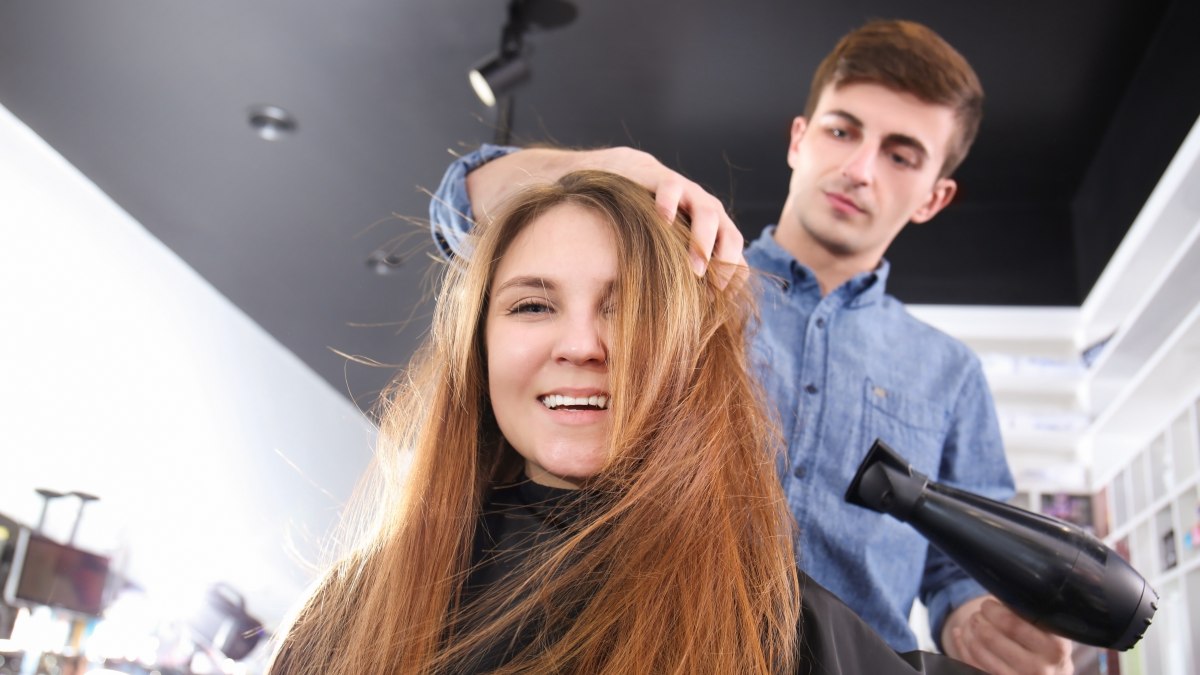
A: The effect blow drying has on the hair comes from a combination of moisture and thermal heat acting on the hair’s keratin structure.
Water acts directly to temporarily break the physical hydrogen bonds in the hair. It is this temporary breaking of hydrogen bonds that allows hair to be curled or straightened using wet roller sets, blow dryers, curling irons, and flat irons. When water evaporates and the hair dries, these hydrogen bonds reform into their new configuration.
Using a blow dryer heats and dries the hair simultaneously. The heat temporarily softens the hair matrix, while the drying process removes water to lock the hydrogen bonds back into their new shape.
Styling and Straightening
When the hair is pulled taut using a comb or brush while blow drying, the hair chains are held stretched while the hydrogen bonds reform in a straighter configuration. Once dry, the bonds complete their reformation in this straight pattern.Because heat makes the hair shaft pliable, a blow dryer can be used with different styling tools to create bends, volume, and waves:
• Round brushes introduce soft curves and volume.
• Flat paddle brushes deliver smooth, even straightness.
Ending your styling with a blast of cold air using the dryer's "cool shot" button sets the hair's shape and hardens the newly reformed bonds in place, while setting a smooth alignment along the outer cuticle layer.
Preserving Natural Curls
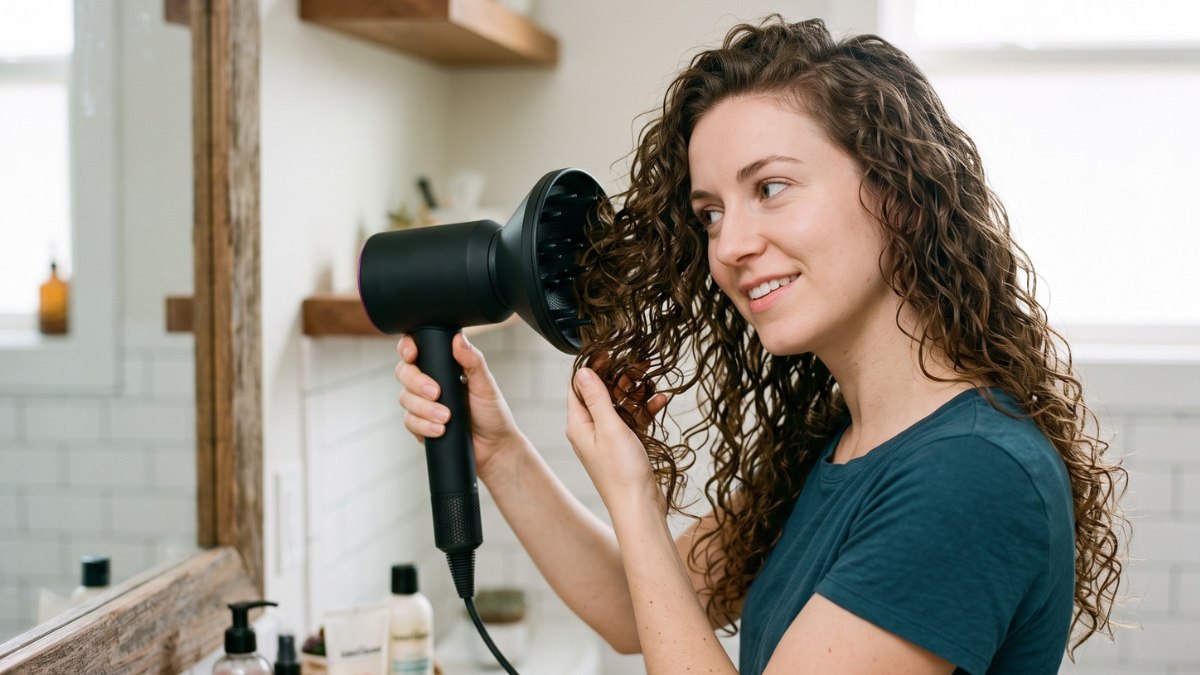
The effects of heat and airflow on hydrogen bonds must be carefully managed when maintaining naturally curly hair. Standard blow drying can disrupt curl formation through strong mechanical force.Diffuser attachments are designed to prevent concentrated airflow from pulling the natural curl pattern straight while drying:
• The diffuser disperses the airflow over a wider area, reducing air velocity.
• It diminishes the direct heat intensity delivered to single strands.
This allows hair to be gently cradled or scrunched so natural curls dry intact without being blown apart into frizz.
Heat Damage and Moisture Loss
Heat must be controlled carefully to avoid damaging the hair shaft. Excessively high temperatures on damp hair can cause trapped water inside the hair shaft to evaporate into steam too rapidly. This localized pressure causes microscopic cracking in the cuticle.If the hair is already porous or chemically processed, unmanaged dryer heat leads to excessive moisture loss, elevated cuticle lifting, brittleness, and breakage.
Applying a thermal heat protectant before blow drying is essential: it coats the hair shaft with heat-conducting polymers, distributing thermal energy evenly and reducing friction from styling tools to safeguard the cuticle layer.
©Hairfinder.com
See also:
How to blow dry hair
Heat styling basics
The best blow dryer