Flat Ironing and Split Ends

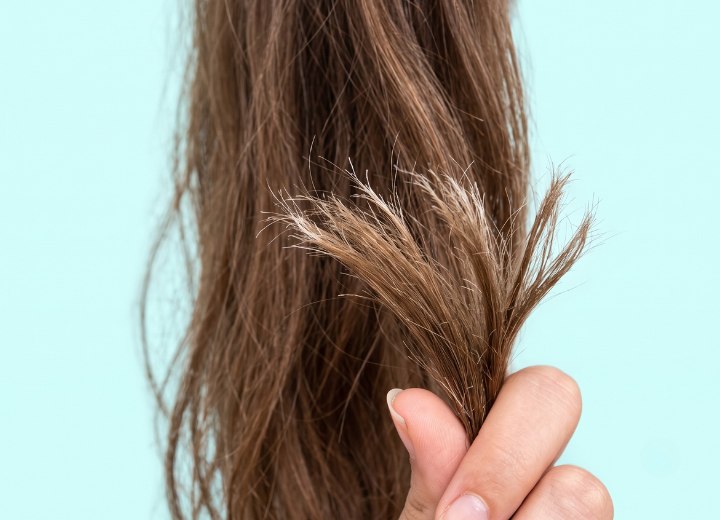
A: It is very likely that straightening your hair contributed to the development of split ends. Heat styling, especially when done frequently or at high temperatures, weakens and wears away the cuticle (the protective outer layer of the hair). Once the cuticle is compromised, the inner cortex of the strand becomes exposed and vulnerable to splitting and breaking.
Understanding Cumulative Hair Damage
The key thing to remember is that hair damage is cumulative, and the ends of your hair are significantly older than the hair at your scalp. On average, human hair grows about 1/2 inch (1.2 cm) per month. This means that every 1/2-inch increment of length on each strand is approximately one month older than the 1/2-inch increment above it.If your hair is 6 inches (15 cm) long, the tips have accumulated a full year's worth of daily stress. During that time, they have been exposed to shampooing, towel drying, brushing friction, sunlight, wind, contact with clothing and pillows, and any previous chemical or heat treatments. Flat ironing was likely the final tipping point that caused already weakened ends to fray and split.
Why Damage Takes Time to Show Up
Keep in mind that split ends don't always appear immediately after heat exposure. Hair can be gradually weakened over weeks or months before the damage becomes visibly apparent. If your hair was already dry or had undergone chemical processes like coloring, bleaching, or perming, it was even more susceptible to heat damage.The Impact of Temperature
The temperature of your flat iron and your technique make a huge difference. High heat (above 300°F/150°C) denatures the proteins in the hair shaft and strips away its moisture. Passing the iron over the same section multiple times multiplies this stress.Using a heat protectant product before styling creates a protective thermal buffer, and keeping the iron at the lowest effective temperature for your hair type significantly reduces the risk of damage.
Can You Repair Split Ends?
Unfortunately, you cannot repair a split end once it forms. Because hair is non-living tissue, it cannot heal itself. Think of it like trying to repair a cracked piece of wood. You can apply glue to hold the pieces together, and it may look whole from a distance, but the structural crack remains.Hair products marketed to "mend" or "repair" split ends work by coating the strand in polymers or silicones to temporarily stick the split closed. This effect is purely cosmetic and washes away with your next shampoo.
Why Trimming is Necessary
Your best approach is to trim away the damaged ends and focus on preventing future breakage.If left untreated, a split can travel further up the hair shaft, leading to greater breakage and making your hair appear thin and frayed. A small trim now removes the split section and preserves the overall strength and appearance of your hair as it continues to grow.
How to Protect Your Hair
To protect your hair, always apply a heat protectant before styling, limit flat ironing to once or twice a week, and give your hair regular breaks by letting it air-dry whenever possible.©Hairfinder.com
See also:
Flat iron styling
How often you can use a hair straightener
How badly will straightening my hair twice a week damage it?