Blow-dry or Air-dry Hair

Q: Is it better to blow-dry your hair or air-dry? If blow-drying, how should I do it so that my hair stays straight and doesn't go frizzy?
A: From a hair health standpoint, the idea that air-drying is always better is actually a common myth. While high heat from a blow dryer can damage the outer cuticle, prolonged air-drying forces the hair shaft to stay swollen with water for hours. This prolonged swelling puts stress on the inner structure of the hair and can cause structural weakening.
To keep your hair straight and smooth during the blow-drying process:
• Prepare properly: Gently squeeze out excess water with a soft towel or microfiber cloth rather than rubbing vigorously. Never brush soaked, dripping hair with a standard paddle brush. Use a wide-tooth comb instead, as wet hair is at its weakest point. Before applying heat, apply a heat protectant evenly to damp hair to form a protective barrier that minimizes damage.

• Direct the airflow downward: Always direct the airflow away from the scalp along the hair shaft, moving downward from roots to ends. Think of your hair cuticle like roof shingles. They overlap in one direction, and you need to blow the air in the direction those shingles point. Blasting air upward or at random angles ruffles those cuticle scales, creating a rough texture and frizz.
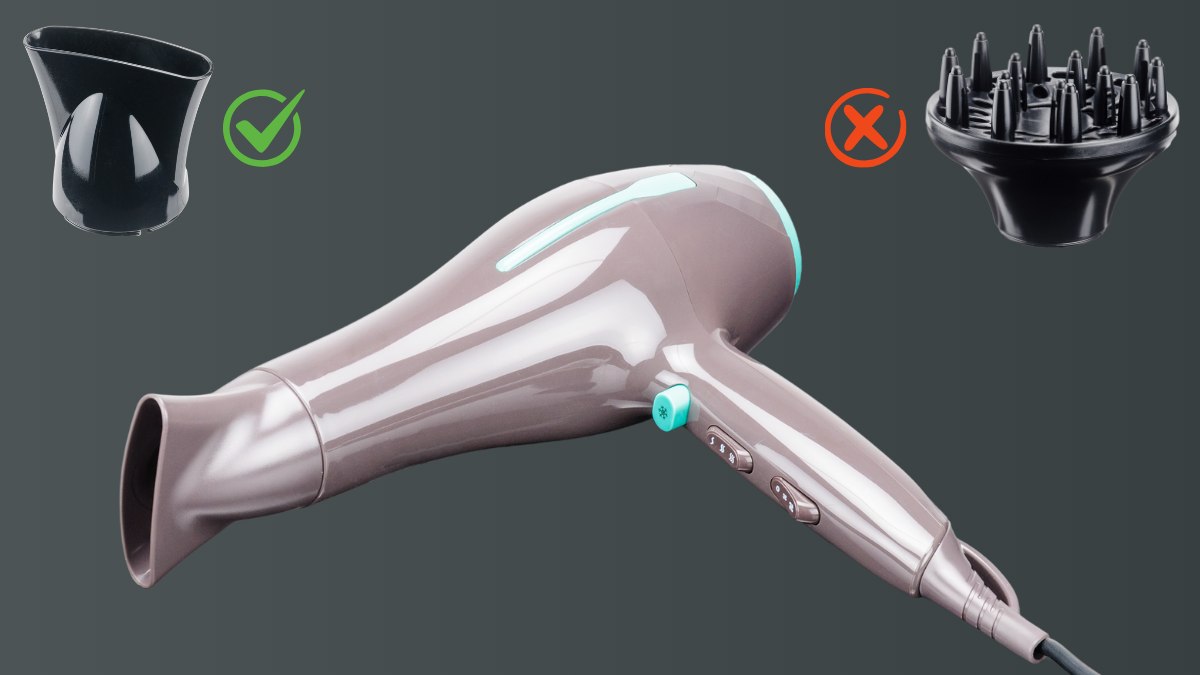
• Use a concentrator nozzle: Attach the flat, narrow concentrator nozzle that comes with your hair dryer rather than using the raw barrel or a diffuser. The concentrator directs airflow precisely along the hair shaft, whereas a diffuser is designed to scatter airflow to enhance natural waves and curls. Ensure the metal tip of the nozzle never physically touches your hair, as this can scorch the cuticle.
• Maintain distance and motion: Keep the hair dryer moving constantly, maintaining a distance of at least 6 inches (15 cm) from your hair. Never hold it in one spot for more than a second or two to prevent localized hot spots that lead to breakage.
• Work in sections with tension: Clip your hair up and work in manageable sections from the bottom up. Use a paddle brush or large round brush to pull each section taut as you dry. It is this critical combination of controlled heat, tension, and downward airflow that physically realigns the hydrogen bonds in your hair for a sleek, straight finish.
• Seal with the cool shot: Finish each section by running the cold air button (cool shot) over the hair. While heat breaks and reshapes hydrogen bonds, cool air locks them in place, sealing the cuticle and preventing ambient moisture from instantly bringing back frizz.
• Lock out humidity: Once dry, finish with a light coat of anti-humidity spray, lightweight hair oil, or serum. This locks out surrounding air moisture, keeping your straight hair smooth for days.
©Hairfinder.com
See also:
How to blow dry hair
How to blow dry hair straight
What are the physical effects of blowdrying on the hair structure?