Alcohol and Hair Growth
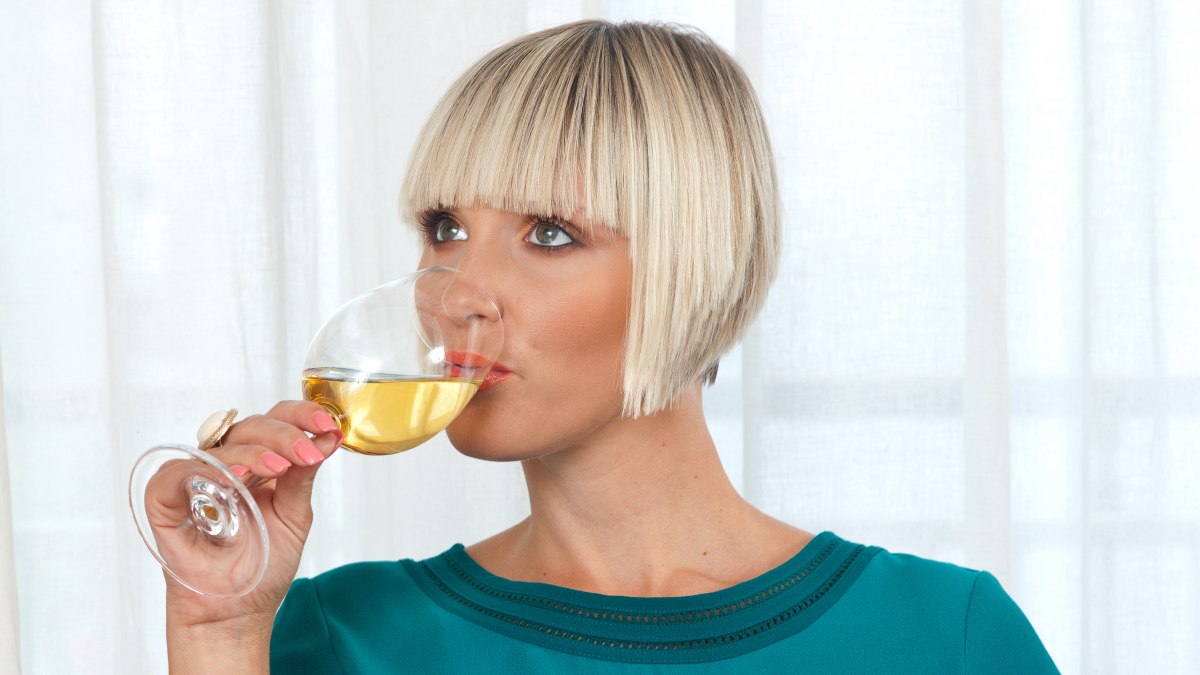
A: The answer to both questions is yes. Heavy drinking can significantly impact your hair's health and growth. However, alcohol does not directly attack your hair follicles; instead, it triggers a cascade of secondary internal issues (nutrient depletion, dehydration, and hormonal stress) that create a hostile environment for hair growth.
Dehydration presents another major concern. Alcohol acts as a diuretic by suppressing the hormone vasopressin, causing your body to lose fluids much more rapidly than normal. This chronic dehydration limits the vital fluid and blood circulation reaching the root of your hair. Because your hair follicles rely heavily on this nutrient-rich blood supply to sustain their active growth phase (anagen phase), a lack of proper hydration leaves them struggling to produce strong, healthy strands.
The problems don't stop there. Excessive alcohol consumption disrupts your body's metabolic balance, severely interfering with your ability to absorb and maintain healthy iron levels. While severe malnutrition from heavy drinking can lead to iron deficiency (which stalls the hair cycle and is a common culprit for hair thinning in women) chronic alcohol use can also dangerously disrupt how your liver stores iron. The combination of dehydration, erratic iron levels, and nutrient depletion creates a perfect storm for a type of temporary, widespread hair shedding.
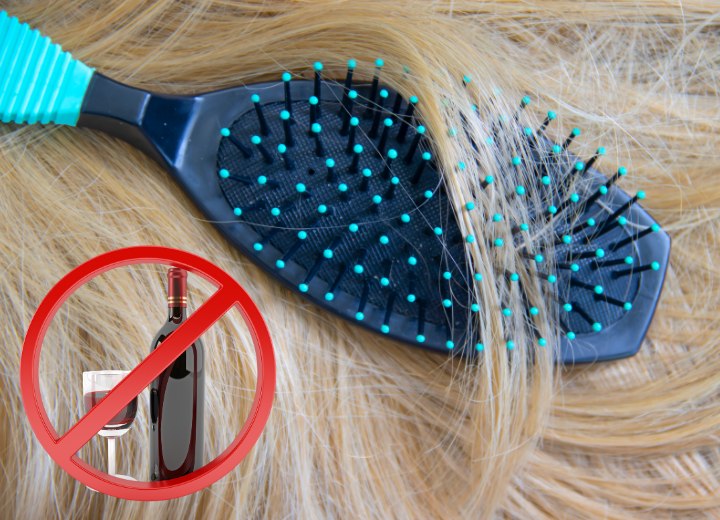
Alcohol can affect your hair from the outside as well, but it depends entirely on the type of alcohol used in your hair care routine. Many styling products, like hairsprays and quick-dry gels, contain short-chain alcohols (such as Isopropyl Alcohol, Ethanol, or Alcohol Denat) to help the product evaporate quickly. If your hair is already internally compromised, these specific alcohols will strip away natural moisture and protective oils, leaving your strands vulnerable to heat styling and brushing. However, you do not need to avoid all alcohols; fatty alcohols (such as Cetearyl, Cetyl, or Stearyl alcohol) found in conditioners are highly moisturizing and actually help smooth and protect damaged hair.
Fortunately, most of these internal effects are completely reversible. Because this type of hair thinning is metabolic rather than genetic, reducing your alcohol consumption, rehydrating, and focusing on proper nutrition allows your body to recover. Your hair follicles have a remarkable ability to bounce back once a healthy internal environment is restored, though it may take several months to see noticeable improvements since hair naturally grows at a slow, gradual pace.
©Hairfinder.com
See also:
How strong are hair roots?
What is hair made of and how does it grow?