How to Remove Paint from Hair
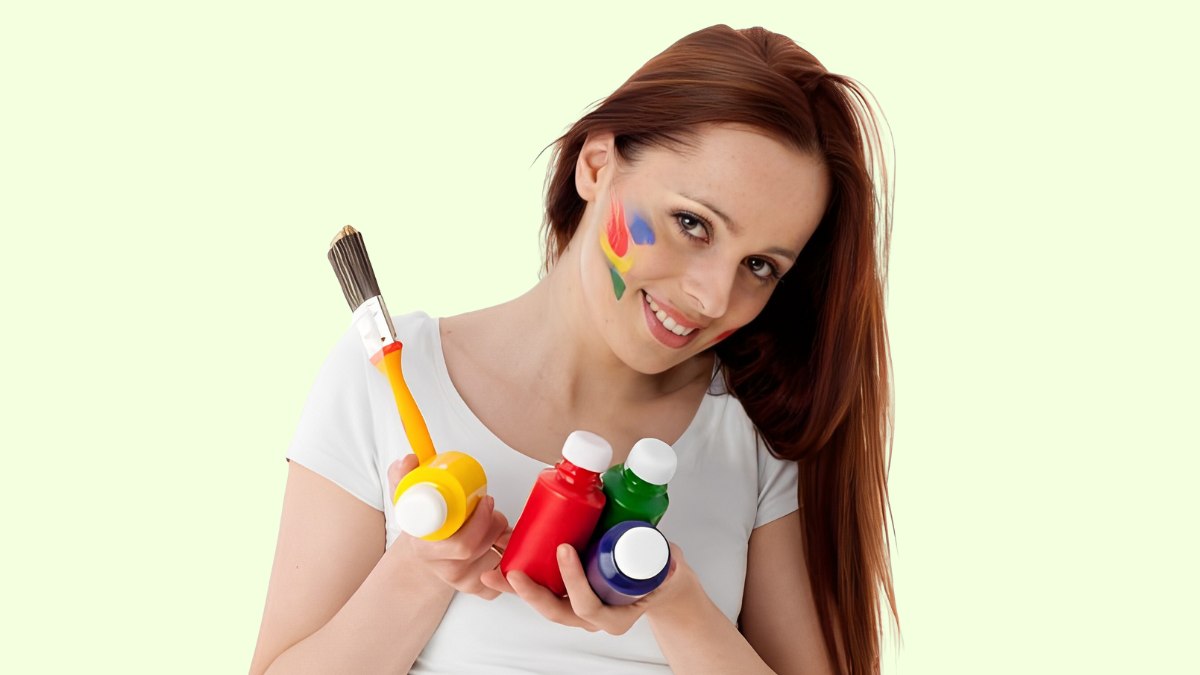
A: Well, there is the obvious option of using turpentine or mineral spirits (paint thinners) to remove the paint from the hair, but these are strong compounds that can have adverse effects. They are severe skin irritants that can cause chemical burns on the scalp, not to mention the very strong odors associated with them.
Fortunately, there are much gentler, chemically sound ways to remove paint from your hair, and in most cases, they work very well. The best method depends on whether you're dealing with a water-based paint or an oil-based paint.
For Water-Based Paints (Latex or Acrylic)
If the paint is water-based, start by thoroughly wetting the affected hair with warm (not hot) water. Apply a generous amount of your favorite shampoo directly to the painted strands, working it in gently with your fingers. If the paint has already dried, let the shampoo sit on the hair for several minutes to re-hydrate and soften the binding polymers before attempting to remove it.If standard shampoo struggles to break down stubborn, dried acrylic paint, you can apply a drop of standard dish soap directly to the spot. Dish soap is a powerful degreaser that will speed up the process, but it is highly stripping, so use it sparingly.
Once the paint begins to loosen, use a fine-tooth comb to gently work the softened paint out of the hair. Start near the ends of the painted section and slowly work upward to avoid compounding the paint into a knot or breaking the hair. Be patient! Trying to force the paint out can cause unnecessary hair-damage.
If needed, repeat the shampoo application several times until the remaining paint comes free. After the paint has been removed, rinse your hair thoroughly and follow up immediately with a moisturizing conditioner (or a deep conditioning treatment if you used dish soap) to restore softness and smooth the cuticle.
For Oil-Based Paints (Alkyd)
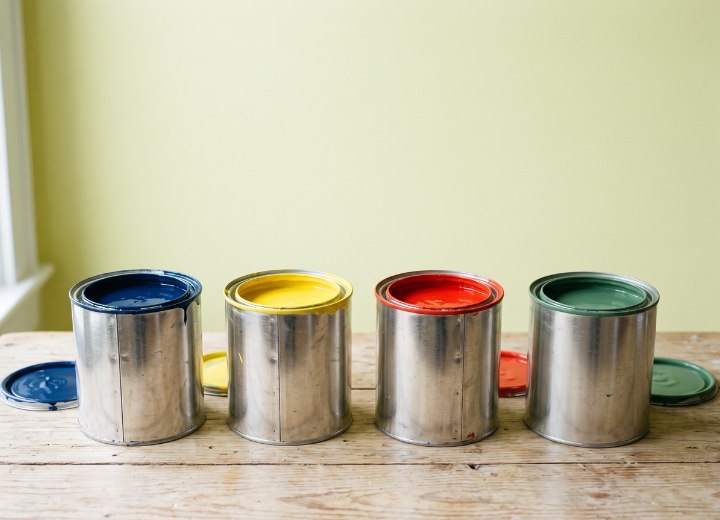
For oil-based paints, you need to use the principle of "like dissolves like." Olive oil is one of the safest and most effective household remedies to break down the oil binders without damaging your hair's keratin structure. Generously apply olive oil to the paint spots, making sure every bit of dried paint is well coated. Massage the oil gently into the hair, allowing it to penetrate around the paint and loosen its grip on the strands.If olive oil is too runny and drips down your neck or toward your eyes, you can use smooth peanut butter or Vaseline instead. They share the same oil-dissolving properties but are much easier to spot-apply.
If the paint is still fresh, you may be able to work it out immediately with a fine-tooth comb. However, if the paint has dried or there is a large amount of it, apply a liberal amount of your chosen oil, wrap the section with plastic wrap or a shower cap, and allow it to sit for several hours. The plastic wrap traps your natural body heat, which accelerates the softening process while deeply conditioning the hair.
Once the paint has loosened, carefully comb it out a little at a time, working from the ends upward. Wipe the comb clean frequently on a paper towel so you don't transfer paint back onto the hair.
Afterward, you will need to shampoo thoroughly to remove both the paint residue and the heavy oil. For the best results, apply the shampoo directly to the oily hair before wetting it with water. Shampoo binds to oil much better when it isn't competing with a shield of water. Rinse, shampoo a second time if necessary, and finish with conditioner.
Additional Tips
• Avoid Scraping: Do not scrape or pick dried paint off with your fingernails, as this can easily strip the hair shaft or pull hair out by the root.• Isolate the Area: If the paint is concentrated in one small section, work on that area separately instead of trying to treat your entire head.
• Watch the Temperature: Warm water helps soften many paints, but avoid using very hot water. High heat can cause certain types of paint to cure further or become stickier, making them harder to remove.
• Check the Label: If you're unsure whether the paint is water-based or oil-based, check the paint can or look up the product label before choosing a removal method.
• Patience Wins: For particularly stubborn spots, several gentle treatments are usually better than one aggressive attempt. Taking your time protects the long-term health of your hair.
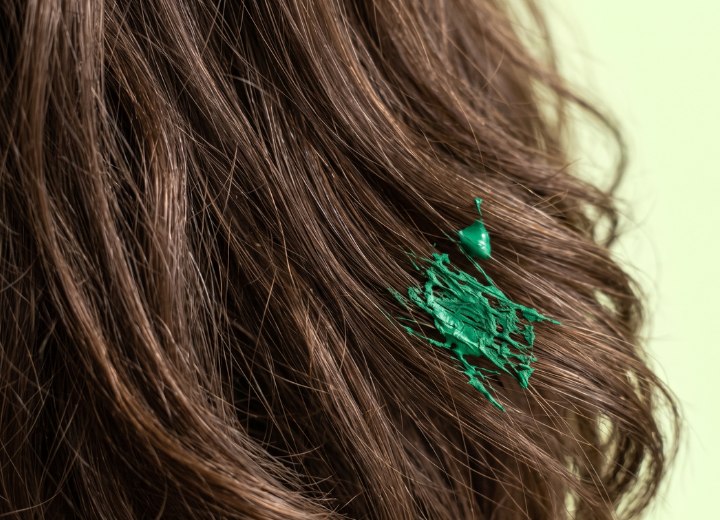
The good news is that, in most cases, paint sticks to the outside of the hair rather than penetrating the core. With a little patience and the right removal method, you can usually remove even fully dried paint without having to cut your hair.
©Hairfinder.com
See also:
Remove tar from hair
Remove pine sap from hair
Remove bubble gum from hair