Hairnet
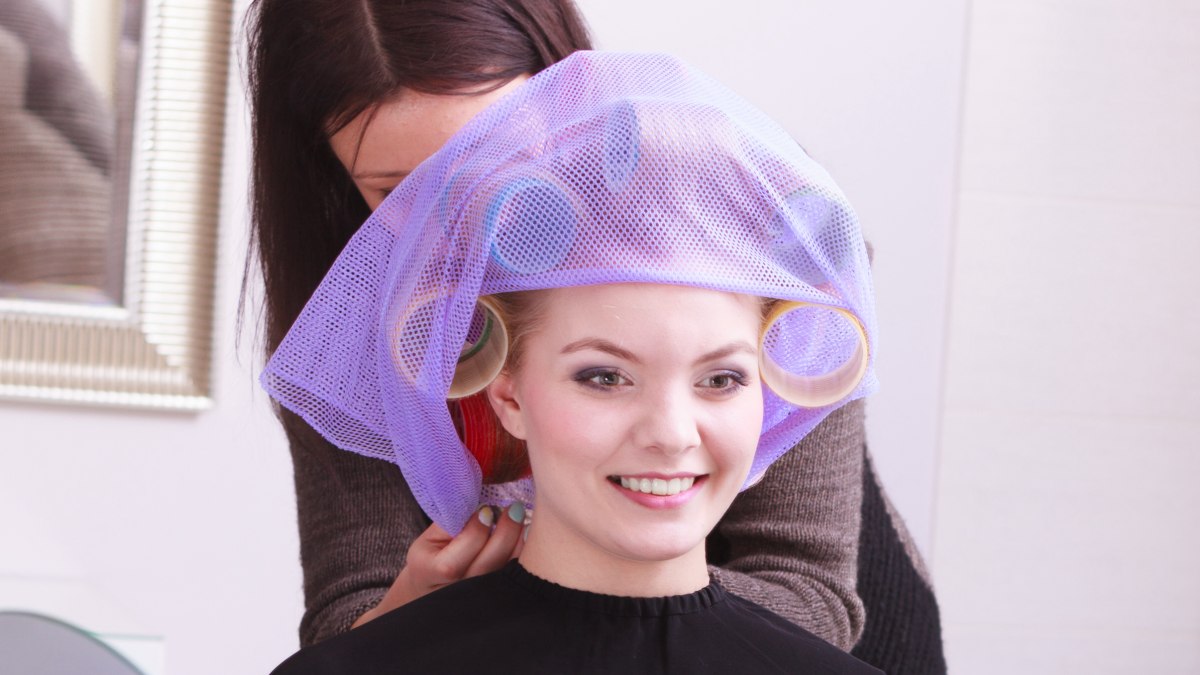
Q: Do you recommend the use of a hairnet to keep perm rods in place and keep them from moving until you finish the perm process?
A: I can see why a hairnet might seem useful in the perming process, but for the vast majority of cases, if the perm rods are wrapped properly and wound with uniform, moderate tension, there is no need for anything extra to keep them in place. They shouldn't move. The rod itself, proper sectioning, end papers, and correct band placement are enough to hold everything securely throughout the process.
Note: While hairnets aren't used to secure rods, loose, lightweight plastic processing caps are routinely used over rods to trap body heat and prevent the chemical lotion from drying out.
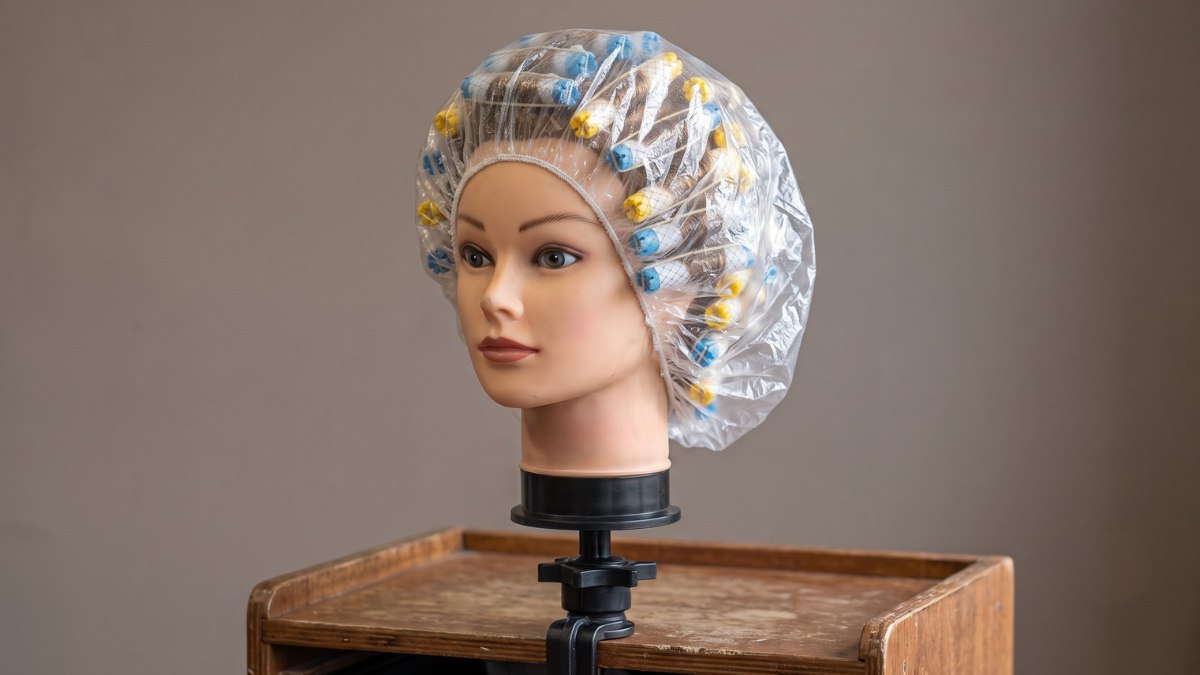
There may be rare situations where a very loose, lightweight net is placed over rods simply to keep them from catching while someone moves around. If used for that purpose, it must remain completely loose so it doesn't press the rods down or add tension. This is a minor convenience, not a necessary part of wrapping a perm.
Remember that the hair is undergoing a delicate chemical reaction during a perm. Disulfide bonds are actively being broken and reshaped. You want to avoid unnecessary pulling, friction, or pressure while the hair processes; the less you disturb the rods once wrapped, the cleaner the final curl.
For ongoing care after the perm, using a silk or satin cap or pillowcase at night is highly recommended. Sleeping with a silk or satin bonnet protects the newly formed curls from friction against cotton bedding, keeping curls smooth and reducing breakage and frizz. Especially since perming leaves the hair structure more porous and prone to mechanical roughing.
©Hairfinder.com
See also:
How to wrap a perm
Plastic no teeth rollers not staying in place
How can I avoid floppy or loose perm rods?