Shades of Gray Hair
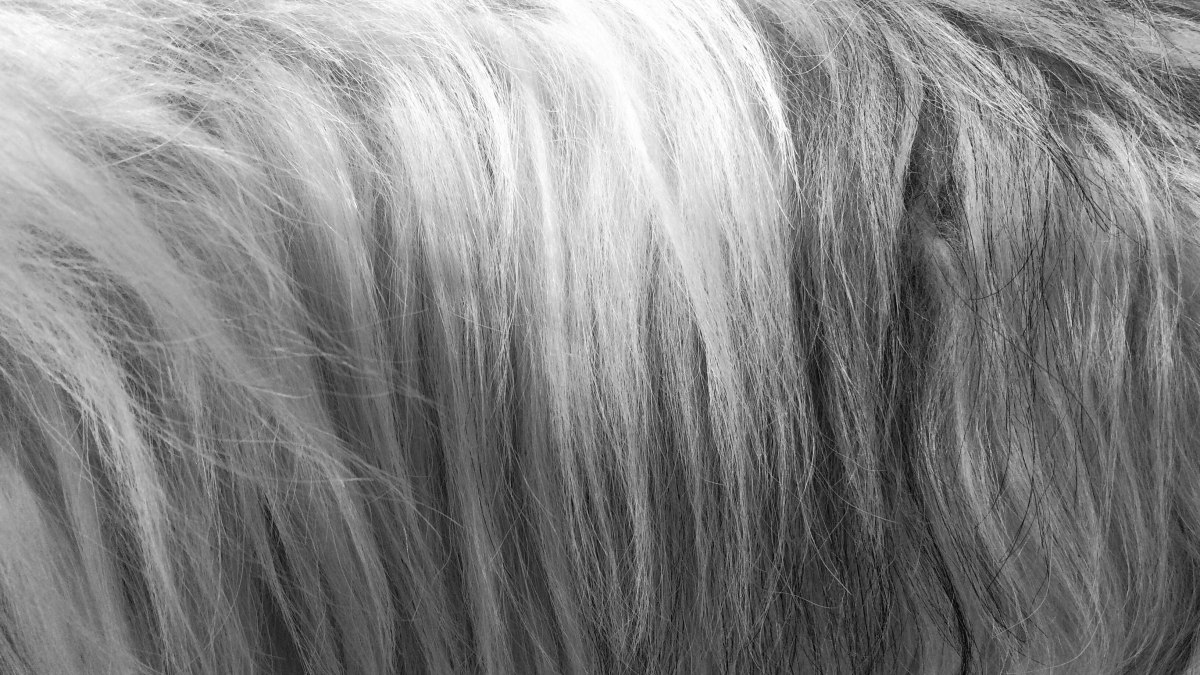
Q: Are there different shades of gray hair, or do they just appear different due to the mix of other hairs on the scalp? I'm trying to find out if all gray hair has a silvery appearance, or if some of it is actually gray or white in color.
A: Once a hair strand turns gray or white, it means the hair follicle has slowed down or stopped producing melanin (the pigment that gives hair its natural color).
• Partial Pigment Loss (Actual Gray): When pigment-producing cells (melanocytes) slow down but haven't shut off completely, a strand emerges with a reduced amount of melanin, producing a true gray, grayish-brown, or pewter shade.
• Complete Pigment Loss (White/Silver): When pigment production shuts off entirely, the hair shaft loses all melanin and becomes transparent.
However, the "gray" hair you see overall on a person's head is largely an optical illusion. It is primarily created by the salt-and-pepper mix: a combination of naturally pigmented dark hairs sitting right next to translucent white ones. The density of white hairs compared to dark hairs dictates whether the overall hair looks steel gray, silver, or snow white.
Why White Hair Doesn't Look Clear
Even without pigment, hair isn't clear like glass. The hair shaft is made of keratin protein filled with microscopic air pockets. When light hits these air gaps and structures, it scatters in every direction, causing the strand to appear white.Additionally, keratin naturally has a faint yellowish tint. Environmental factors - such as UV exposure, hard water minerals, heat styling, or smoking - can amplify this, making unpigmented hair look yellowish or off-white rather than silvery.
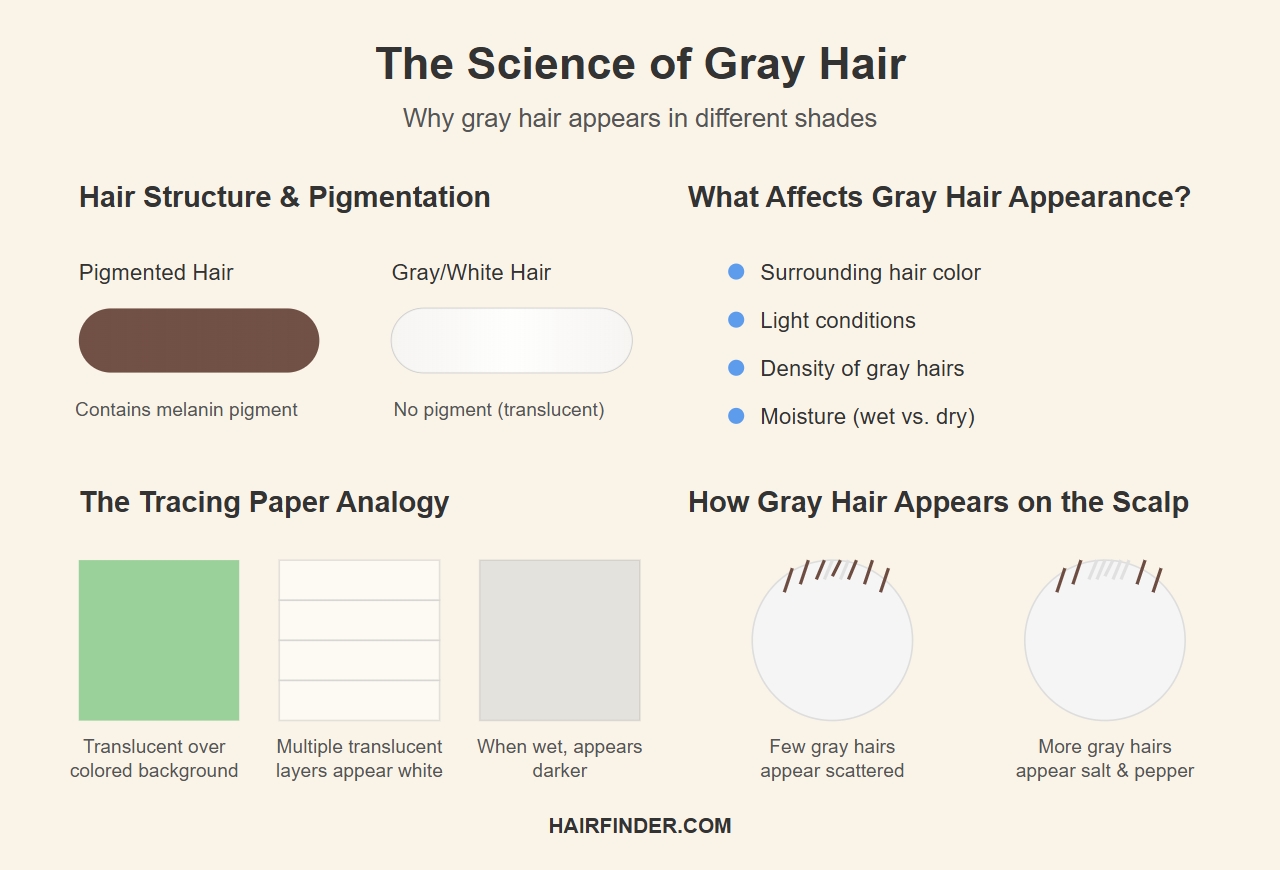
The Tracing Paper Analogy
To illustrate how it works, take a sheet of tracing paper. Lay the tracing paper over colored sheets of paper and stack another sheet of tracing paper on top, then observe the color.The more sheets of tracing paper you stack together, the whiter and more opaque the pile becomes because light scatters across the multiple translucent layers. When placed on top of colored paper, the light bouncing off the white tracing paper blends with the reflected color beneath it, making the paper appear to absorb or mute the color. This is very similar to how white and pigmented hair strands blend together on the scalp.
Why Hair Appears Darker When Wet
When hair gets wet, water coats the strands and fills in the tiny air gaps inside and between hair fibers. Because water and hair keratin have a similar refractive index, light passes straight through rather than scattering off internal surfaces. With less light bouncing back to your eyes, the hair appears darker and more translucent.This effect is even more pronounced with unpigmented hair, which relies entirely on air pockets for its white appearance. Try the tracing paper test again, but this time, mist the tracing paper with water. You'll see it instantly become clearer and darker!
©Hairfinder.com
See also:
Why and how does hair turn gray?
How can I speed up the change of my hair from gray to white?
My hair is snow white, but I detest those old lady white haircuts. Any advice?