How to Remove Bleach
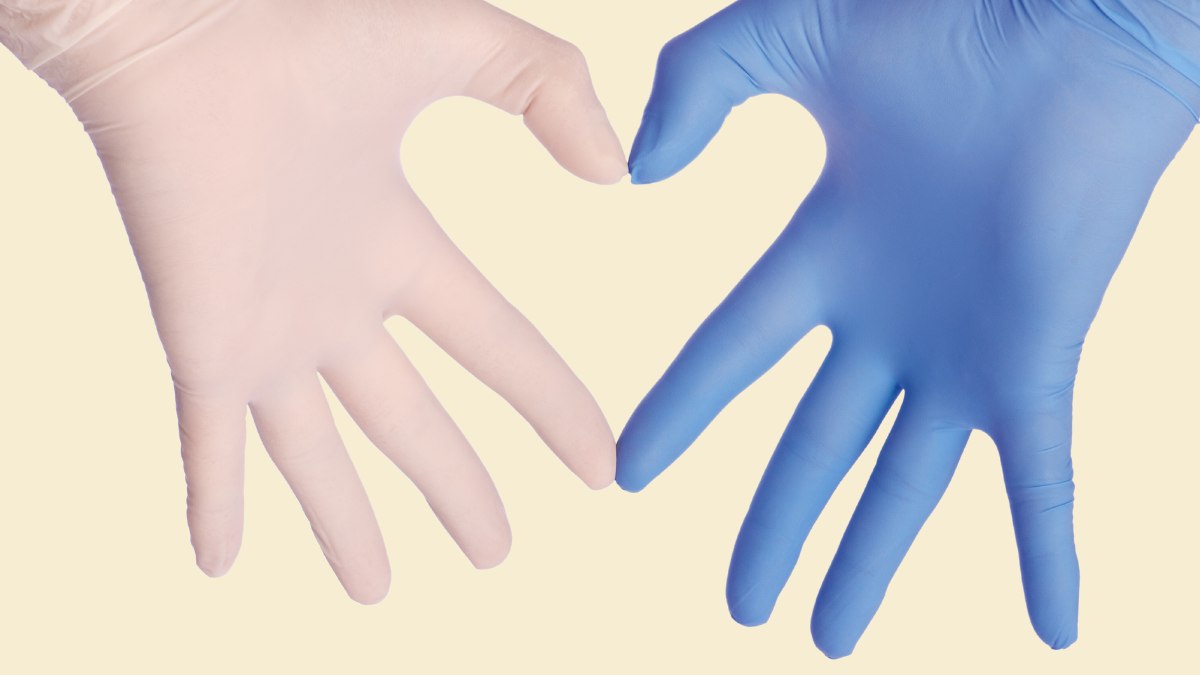
A: This is one of the reasons we always stress the importance of wearing rubber or plastic gloves when performing hair coloring or bleaching services.
Why Did Your Skin Turn White?
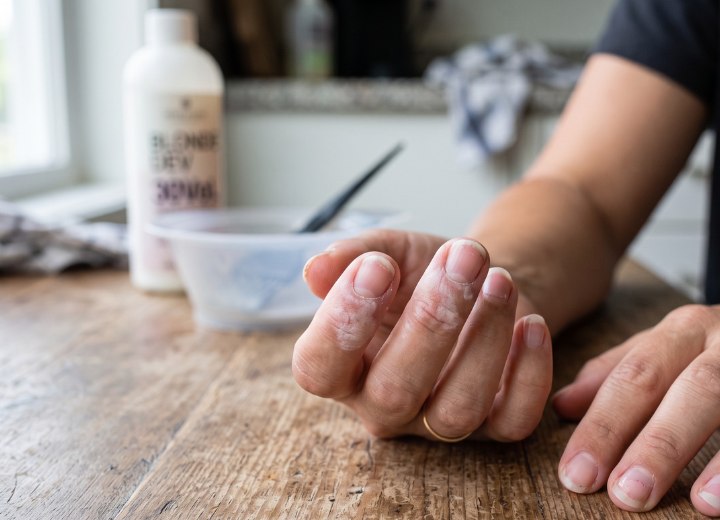
While it might look like the bleach has permanently "bleached" your skin pigment (melanin) or left behind a layer of dead, dry skin, the actual culprit is a chemical reaction involving the hydrogen peroxide developer in the hair bleach, working alongside highly alkaline bleaching powders.When hydrogen peroxide makes contact with your skin, it penetrates the outer layer and reacts with an enzyme in your tissues called catalase. This reaction rapidly breaks the peroxide down into water and oxygen gas. These microscopic bubbles of oxygen get temporarily trapped in the outer layers of your skin. This buildup of gas physically compresses the tiny blood vessels in the area (acting as temporary micro-blockages), which restricts blood flow to the surface and causes the skin to instantly blanch into a stark, chalky white.
In addition to this color change, the alkaline chemicals in hair bleach can temporarily strip your skin's natural oils, leaving your fingertips feeling rough, dry, tight, or slightly tingly.
How to Treat It and Get Rid of the White Spots
The good news is that because this discoloration is caused by trapped oxygen and temporary blood flow restriction, it is entirely temporary and usually fades on its own within 30 minutes to a couple of hours as the oxygen naturally dissipates and blood flow returns.Because the white spots are beneath the surface of the skin, you cannot "wash" or scrub them off. Scrubbing aggressively will only further irritate your skin. Instead, follow these steps to soothe your hands and speed up recovery:
• Wash Gently: Immediately wash the affected area with cool water and a gentle, fragrance-free soap to ensure all active bleach residue is completely gone.
• The Quick-Fix Oil Massage: To make the white spots less noticeable, apply a few drops of a natural oil (like coconut oil, olive oil, or jojoba oil) or a heavy ointment (like Vaseline) and massage it gently into your fingertips. While this doesn't instantly pop the trapped bubbles beneath your skin, the oil immediately rehydrates the dry, rough keratin cells on the surface. This changes how light reflects off your skin, masking the chalky appearance almost instantly while your body naturally absorbs the trapped oxygen.
• Moisturize Regularly: Keep applying a rich, fragrance-free hand cream or cuticle oil over the next 24 to 48 hours to help rebuild your skin’s moisture barrier.
• Protect Your Hands: If your fingertips feel dry or sensitive, avoid exposing them to hot water, harsh dish soaps, or cleaning chemicals for the next day or two. Wear protective gloves if you have to do the dishes or clean.
What About Your Nails?
If your fingernails have also become dry, chalky, or white after coming into contact with the bleach, this is also due to temporary dehydration of the nail plate. Applying a high-quality cuticle oil several times a day will restore moisture to the nail. If you want to hide the chalky look while they recover, a simple coat of clear nail polish will make them look normal again instantly.When to Seek Medical Attention
While minor hydrogen peroxide exposure heals quickly on its own, hair bleach is a strong chemical. If you experience significant redness, blistering, swelling, severe pain, or a persistent burning sensation that doesn't go away after washing, you may have a chemical burn. In these cases, contact a doctor promptly for proper treatment.©Hairfinder.com
See also:
Hair coloring and bleaching
How bleaching your hair works
How to remove hair color from your hands
How to remove hair color stains from your forehead