Hair Elasticity
Q: How does hair elasticity affect a haircut that I will do?
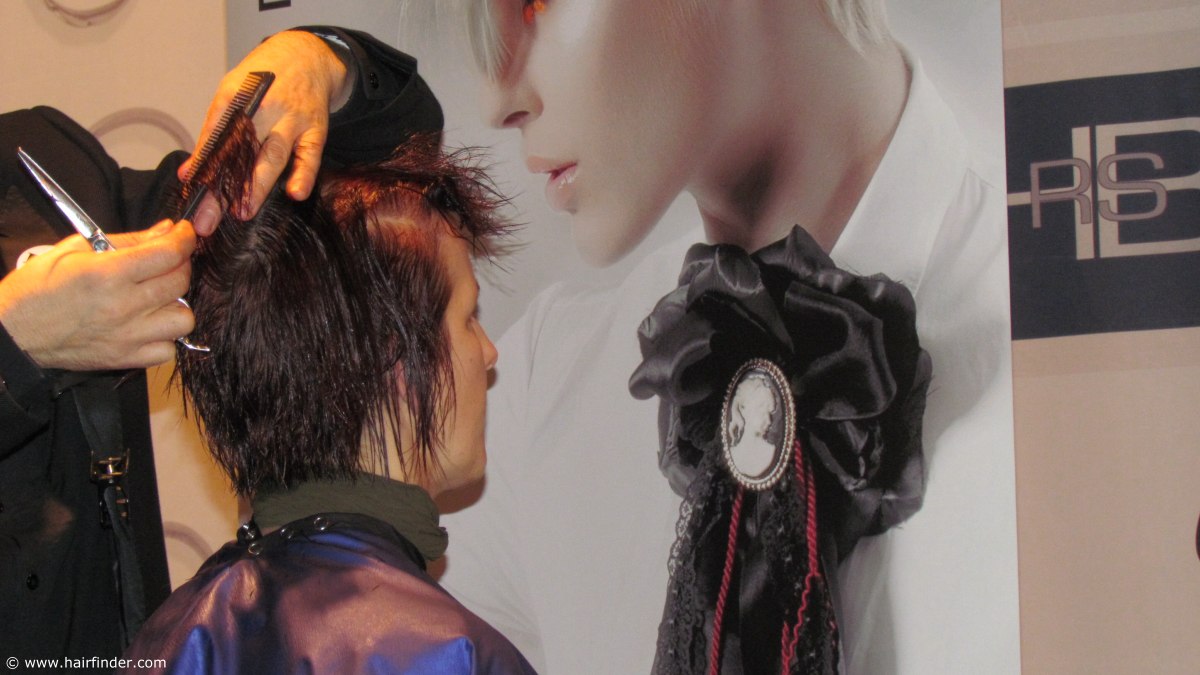
A: The elasticity of the hair affects the way you handle the hair when cutting it, since when the hair is wet it is easily stretched and will revert to its normal state when it dries again. This means that with someone whose hair is very elastic, you could accidentally cut the hair significantly shorter than you intend.
This is why it is very important to hold the hair using as little tension as possible. The more you stretch the hair while cutting, the greater the chance that it will spring back after drying, making the finished result shorter than expected.
Understanding Hair Elasticity
A strand of wet hair with good elasticity can stretch up to 50% of its original length before breaking, returning to its normal shape when released. Dry healthy hair typically stretches around 20% to 30%.Healthy hair maintains a proper balance of moisture and protein, giving it flexibility and strength. If hair is damaged, chemically over-processed, or high-porosity, it loses its structural integrity: it may either over-stretch like a rubber band without bouncing back, or lack elasticity entirely and snap under minimal tension.
This becomes doubly problematic when you're dealing with curly hair types. Curly hair can shrink drastically when going from wet to dry. Sometimes by 50% to 75% of its perceived length! Because of this, many stylists choose to cut curly hair dry.
Maintaining Precision and Tension Control
Hair elasticity also influences the precision of your haircut. When every section of hair is held with the same amount of tension, the haircut will be more even and symmetrical. However, if some sections are stretched more than others (or if sections dry out unevenly while you work), this might result in an uneven perimeter or inconsistent layering.Maintaining uniform dampness with a spray bottle and developing the habit of using light, controlled tension throughout the haircut are important skills for achieving consistent results.
Assessing Elasticity Before You Cut
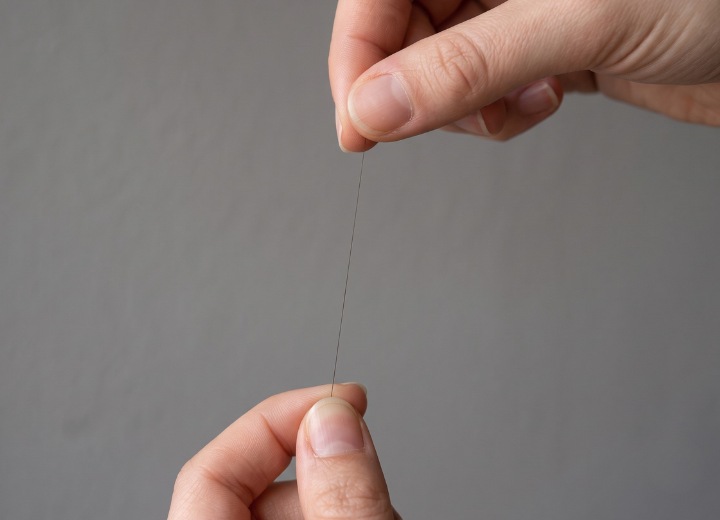
Before beginning a haircut, it is often helpful to assess the hair's elasticity. You can do this by selecting a single damp strand from different areas of the head (since damage is rarely uniform) and gently stretching it:• Good elasticity: The strand stretches smoothly and returns to its original length.
• Low elasticity: The strand stretches very little and breaks easily.
• Over-processed or damaged: The strand stretches abnormally far, feels mushy, and fails to spring back.
This simple assessment gives you valuable information about the condition of the hair, helping you decide how much tension is appropriate during the haircut, and whether wet or dry cutting is best.
©Hairfinder.com
See also:
How do you get your hair's elasticity back?
If you get a perm. How much does your hair shrink up?
Should you not brush hair when wet?