How to Trim a Beard
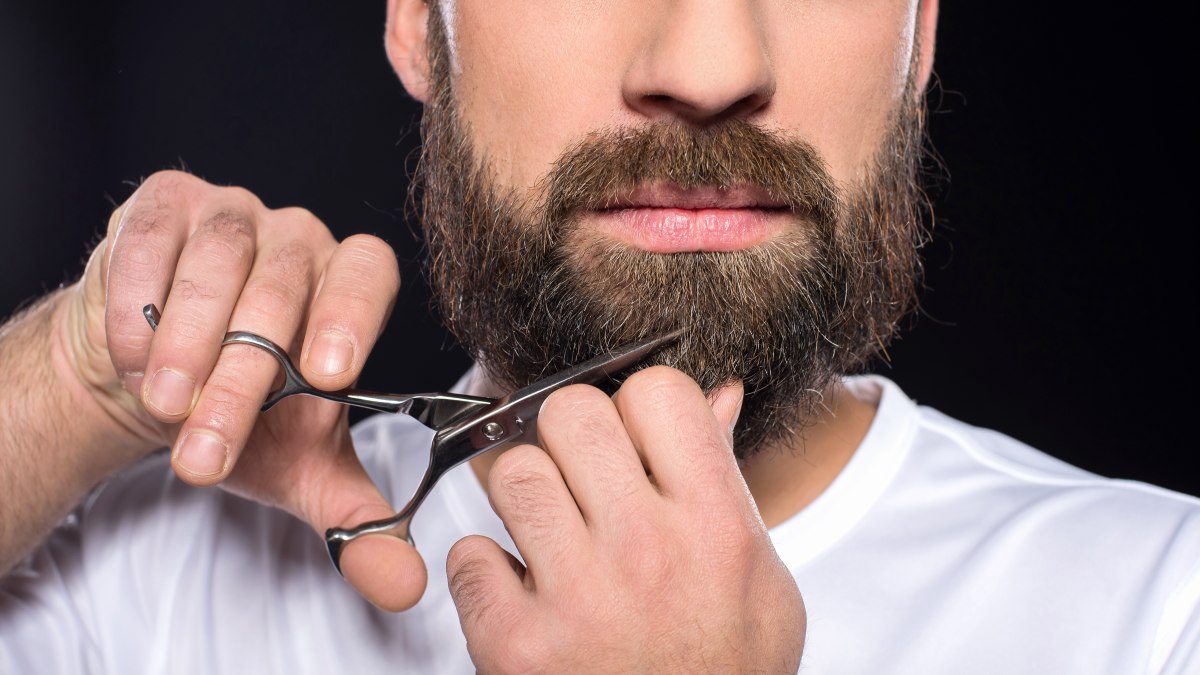
A: Beard trimming is an essential skill that many men overlook or approach haphazardly. Too often, guys let their facial hair grow wild for weeks, then attack it with clippers in a desperate attempt to tame the chaos. This all-or-nothing approach rarely yields flattering results and can leave you looking unkempt. The truth is, a well-maintained beard can be incredibly attractive when done right.
1. Establishing Your Neckline and Cheek Line
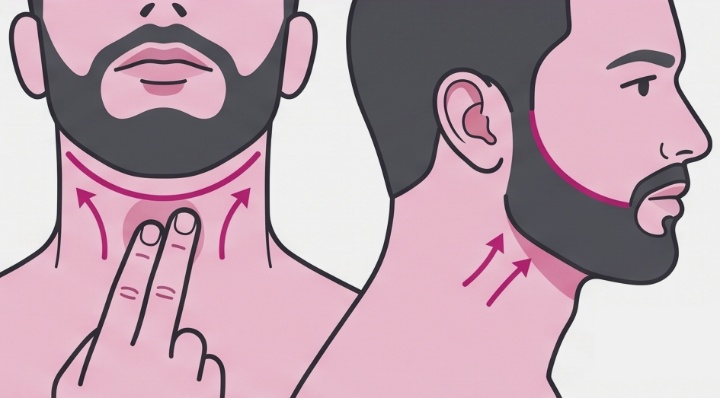
One of the most critical aspects of beard trimming is getting your lines right.• The Neckline: The neckline is particularly important because a poorly defined neck can make even the most carefully trimmed beard look sloppy. For the neckline, place two fingers above your Adam's apple and draw an imaginary curved line from ear to ear. Everything below this line should be shaved clean. This creates a natural-looking boundary that doesn't appear too high or too low. Avoid the mistake of following your actual jawline, which often results in a neckline that's too high and can make your face appear to have a double chin.
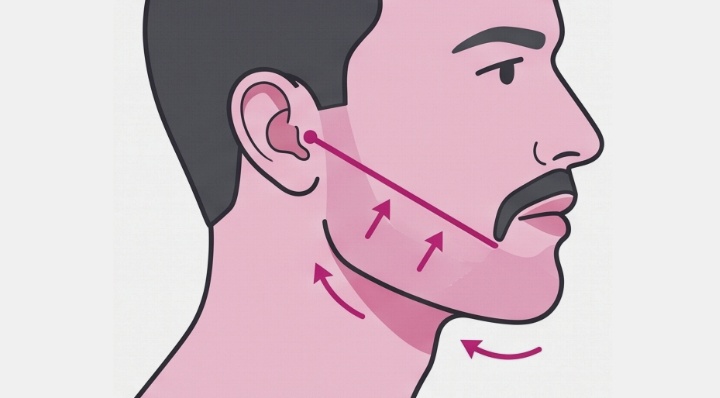
• The Cheek Line: The cheek line requires equal attention. Use the natural line that runs from the tragus of your ear (that small protruding part at the front of your ear canal) down to the corner of your mouth as your guide. This creates a clean edge that frames your face. Some men prefer a slightly lower cheek line for a more natural appearance, but avoid going too low, as this can make your beard appear unkempt.
2. The Trimming Process
Start with clean, dry hair for the most accurate cut. Wet hair appears longer and can lead to mistakes. Work systematically, starting with the longest areas and gradually working your way to shorter sections.If you are using clippers with guard combs, trim against the grain of hair growth for the most even cut, and make multiple passes rather than trying to achieve your desired length in one session.
(Note: If you have highly sensitive skin or very coarse, curly hair, trim with the grain first to reduce bulk, then go against the grain only for the final pass to prevent ingrown hairs).
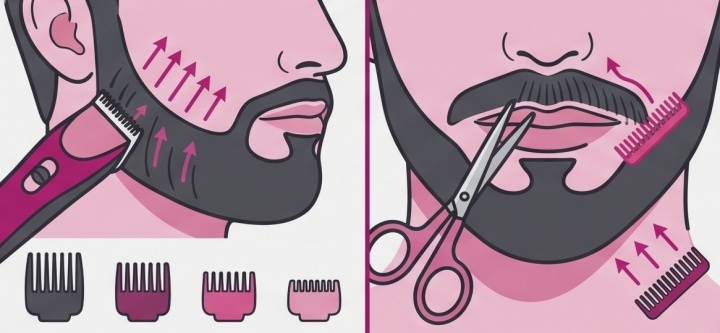
Pay special attention to the mustache area, which often grows at different rates and angles than the rest of your beard. Use small scissors or a precision trimmer to carefully shape around your lip line, ensuring you don't accidentally create an uneven appearance.
3. Aftercare & Conditioning
Once you've established your desired shape, maintenance becomes much simpler. Plan to touch up your edge lines every two to three days to keep them crisp and clean. The rest will need attention every four to six days, depending on how quickly your hair grows and how clean you prefer your appearance.Conditioning your beard is just as important as the actual trimming. Facial hair tends to be much coarser than the hair on your head, so it benefits greatly from daily hydration.
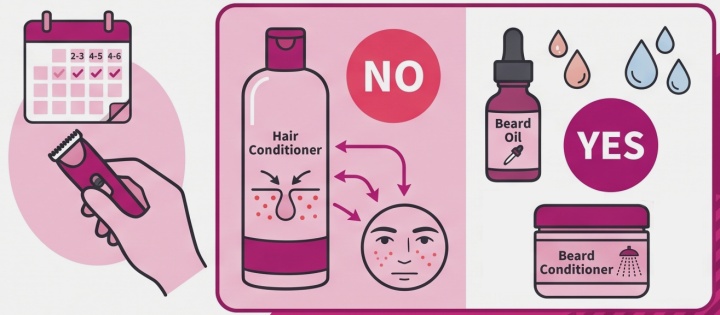
Important: Avoid using regular hair conditioner on your face. The skin on your scalp is thick, but the skin on your face is thin and highly sensitive. Regular hair conditioners contain heavy silicones and waxes designed for the scalp that will easily clog your facial pores, leading to breakouts and irritation. Instead, opt for one of these face-friendly methods:
• Beard Oil: Apply a few drops of high-quality beard oil containing non-comedogenic carrier oils (like jojoba, argan, or grapeseed oil) directly to your skin and hair right after drying. This mimics your skin's natural oils and keeps the hair soft without clogging pores.
• Dedicated Beard Conditioner: If you prefer an in-shower product, use a conditioner specifically formulated for beards, which is designed to wash out cleanly without leaving pore-clogging residue on your face.
©Hairfinder.com
See also:
Beards and the shape of your face
Basic styles for moustaches and beards
Is there anything I could do to get my beard to come in fuller?