Bangs for a Low Forehead

A: A woman with a shallow or low forehead who wants bangs almost always needs to begin the fringe section farther back on the head than someone with an average or high forehead. Starting the bangs farther back gives you more hair to work with, allowing the fringe to have enough length and weight to drape naturally. If the bangs begin too close to the hairline, they often end up looking short and bulky, and are difficult to style.
Texture plays an important role. Texture throughout the bangs removes excess bulk and allows the fringe to fall softly instead of forming a heavy, blunt curtain across the forehead. Softer, textured bangs tend to be much more flattering on a low forehead because they prevent the hair from overwhelming the upper part of the face.
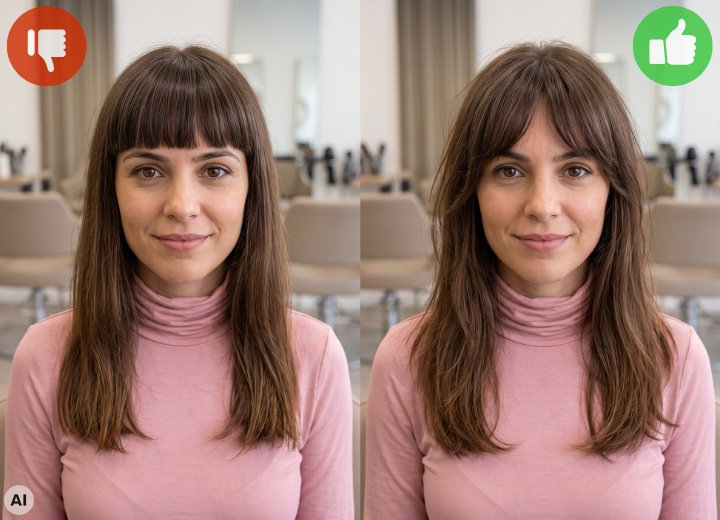
For the most flattering effect, allow the bangs to fall below the eyebrows rather than cutting them too short. Slightly longer bangs visually extend the forehead. You can also curve the outer edges of the bangs downward so they gradually become longer toward the temples. This subtle variation in length frames the face beautifully and further enhances the illusion of a longer forehead.
Styling makes a difference as well. Blow-drying the bangs with a round brush or paddle brush so they lie softly against the forehead, rather than puffing outward, creates a sleeker, more elongated appearance. A lightweight styling cream or smoothing serum can help keep the fringe separated and natural-looking without making it appear stiff or heavy.
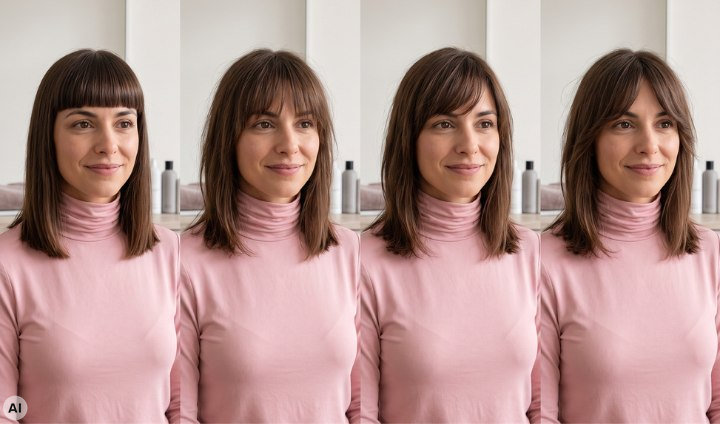
Keep in mind that not all bangs are created equal. Heavy, blunt bangs cut straight across can make a low forehead appear even shorter. In contrast, longer, textured, softly blended bangs - whether worn straight across, slightly side-swept, or with gently feathered edges - are much more flattering because they create softness and the illusion of additional facial length.
©Hairfinder.com
See also:
Tips for better bangs
How do you know if side bangs will suit you?
Do bangs make you look older?