Ponytail Holders and Hair Breakage
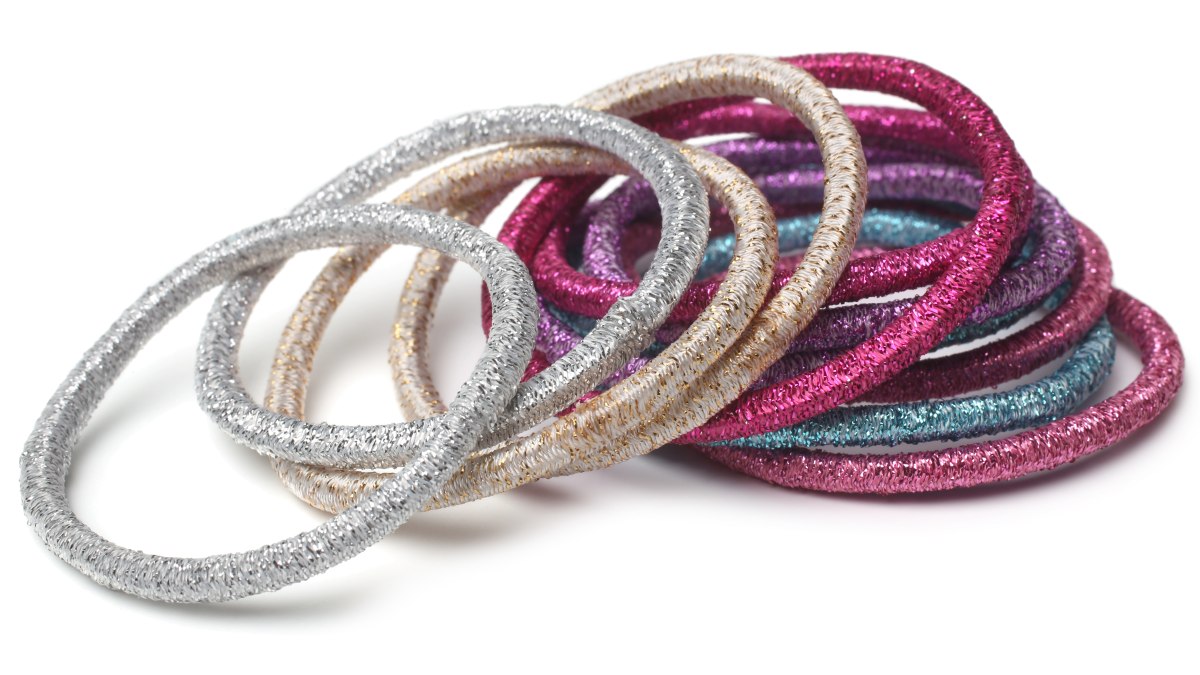
A: What you describe does seem consistent with breakage caused by ponytail holders. If this is indeed the cause, the fix is usually quite simple: be kinder to your hair and give the damaged sections time to recover.
Smart Styling Choices
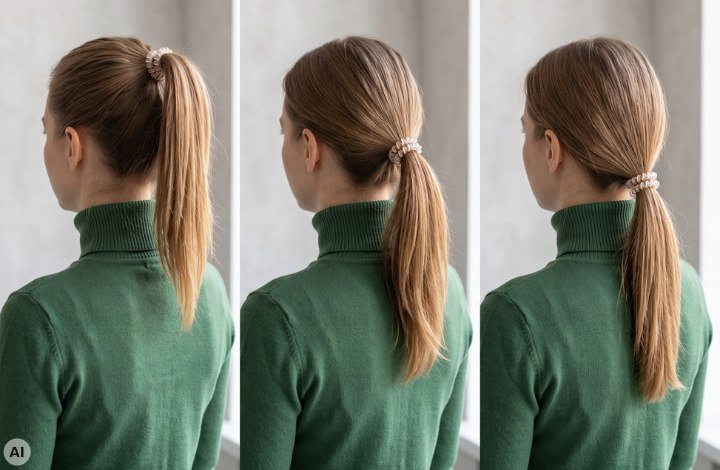
Choose snag-free ponytail holders without metal clasps (such as silk or satin scrunchies and soft spiral ties) and avoid wrapping them so tightly that they place unnecessary tension on your hair. Never tie your hair up while it is wet, as wet hair stretches up to 50% of its length and becomes extremely fragile, making it far more prone to snapping under an elastic.If possible, vary the position of your ponytail from day to day (high, mid-level, or low) to prevent repeated stress on the same area. You can also alternate ponytails with looser hairstyles such as a gentle braid, a loose bun, or simply wearing your hair down whenever practical.
Moisture and Conditioning
Keeping your hair well-conditioned is important. Use a moisturizing conditioner every time you wash your hair, and don't hesitate to apply conditioner even on days when you skip shampooing.Incorporating deep conditioning masks and bond-repair treatments can help restore inner hair strength. A leave-in conditioner and an anti-frizz serum can help smooth the hair cuticle, reduce tangles, and minimize breakage during brushing.
Other Damage Factors
Also pay attention to other possible sources of hair damage:• Nighttime Friction: Tying your hair up to sleep or sleeping on rough cotton pillowcases creates friction overnight. Switching to a silk or satin pillowcase helps protect vulnerable hair.
• Styling & Treatments: Excessive heat styling, vigorous towel drying (try swapping your cotton towel for a microfiber hair towel or soft T-shirt), harsh brushing, and chemical treatments such as bleaching, perming, or coloring all contribute to hair breakage.
Recovery Timeline
The good news is that if your hair follicles are healthy and the problem is mechanical breakage rather than actual scalp-level hair loss, the shorter sections should gradually catch up as new growth continues.Hair typically grows about half an inch (1.25 cm) per month, and noticeable improvement takes patience. However, if you notice thinning directly at the scalp or excessive shedding, consult a dermatologist to rule out underlying hormonal or nutritional factors.
©Hairfinder.com
See also:
How to put your hair in a ponytail
Is it bad for your hair to have it up in an elastic band all the time?
How to fix the crease in your hair after wearing it in a ponytail