Reverse Perm

A: Your hair's natural wave pattern is determined by the way the hair forms in the follicles beneath the scalp. The shape of the hair follicle and the structure of the hair shaft are determined by genetics, which is why your hair grows with a particular curl pattern. A perm does not change the follicles themselves. Instead, it changes only the hair that has already grown out from the scalp.
How Perms Work
A perm permanently alters the wave pattern of the existing hair by breaking and reforming the hair's internal chemical bonds into a new shape. That's why the service is called a permanent wave. The curl won't simply wash out over time.As your hair grows, however, the new growth will emerge with your natural texture, creating a gradual transition between your natural roots and the permed lengths. This creates a distinct "demarcation line" where your hair roots meet the uniform permed ends, which will require touch-ups every few months.
If you decide you no longer want the perm, simply washing your hair will not remove it. Shampooing only cleans the hair and it does not reverse the chemical changes that created the curls. Likewise, conditioners, deep treatments, and styling products cannot restore the original texture of the permed hair.
However, perms do relax over time. Even though the chemical change is technically permanent, perms lose tension over 3–6 months, though the original natural texture still won't return until it grows out.
Reversing a Perm
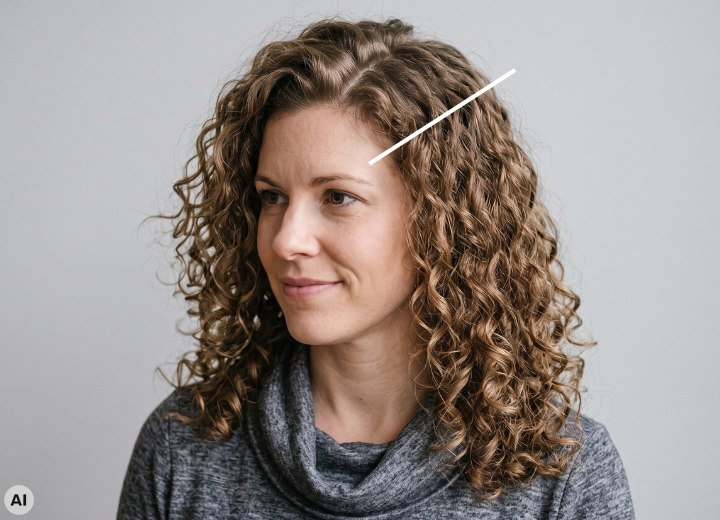
The only way to really “reverse a perm” is through another chemical service designed to reshape the curl pattern, often called a reverse perm or chemical retexturizing. Even then, the results may not perfectly recreate your original curl pattern, and the additional chemical processing can place severe stress on the hair, leading to breakage and damage.If your hair has been highlighted or bleached, chemical perms carry a high risk of damage. Especially bleached hair often cannot take a traditional perm without extreme breakage. In many cases, the healthiest solution is simply to let the perm grow out and gradually cut off the permed hair.
Benefits of a Perm
That being said, if your biggest frustration is that your natural curls are inconsistent from day to day, a perm can be a very good solution. Many people with naturally wavy or curly hair choose to get a perm not because they want more curl, but because they want a curl pattern that is more uniform and predictable.Keep in mind that a perm is not zero-maintenance. You will still need to use curl-defining products and use a diffuser on your hair dryer or air-dry properly to prevent frizz.
Alternative Solutions
Before deciding on a perm, it's a good idea to consider why your natural curls are inconsistent. Humidity, heat styling, brushing (especially dry brushing), hair length, and product buildup can all affect how well your natural curl pattern forms.Fine-to-medium Caucasian hair textures are especially sensitive to heavy products that weigh curls down. Sometimes a change in haircut (like adding long layers), a modified moisturizing routine for curly hair, or using a curl cream and a diffuser can improve curl consistency without the need for a perm.
©Hairfinder.com
See also:
Perms and perming hair
Naturally curly hair and curly hair problems
Haircut for thick, curly and unmanageable hair