Hairstyles for Thin Hair
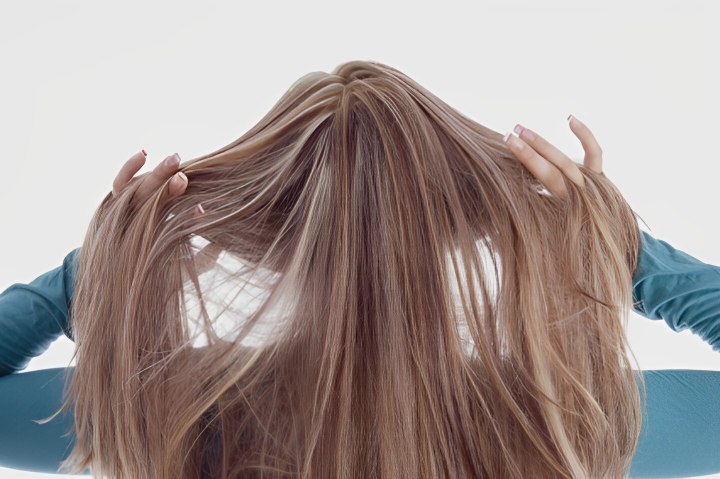
A: A good hairstyle is based on a number of factors: the shape of the face, the texture of the hair, its growth patterns, natural wave pattern, and its density. Describing your hair as "thin" tells me that your hair is sparse, with fewer numbers of hair strands per square inch than are normally found. We call this "low density."
Hairstyles for Low-Density Hair
With low density, the goal is to help you look as though you have more hair. One of the easiest ways to accomplish this is to create the optical illusion of weight and volume:• Keep strong, blunt perimeters: At shoulder-length, thin hair can easily look sparse or "see-through" at the ends. Keeping the bottom edge cut straight and blunt (such as a classic bob or long bob) gives the appearance of immediate thickness.
• Use soft, strategic layers: If the hair is naturally curly or wavy, adding subtle layers allows you to get more lift and fullness at the crown. However, be cautious with heavy or deep layers, as removing too much interior weight will make the ends look thin and stringy.
• Lighten your hair color: If your hair is sufficiently low in density to make the scalp readily visible through the hair, consider softening your hair color so that there is less contrast between the color of your hair and the color of your scalp. This helps to make the hair appear fuller as well.

Hairstyles for Fine Hair
It is also possible that when you say "thin" you really mean "fine," which instead of referring to the hair's density refers to its texture (the narrow thickness of the individual hair strand). Fine hair can look similar to "thin" hair on the head, as in both cases the hair tends to be "flat" and lie close to the head. Many women actually have a combination of both!With fine hair, heavily texturized or choppy haircuts can look awkward, as they remove too much density. Depending on the shape of your face, an A-line bob or long bob can look very attractive, as it concentrates all of your hair's weight at the bottom baseline. If you need extra volume, request beveling (a soft micro-shaping technique that lets the hair cup inward gently without losing density) at the ends or style it into soft waves using a curling iron or round brush.

Hair Products
When it comes to products, volumizing shampoos and lightweight conditioners (applied strictly from mid-lengths to ends) are a great start. There are also great styling products that will add volume and give the appearance of thickness to both fine and low-density hair:• Root lift sprays and mousses help the hair stand out directly at the scalp.
• Hair thickening tonics use lightweight polymers or proteins to coat the individual hair shaft, giving temporary body and substance to each strand.
• Dry texturizing sprays add instant grip and separation without the heavy weight of traditional waxes, oils, or pomades.
A quick note on perms: While body waves or perms are sometimes suggested for volume, proceed with caution. Perms do not actually thicken the structural diameter of your natural hair strands; they simply break and reshape the hair's internal bonds. Because fine and low-density hair is naturally more fragile, chemical processing can lead to breakage, which will ultimately make the hair look thinner.
©Hairfinder.com
See also:
Does hair thickening spray really work?
How to make your hair look thicker and fuller