Rubber Bands in Hair
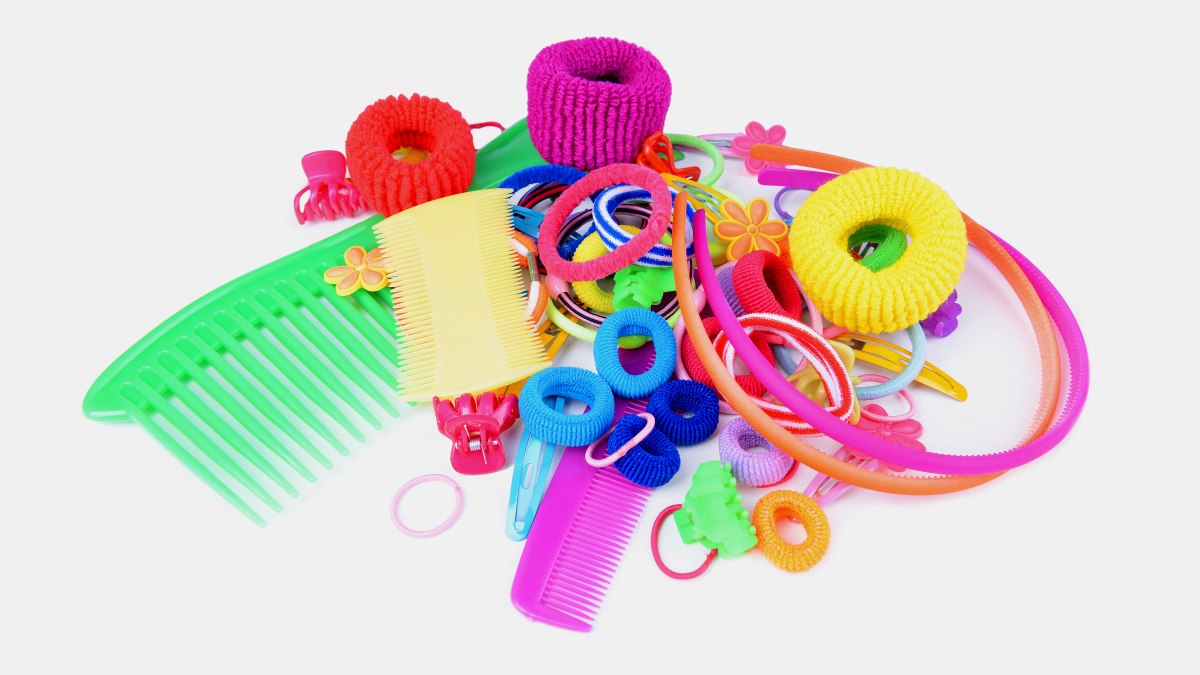
A: Your mom is on to something! There is definitely truth to her concerns for a few important reasons.
Two, if the bands are used to secure the hair taut against the scalp (such as in pigtails or ponytails) and you allow your child to sleep on them, the pressure from the mattress places continuous extra tension on the hair along the partings and hairline. This persistent pulling can result in traction alopecia. This is a form of hair loss caused by strain on the follicles. Even if the hair isn't pulled completely loose, the tension causes strands to stretch, snap, and leave a fuzzy, broken halo of hair in those areas.
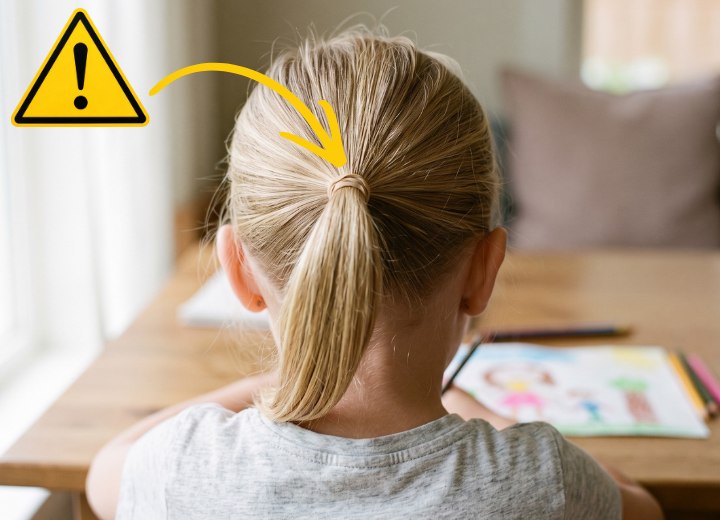
Three, how you remove the bands matters just as much. Never yank or slide elastic bands out of her hair, as this strips the hair shaft and breaks the strands. Instead, carefully snip mini-elastics with baby nail scissors, or dab a drop of coconut or olive oil directly onto the elastic. The oil breaks down the band so it pops right off without pulling a single strand.
Four, beyond hair health, leaving tiny elastic bands on a child under two while they sleep poses a genuine choking hazard. Toddlers frequently pull at their hair while tossing and turning or upon waking, and loose bands can easily end up in their mouth unmonitored.
We’ve learned over the years that gathering and binding hair should be done gently, especially for little ones. If you want to use a band during the day, select one that doesn’t grip against the hair. Look for plasticized bands or soft fabric-covered ponytail holders.
Avoid pulling the hair tightly into a style, and always take the bands out before bedtime. Her style might not have that "crisp, tidy" look overnight, but her hair will remain much healthier - and safer - all around.
©Hairfinder.com
See also:
Is wearing your hair in a ponytail bad for your hair?
How to put hair in a ponytail
Kids hairstyles