Hair Color & Face Shape
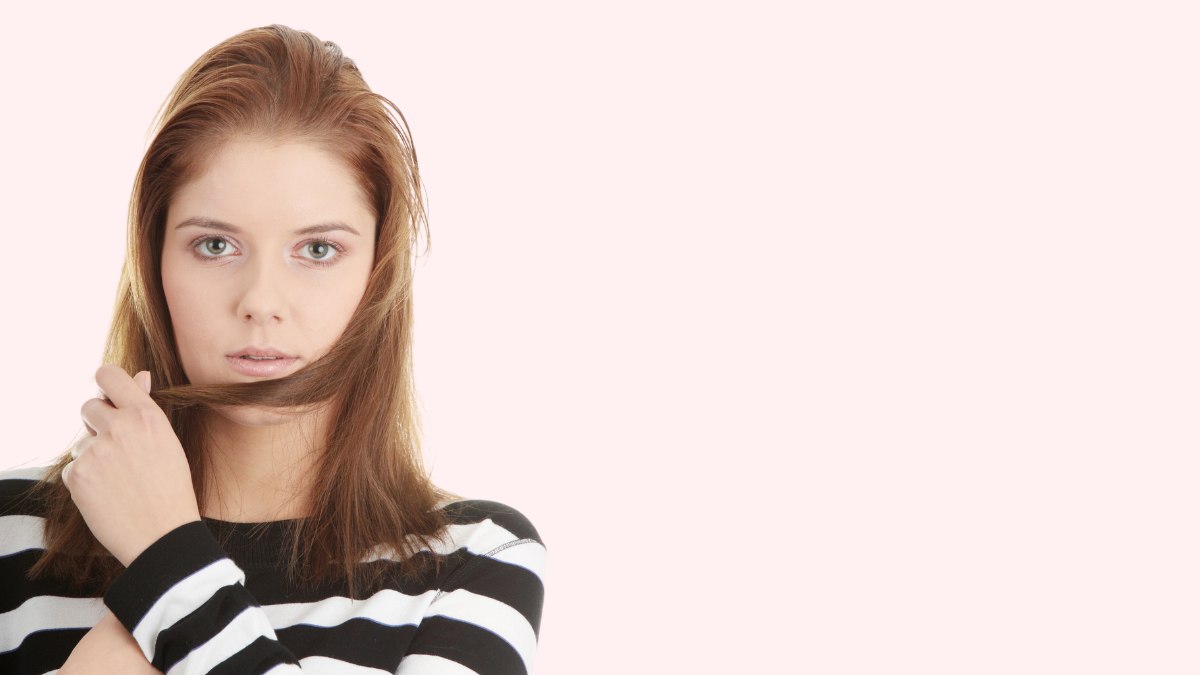
A: Color alone is generally not the primary factor in managing face shape or feature prominence. Haircut and styling have a far greater impact on how face shape is perceived. A uniform, solid hair color (whether blonde, brunette, red, or black) reflects light evenly and will not noticeably alter facial proportions on its own.
Strategic Color Placement Techniques
• Creating Vertical Focus = Elongating the Face: Placing highlights at the top section of the head and along the forehead draws the eye upward. This adds visual height, making it an effective technique for round or square face shapes seeking the illusion of added length.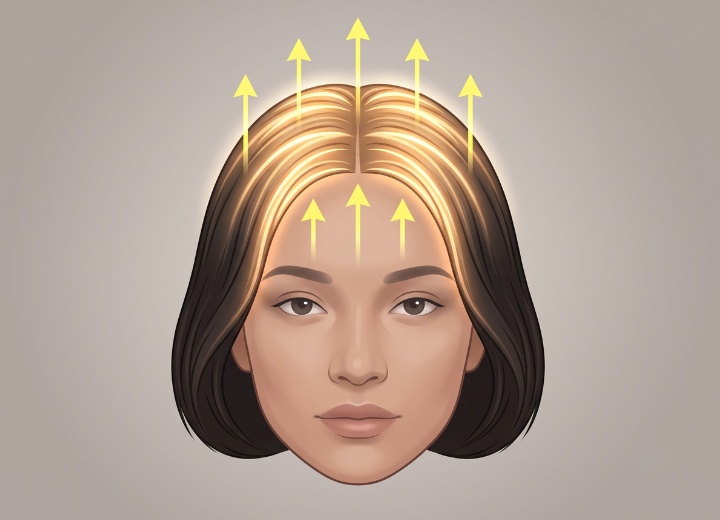
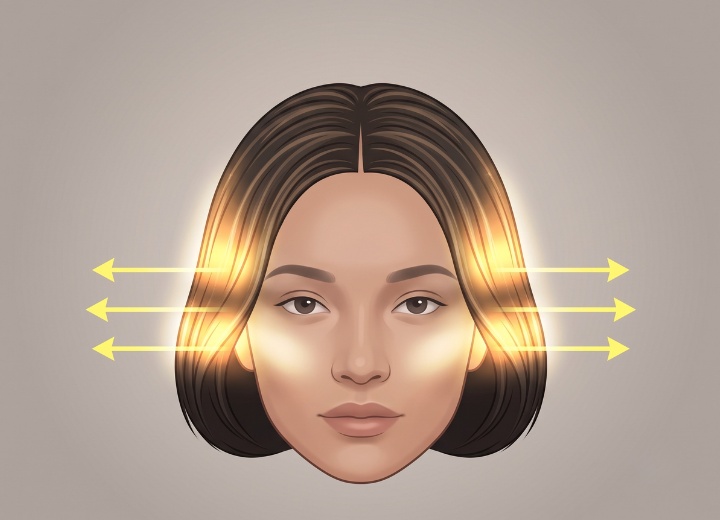
• Creating Horizontal Focus = Widening the Face: Placing highlights predominantly along the temples, sides, or ear level pulls the eye outward, adding visual width. This helps balance long, narrow, or rectangular face shapes.
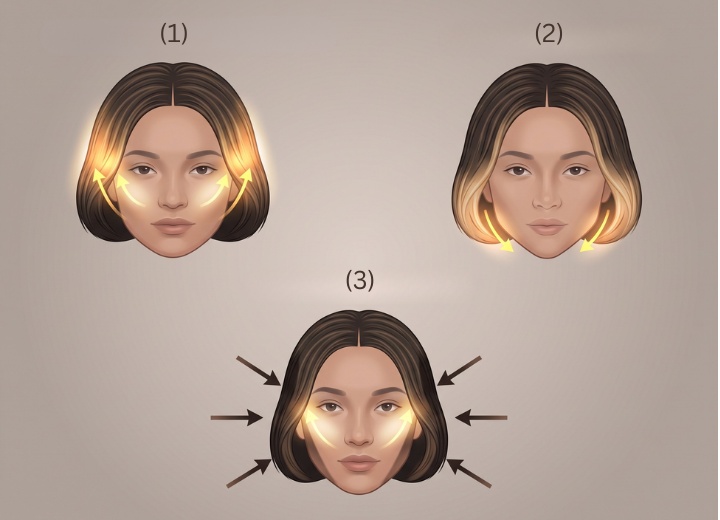
• Targeted Framing & Feature Enhancement: Lighter pieces placed around the cheekbones emphasize structure (1), while lighter tones around the jawline soften a narrow lower face (2). Conversely, darker lowlights at the temples or jawline visually narrow the perimeter (3).
The Role of Hair Length & Contrast
• Short Hair: Color placement has a strong visual impact on short cuts because the focal points remain fixed and distinct without long strands distracting the eye.• Long Hair: The effects on long hair are more subtle, as natural movement, layering, and daily styling break up light reflection.
• Skin Tone Contrast: High contrast between base hair color and skin tone (such as jet-black hair framing pale skin) sharply outlines the facial perimeter, making the natural face shape more defined regardless of highlight placement.
©Hairfinder.com
See also:
How to find out what your face shape is
Hairstyles to deal with problematic facial features
How to color hair