Braiding and Faster Hair Growth

A: No. Braiding the hair will not cause it to grow any faster than it does normally. Hair growth takes place at the follicle, beneath the scalp, and putting the hair into braids does not change the natural rate at which those follicles produce hair. However, people who wear their hair in long-term braided styles often think that it helps the hair grow faster.
Hair Growth vs. Length Retention
Having the hair in these braids protects it from many of the types of damage caused by the environment and everyday styling. Hair that is constantly brushed, heat-styled, or exposed to friction can become damaged and break before it has a chance to reach its full potential length. Braided properly and cared for in the right way, these styles can be great for anyone who has trouble with hair breakage.The important distinction is between hair growth and hair retention. Your hair may be growing at exactly the same rate while it is braided, but you may be able to keep more of the length because less of the hair is breaking off. This can make it appear as though the hair is growing faster.
The hair can end up looking healthier and can feel as though it grows much more quickly. However, the appearance of faster growth is purely a by-product of lessened attrition. This means that without the breakage and damage from styling or the environment, the hair can grow longer on its own.
This is one reason protective hairstyles can be useful for people whose hair tends to be fragile and prone to breakage. Keeping the ends protected and reducing the amount of daily manipulation can help preserve the length that has already grown.
The Risks of Tight Braids
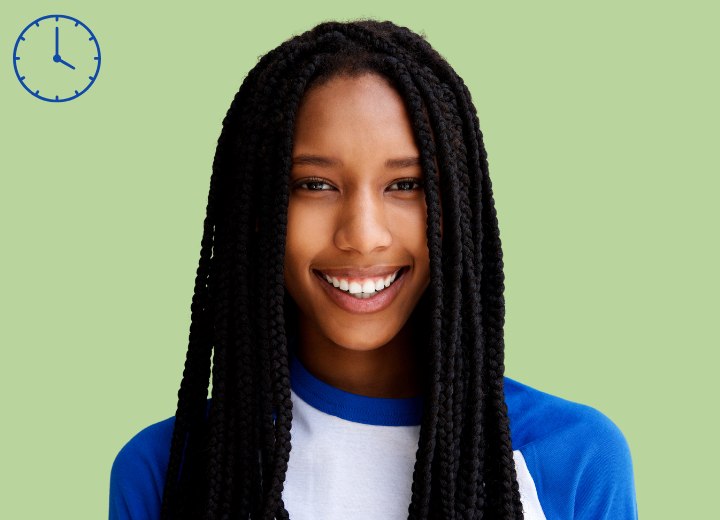
Braiding is not automatically beneficial. Braids that are installed too tightly can place excessive tension on the hair and scalp. This can cause tenderness, headaches, broken hairs, and, if repeated over time, a form of permanent hair loss called traction alopecia.If a braided style hurts, feels excessively tight, or causes significant pulling around the edges, it should not be considered a healthy protective style. A good braid should be secure without causing pain or putting unnecessary stress on the hair roots.
Hair Texture and Type
If your intention is to try a braid style, be sure you talk with the stylist about the care and maintenance schedule and your hair type. Protective braided styles originated as cultural practices tailored for textured, coarse, curly, or kinky hair, which thrives under reduced manipulation.Straight, fine, or silky hair types - common among many people of Caucasian descent - behave differently. Silky strands resist being confined to a braided configuration, meaning braids slip out faster. And fine or straight hair is often more susceptible to heavy tension damage.
Maintenance Timeline
You should also discuss how long the style is intended to remain in place. As a general rule, protective styles should not be left in longer than 6 to 8 weeks (and often less for finer hair textures).Leaving any hairstyle in for too long without proper care can lead to tangling, severe product buildup, dryness, or breakage when the style is eventually removed. The scalp and hair still need appropriate cleansing and light moisture even when the hair is in a protective style.
Do not be alarmed by the amount of hair that comes out when taking braids down. The average person sheds between 50 to 100 hairs a day. When your hair is in braids for weeks, those shed strands have nowhere to go and stay trapped in the style. When you finally unbraid your hair, several weeks' worth of natural shedding releases all at once. As long as the hair shed shows small white bulbs at the roots (indicating normal shedding rather than broken strands), this is normal and not a sign of breakage.
©Hairfinder.com
See also:
Is braiding bad for your hair?
What are cornrow braids?
How to braid hair