The Shapes of Hair
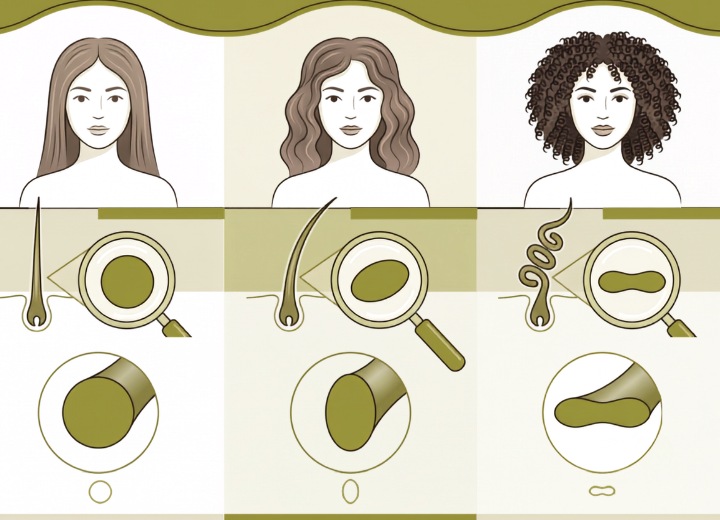
A: Actually, the hairs on your head can be a variety of shapes! Microscopic inspections show that cross-sections of hair can range from round to oval, and even flat. And these shapes directly determine how your hair behaves.
• Straight hair tends to be round in shape.
• Wavy hair is typically oval.
• Very curly or kinky hair is an asymmetrical, flattened oval (wider than it is thick, appearing flat like a ribbon).
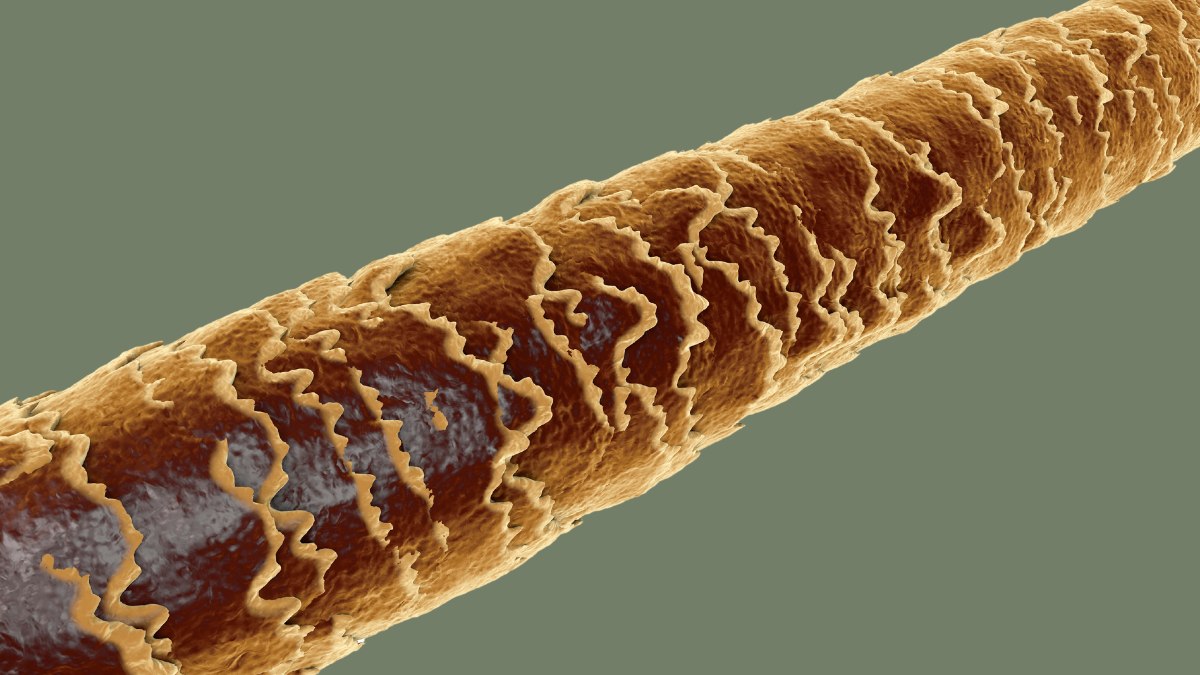
Because your zigzag hair has a flat cross-section, the hair shaft bends unevenly as it grows, creating those sharp kinks and making it spring up differently from your surrounding straight or wavy hairs. These sudden individual changes in color and texture often happen as hormonal shifts alter both the follicle's shape and its melanin production over time.
Many people don't realize that each individual hair follicle operates as its own independent factory, capable of producing a different texture or shade than those around it. This independent action is why natural hair color looks so vibrant and multidimensional compared to artificial dyes.
It’s also what keeps our hair transitions gradual as we age. If all follicles acted in unison, you’d go completely white-haired or experience sudden hair loss overnight. Also, because hair grows in distinct phases (growth, resting, and shedding), independent follicles ensure you only shed a few dozen strands a day rather than losing all your hair at once every few years!
In that respect, the independence of your follicles is a great feature. It allows us to adapt to gradual changes over time. Just be careful not to pluck those rogue zigzag hairs, as repetitive pulling can eventually damage the follicle and cause permanent hair loss or ingrown hairs.
©Hairfinder.com
See also:
I have a very rare genetic hair type and each follicle is banded.
I have just noticed I have one single hair strand that is very different from all the rest.
I have several strands of hair that are abnormally wavy. Why?