Hair Cutting and Face Shapes

A: It is a fundamental principle of design and aesthetics. The shape of a client's face can be visually enhanced or exaggerated by a haircut, making an understanding of facial geometry essential for creating flattering styles.
The haircut essentially serves as a frame for the face. Lines, angles, volume, length, and texture influence how facial proportions are perceived. A skilled stylist considers these elements to determine where to build weight, remove bulk, adjust length, or place layers. The goal is not necessarily to alter the natural face shape, but to achieve a balanced, harmonious appearance.
For example, giving a client with a round face an ear-length blunt cut paired with straight-across bangs introduces strong horizontal lines. This emphasizes width and makes the face appear shorter and broader. Conversely, a long, narrow face will look even more elongated with a sleek, center-parted style that falls below the shoulders. These examples illustrate why the exact same haircut produces vastly different visual outcomes on different clients.
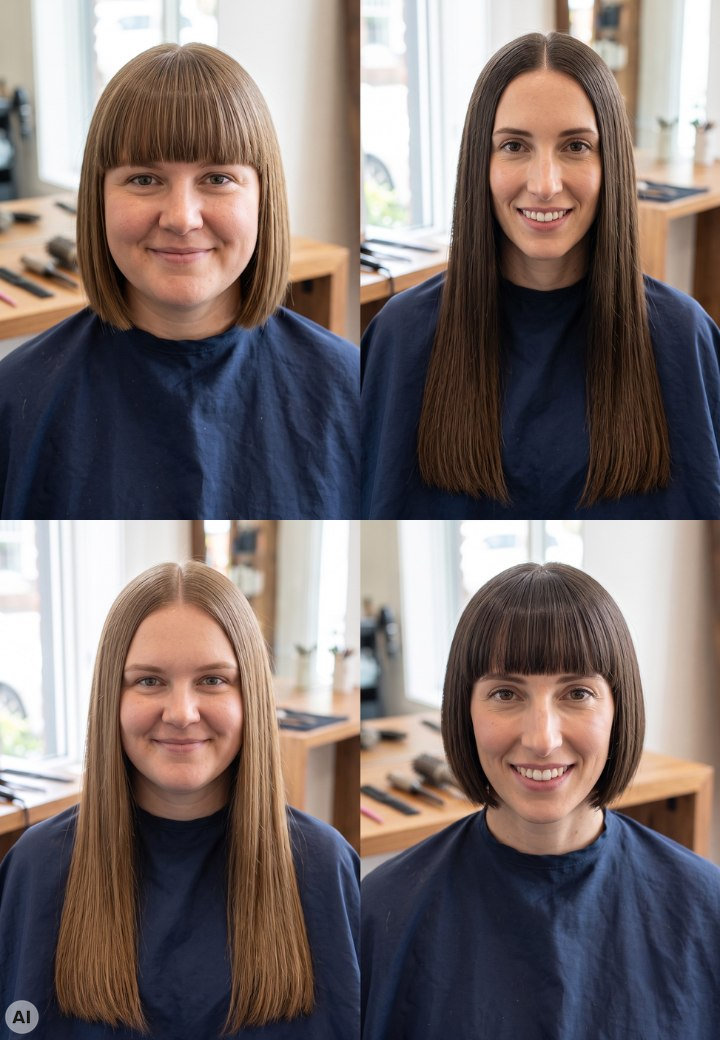
Face shape also guides how a haircut is structured:
• Directional Lines: Vertical or diagonal lines can make a face appear longer or narrower, while horizontal lines add width.
• Volume Control: Adding height at the crown adds vertical length, whereas adding side volume creates width.
• Detailing: Precise placement of layers - such as where a face-framing piece hits the cheekbones or jawline - directly alters visual balance.
Hairstylists are trained to evaluate facial features as a unified composition. For instance, balancing a round face often involves creating height at the crown, keeping the sides sleek, and adding length. Conversely, softening a narrow face may require adding width through side volume or outward-sweeping layers.
This is why a professional consultation is a crucial first step. Before cutting, the stylist must evaluate not only face shape, but also hair texture, density, growth patterns, lifestyle, and individual style preferences. Face shape serves as a guide for design choices rather than a strict set of rules.
©Hairfinder.com
See also:
How to determine your face shape
How to match your hairstyle and body type