Allergic Skin Reactions

A: Odds are there is going to be someone who is allergic to some ingredient in any given hair color product. This is why you should do a patch test prior to using any permanent hair color.
Natural Alternatives
Among the companies offering natural hair color products are Cosval with its Sanotint line of products and EcoColors, which offers its own range of hair dyes made with naturally derived ingredients. These products are designed for people looking for alternatives to classic permanent hair color and may be a good option for those whose skin becomes irritated by standard formulas.You should always check the ingredient list rather than relying solely on marketing terms such as "natural," "organic," or "gentle." Even products made with botanical ingredients can contain chemical preservatives (such as parabens or methylisothiazolinone), fragrances, or secondary coloring agents that may trigger allergic reactions in sensitive people.
Also beware of commercial "black henna" products. Unlike 100% pure plant henna, black henna frequently contains hidden, high concentrations of synthetic additives like PPD to darken the shade quickly. These additives can trigger skin allergies. Reading the label carefully can help you avoid ingredients you already know you are allergic to.
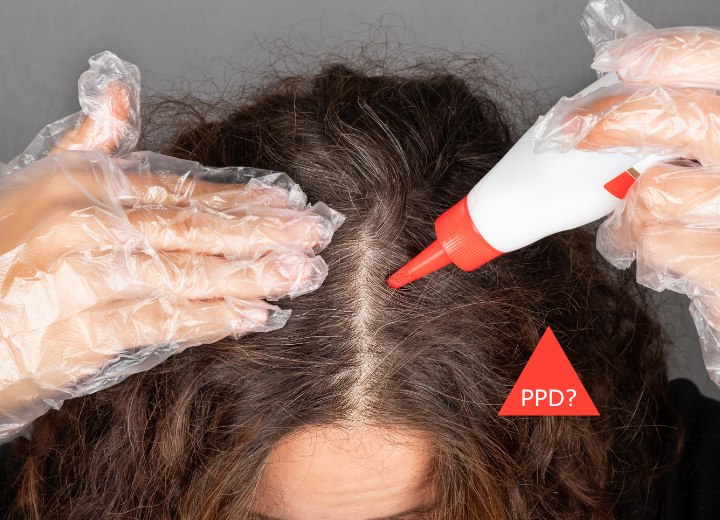
Understanding PPD
One of the most common causes of allergic reactions to permanent hair dye is a coloring ingredient called para-phenylenediamine (PPD). When people experience allergic symptoms from permanent hair dye, PPD or similar chemical additives are usually the culprit.Be aware that some "PPD-free" dyes replace PPD with related compounds such as para-toluenediamine sulfate (PTDS) or PTD. Because these chemicals are structurally similar, approximately 50% of people with a PPD allergy will also react to PTD and PTDS as well.
Once your body becomes allergic to PPD, you might also develop cross-reactions to other items made with similar compounds, including clothing dyes, black rubber products, or certain local anesthetics.
Lower-Risk Alternatives
If you have previously experienced redness, swelling, itching, or a rash after coloring your hair, stop using that product immediately. You should consult a doctor before trying another permanent hair dye. In some cases, an allergist or dermatologist can perform patch testing to help identify the specific ingredient causing your symptoms.If you find that you are allergic or sensitive to most permanent hair colors, you may want to consider using semi-permanent hair colors, temporary hair colors, or pure 100% herbal henna instead. These alternatives are often less likely to cause allergic responses because they generally contain different coloring ingredients and do not penetrate the hair shaft as deeply as permanent dyes. However, some semi-permanent products can still carry allergenic ingredients, and a 48-hour patch test is still necessary before every use.
There is no hair dye that can be guaranteed to be allergy-free for everyone. The safest strategy is to choose products that are free of ingredients you know you are sensitive to. Carefully read ingredient lists, follow all product directions, and always perform a 48-hour patch test before coloring your hair.
This answer is intended for informational purposes only. For medical advice or a diagnosis, contact a doctor.
©Hairfinder.com
See also:
Hair color allergies
The different types of hair dyes
The difference between salon colors and hair colors for at-home use