How Perms Work
Hair 101:
Your hair is primarily composed of proteins. Each strand contains a cortex at its core, comprised of proteins arranged in a chain along the length of the shaft. These proteins, known as polypeptide chains, are held together by peptide bonds, providing the hair with its strength.
The salt and hydrogen bonds are weaker than the disulfide bonds, but there are more of them, and overall, each bond type constitutes about a third of the strength of the hair's curl. It's the disulfide bonds that undergo change during a permanent wave.
Finally, the cortex and medulla are surrounded by a protective sheath known as the cuticle, consisting of tiny, overlapping scales of keratin (the same material found in fingernails and toenails). This cuticle serves to shield the hair from environmental damage.
Some individuals have tightly closed cuticles, while others have cuticles that are naturally slightly raised. The arrangement of the hair's cuticle determines its susceptibility to moisture absorption and its tendency to appear "frizzy."
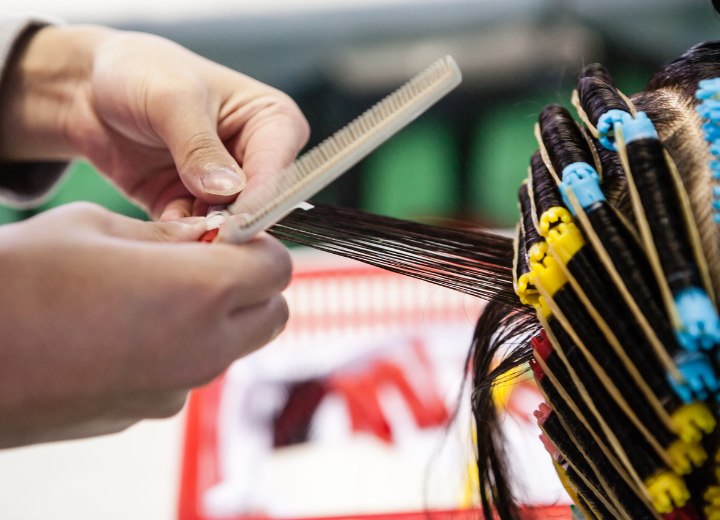
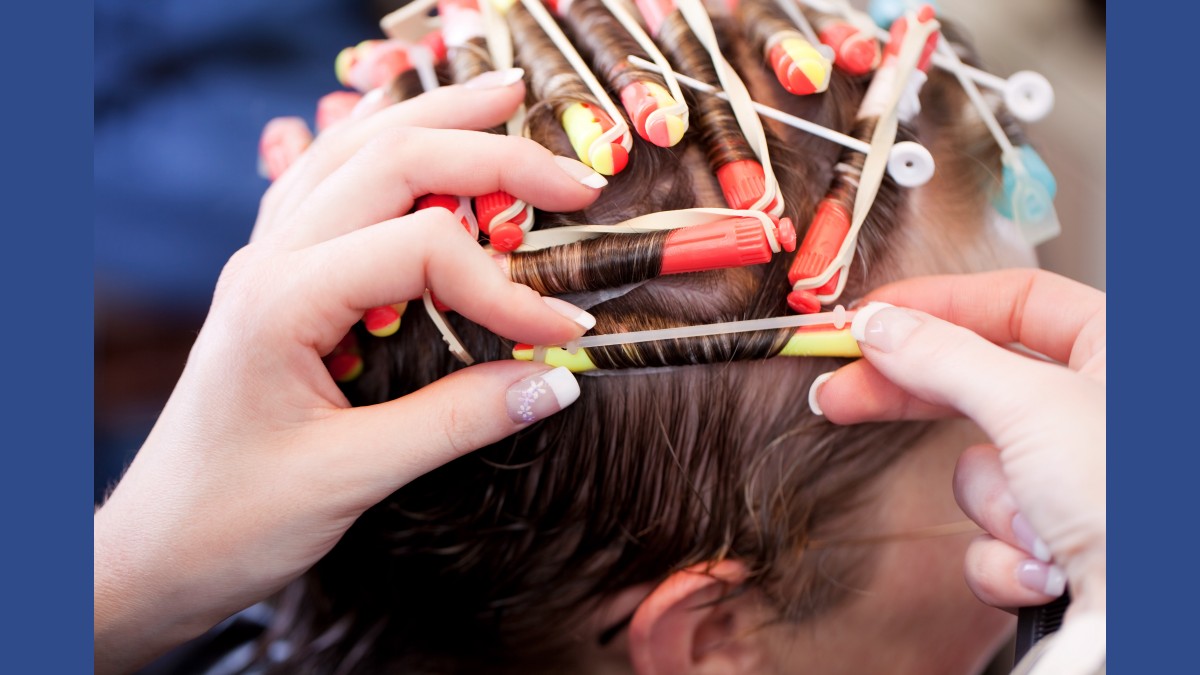
We alter the hair's wave pattern by curling it, typically using perm rods or rollers. These changes occur because we manipulate the side bonds of the hair. The salt and hydrogen bonds mentioned above are easily disrupted by the application of water and heat, which is why simply wetting the hair, wrapping it in rollers, and allowing it to dry, or using a curling iron, can create curls.
As the heat cools and the hair dries, the salt and hydrogen bonds naturally reform. Consequently, the curl achieved this way only lasts until the hair becomes wet again. Hot combs and flat irons operate on the same principles to relax curls and straighten the hair.
Perming The Hair:
The process we refer to as permanent waving involves using chemicals to break and reform the stronger disulfide bonds of the hair. After washing the hair and wrapping it on a perm rod (the size of the rod determining the tightness of the curl), we shape it into the desired physical form. Then, by applying a waving lotion with an alkaline base (commonly ammonium thioglycolate in today's perms), we raise the cuticle layer and break the disulfide bonds that dictate the natural wave pattern.
Once the waving lotion has had time to process and has been rinsed away, the rods are blotted to remove excess water, and a neutralizer is applied. The neutralizer is what actually reforms the disulfide bonds of the hair and sets the new curl pattern. This stage is also the most potentially damaging part of the perming process and should always be closely monitored.
After allowing the neutralizer to take effect, rinsing it away, removing the rods, and giving the hair a final rinse, it can then be styled as desired.
Continue reading...