A Guide To Permanent Waves
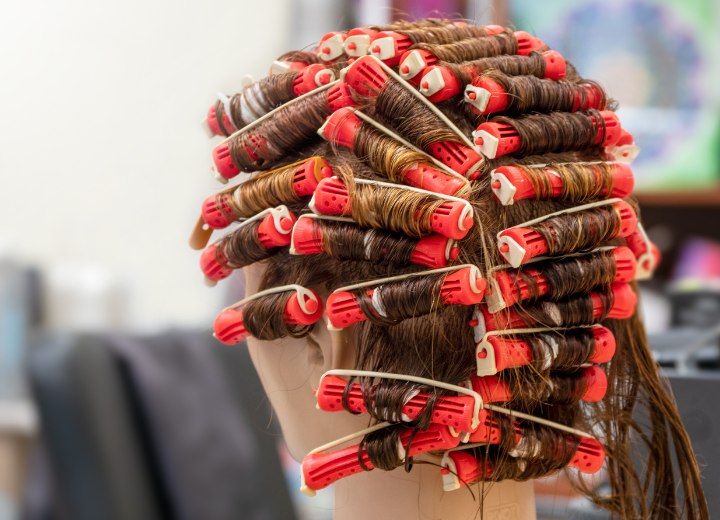
We can also take the straight hair and make it curl (and vice versa). When the chemical wave was developed, it was a breakthrough for many women who had long undergone repetitive and sometimes torturous treatments to get the curls they desired. Look into the history of cosmetology sometime and see the kinds of strange and dangerous treatments that some women underwent in the name of beauty.
Each formulation of a permanent wave has its own rationale and purpose for being, since there are so many different hair types. It’s important to understand permanent waving and the pros and cons of the different formulations in order to know what’s best for a given individual’s hair.
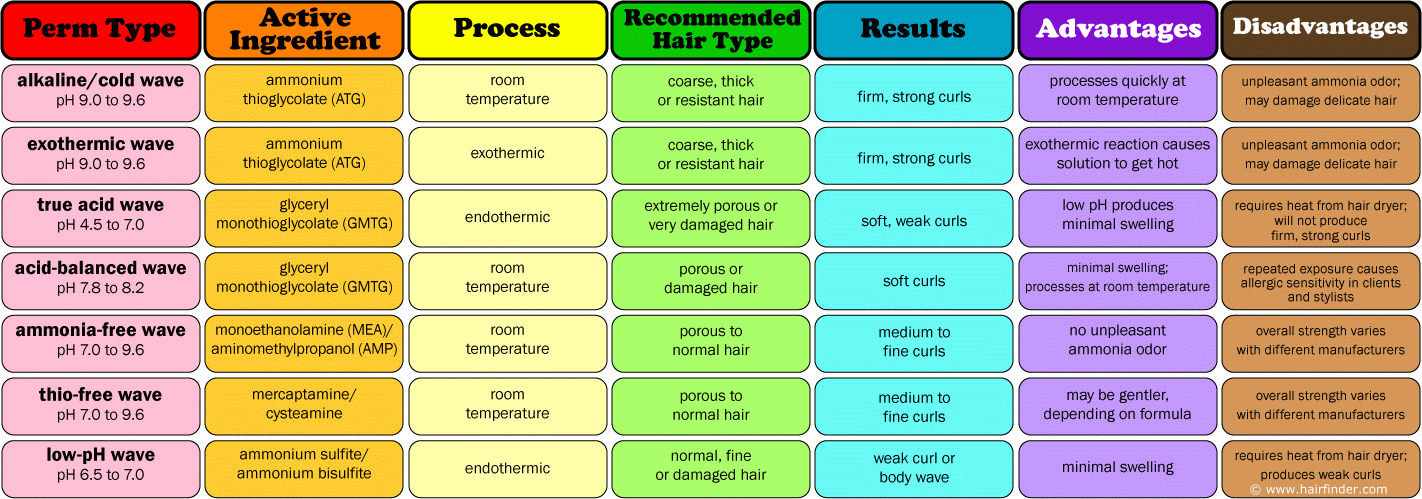
Let's look at the various perm types, what makes them special, and for which hair type and condition they are best suited:
Alkaline (or Cold) Waves
Alkaline waves are perhaps the most commonly used wave type because they are ideal for creating firm, lasting curls. Alkaline waves contain Ammonium Thioglycolate as a key ingredient and process quickly at room temperature without having to apply additional heat (usually within 20 minutes). Most alkaline waves have a pH between 9.0 and 9.6.
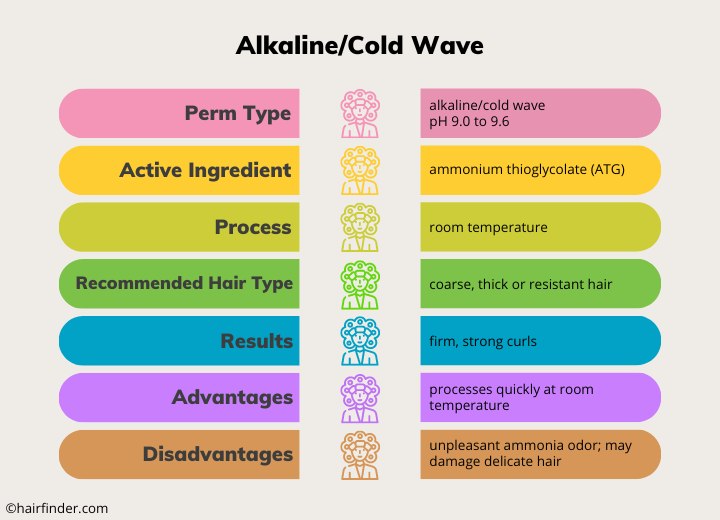
Due to the strength of the formulation of most Alkaline waves, they are ideal for use on coarse, thick, and resistant hair types to give a firm, strong curl. However, they often have a strong, unpleasant ammonia odor and can damage delicate hair types.
True Acid Waves
The first "true" acid waves were introduced in the early 1970s and use Glyceryl Monothioglycolate as the key ingredient. Because they have a pH between 4.5 and 7.0 typically, they process much more slowly and usually require the application of heat from an external source to process the hair.
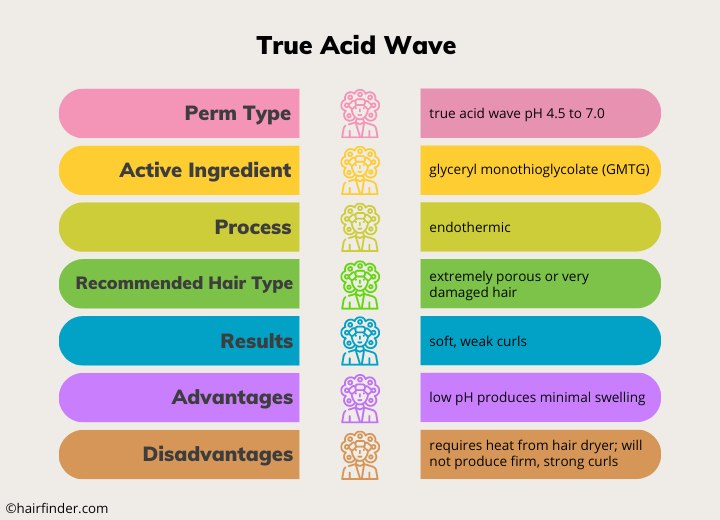
The comparatively mild formulation of an acid wave means it is much gentler on the hair, but also means that the processing will take longer and the resultant curl is often less firm than that achieved with alkaline perms. Acid waves are ideal for use on extremely porous hair or hair that has been very damaged, while it is likely to have little effect on coarser or more resistant hair types.
Note: All acid waves have three components: a waving solution, an activator, and a neutralizer. The activator contains the agent Glyceryl Monothioglycolate (GMTG) and should be considered carefully before deciding to use an Acid Wave since repeated exposure to GMTG is known to cause allergic sensitivity in both stylists and clients.
Acid-Balanced Waves
Because of the level of additional effort and difficulty in processing a True Acid wave, the strength and pH of acid waves have been increased over the years to allow for easier and simpler processing. Most acid waves found in salons today have a pH of between 7.8 and 8.2 which isn’t truly acidic. These are now called acid-balanced waves.
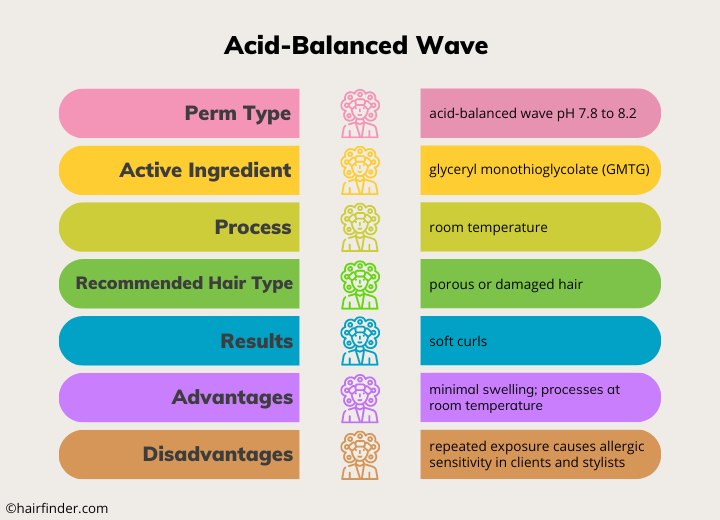
In addition to speeding up the processing and allowing for the wave to process at room temperature, and without the need for the use of a hair dryer to provide added heat, acid-balanced waves create firmer curl results than a true acid wave. They are great for use with hair that is porous and possibly damaged because they are gentler than most alkaline perms.
Note: All acid waves have three components: a waving solution, an activator, and a neutralizer. The activator contains the agent Glyceryl Monothioglycolate (GMTG) and should be considered carefully before deciding to use an Acid Wave since repeated exposure to GMTG is known to cause allergic sensitivity in both stylists and clients.
Exothermic Waves
An exothermic wave is called thus because of the chemical reactions involved in the waving process. An exothermic chemical reaction produces heat, and an exothermic wave uses exothermic chemical reactions to produce heat as a way to speed up the processing time of the permanent wave.
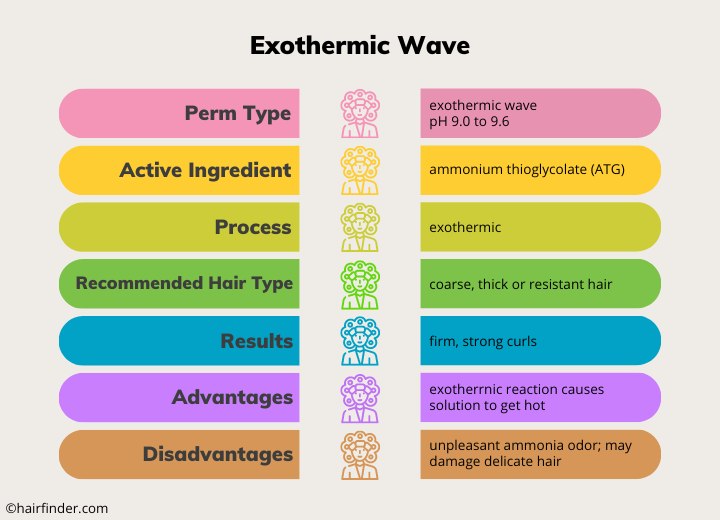
Exothermic waves have three components (like acid waves): waving solution, activator, and neutralizer. The waving solution contains thio just as in a cold wave and the activator contains an oxidizing agent (usually hydrogen peroxide). Combining the two creates a rapid release of heat and an increase in the temperature of the solution. The increased temperature increases the rate of the chemical reactions in the hair and shortens the required time to process the curl.
Exothermic waves are good for coarse, thick, and/or resistant hair types, typically process faster than alkaline waves and create firm, strong curls. However, like an alkaline perm, exothermic waves can damage delicate hair and often has a strong, unpleasant ammonia odor.
Endothermic Waves
An endothermic wave is the counterpoint to the exothermic wave. Whereas the exothermic wave generates its own heat using a specific type of chemical reaction, the endothermic wave utilizes reactions that absorb the heat from its surroundings. This means that they are only activated by an external heat source - typically a standard hooded hair dryer.
As is obvious, most true-acid waves are endothermic, but not all endothermic waves are "true" acid waves.
Continue reading ...