Thermal Styling with Curling Irons
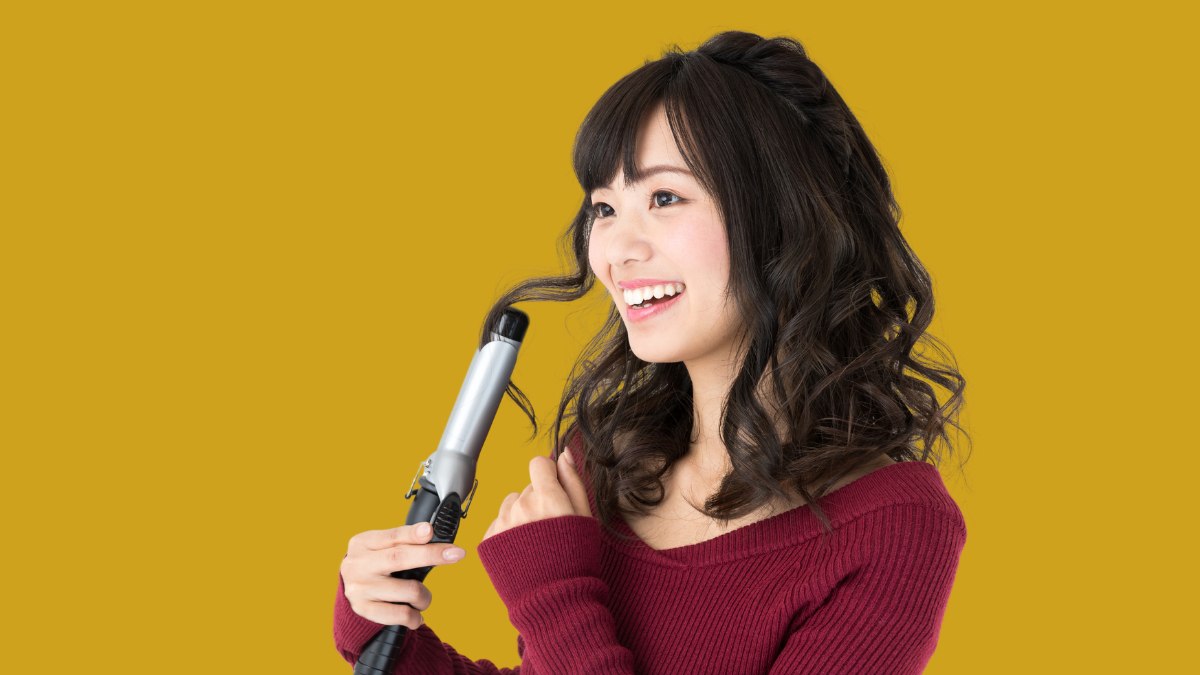
As technology developed and understanding increased, each new invention was inevitably applied to the practice of styling hair, either to add curls and waves or to take them away.
The barrels of today's curling irons vary widely in size and can range from the pencil thin - for very short hair or tight curls - to the enormous - for long hair or cascading spirals. No matter what size curl you're after, there's a curling iron for you. Unfortunately, a lot of women don't know how to use a curling iron properly.
Here are some things you should know to get the best use out of your curling iron:
Rule Number One: For best results, start with clean, DRY hair. The hair should be shampooed, conditioned with a moisturizing rinse-through conditioner, and treated with a leave-in conditioner for protection against damage from thermal styling. The hair must then be completely dried. If the hair is even slightly damp, thermal styling can result in severe damage, because the hot iron will effectively "cook" the hair, causing it to swell, opening the cuticle, and forcing the protective moisture out of the cortex.
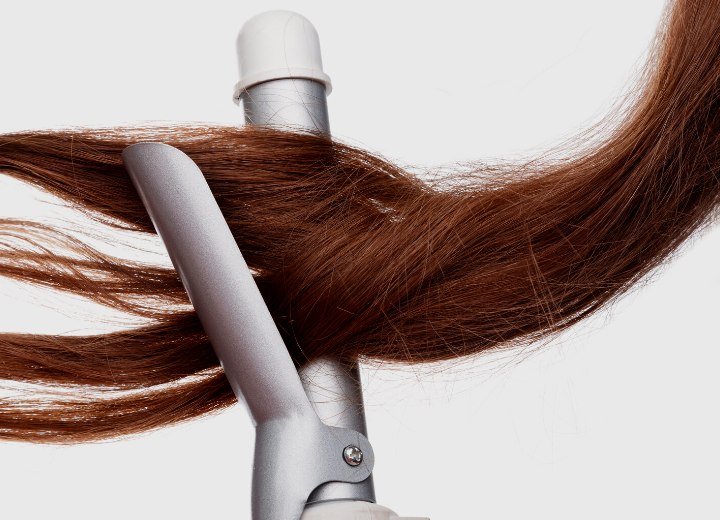
Remember, it's better to be safe than sorry. Back in school I watched a classmate use an untested curling iron on her manikin and saw the horror on her face as she wound the curl around the iron, saw it begin to smoke, and watched the curl break off and fall to the floor.
Rule Number Three: If you want your curls to last, use a small amount of styling product. By using a light mist of hairspray and allowing it to dry (or a small amount of gel or mousse worked into the hair immediately prior to drying) on each section of hair being curled, you will get firmer curls and the curls will last longer than without any product at all.
Rule Number Four: Work with manageable amounts of hair. Don't try to curl too much hair at once. For a curling iron to work properly, you have to get even heat distribution, and using too much hair at one time makes this difficult if not impossible in some cases.
Rule Number Five: Allow your curls to cool before working with them further. Because the heat used in thermal styling is what breaks the necessary side bonds allowing the hair to be reshaped, you have to let the newly formed curls cool so that these side bonds are reset in their new shape and the curls will stay.
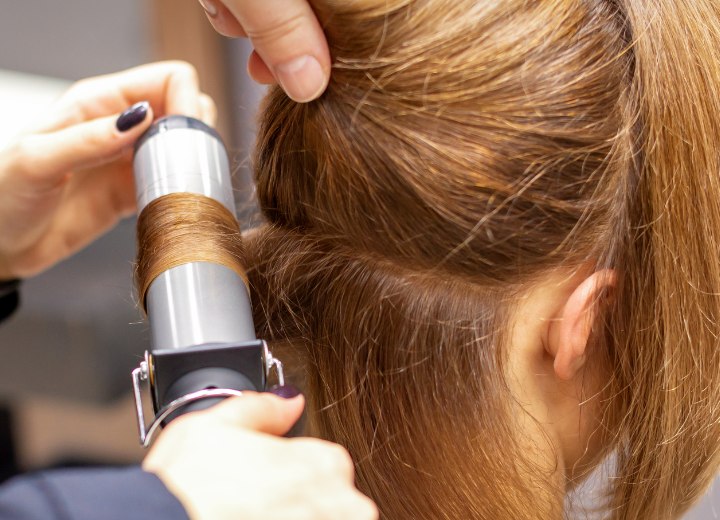
The Barrel Curl: Good for adding body and fullness to shorter hairstyles. To achieve the barrel curl, you divide the hair into sections a little shorter than the length of your curling iron's barrel, and take slices approximately as thick as your curling iron is wide. Slide the hair section between the iron's clamp and barrel, gently slide the iron to the end of the hair and roll the iron toward the scalp.
As you near the scalp, you can use a comb to prevent touching the head with the hot iron and burning yourself or the person whose hair you are curling. Hold the iron in place long enough for the heat to penetrate fully then unwind the iron in place to loosen the hair and allow you to slide the iron out of the curl from the side. If you want to make sure the curl stays tight, you can use a bobby pin or hair clip to hold the curl in place while it cools. Once cooled, you can style the curled hair as you wish.
The Spiral Curl: This type of curl is extremely popular in long hairstyles, and is also great for adding something extra to special occasion styles. The spiral curl is achieved by using smaller sections of hair and wrapping them at an angle along the barrel of the iron from the ends to the scalp. Again, hold the curling iron in place to allow the heat to penetrate fully, and unwind the iron in place so that you can release the curl and slide the iron out from the end. Allow the curl to cool and you can use your fingers or a comb to soften the curl without losing it.
©Hairfinder.com
See also:
More about barrel curls and spiral curls
The different sizes, shapes and styles of culing irons
What do I need to look for hen buying a curling iron?
Burning smell when using a curling iron