How to Layer Long Hair
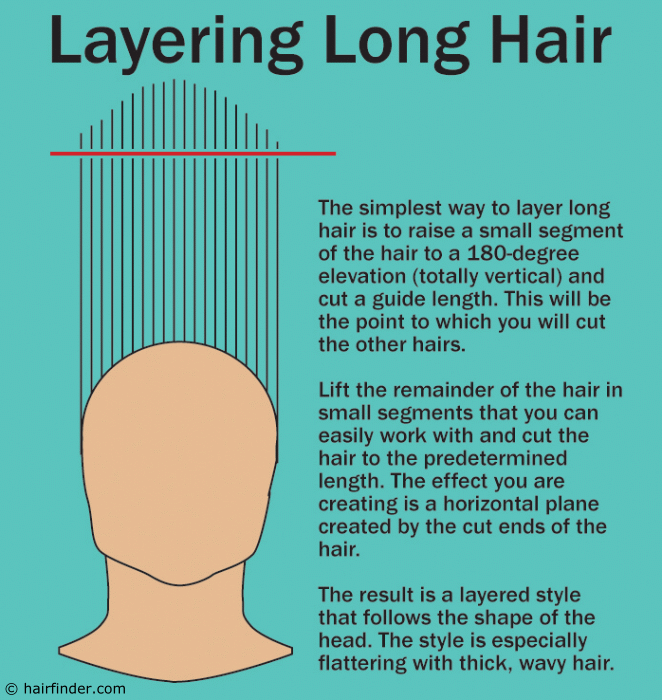
Q: Do you have a diagram of how to layer long hair?
A: Actually, several of the articles we have on haircutting here at Hairfinder contain diagrams for creating many types of layered hairstyles. These articles can be accessed here and will offer you much of what you need to know to create the layers you desire. I highly recommend you review these articles as well as the information on how to layer hair I give you here.
There is the beveled cut where the hair is layered, but long, so that the layers of the hair only appear along the lower 25% of the hair's finished style. There is also what is commonly referred to as a long-layered haircut.
In the long-layered haircut, the hair is raised to a 180-degree elevation - in other words, completely vertical - and cut to a designated length. This designated length is chosen when beginning the cutting process.

Designate the length of the cut by starting with a small segment of hair at the top of the head. In the case of individuals with long fringe/bangs this length is usually determined by the length of the fringe, although those with shorter fringe areas may want to have the layers at the top of the hair longer than their fringe for various reasons. This designated length is going to be your stationary guide.
Once you've determined the length of your stationary guide, continue by bringing small segments of the surrounding hair up to the stationary guide and cut the hairs to the same length. It's much better and more accurate to start with the stationary guide and work from front to back in the center of the head and then from side to side, alternating between left and right and working front to back until all the hair has been cut.
There is a shortcut step that many women have used in performing this haircut. The trick has made it possible to give a good-looking cut with minimal experience. Simply have the person whose hair is to be cut lie on a table or high countertop with his or her head hanging over the end upside down. Make sure the head is completely vertical - albeit inverted - comb the hair down and cut it off on a straight plane. It's not practical for many people, but in cases where it can be done it will greatly speed the cutting process.
©Hairfinder.com
See also:
What is the difference between a layered cut and a beveled cut?
How to cut box layers
What is the difference between square layers and vertical layers?
How to cut a uniform layered haircut