Basic Hair Coloring Information

In the seventeenth and eighteenth centuries, women applied oil and powder to their hair to achieve a lighter color. Today, the color of hair one is born with bears little relation to the color one can have if they desire something else.
To make good choices about hair coloring, here is some basic information:
Your hair gets its color from a substance called melanin, found in the cortex of the hair shaft, between the outer layer, or cuticle, and the core, or medulla. Melanin comes in two varieties: eumelanin, which is responsible for brown and black colors, and pheomelanin, which is responsible for red and blonde shades. Hair can have either of these types of melanin, or none at all, in the case of gray hair.
When you start thinking of coloring your hair, you should first determine the "contributing pigment" of your hair. This is the underlying color of the hair. Many brunettes and blondes have the same contributing pigment, varying only in the lightness and strength of the color.
We use the term "level" to indicate the lightness or darkness of the hair. Color level is based on a ten-step scale, with 1 being black and 10 being the lightest blonde. By judging the color level of the hair, your colorist is able to choose which color shades will work best to give you the desired results, and whether they will need to pre-lighten the hair in order to achieve the look you want.
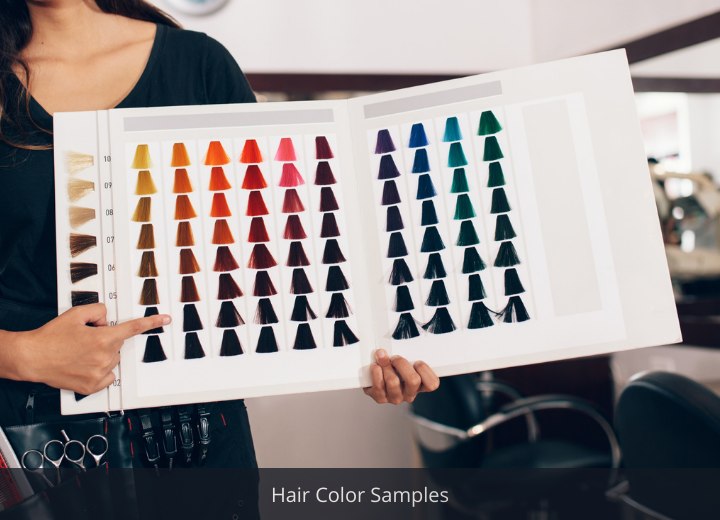
"Intensity" is also important to consider when thinking about hair color. Intensity is the strength of a color tone. "Strawberry Blonde" and "Fire Engine" are both red tones, but I can guarantee that no one will mistake the two colors because of the difference in their intensity.
Finally, when you look at a color to apply to the hair, you have to consider the base color. Today's hair color formulas clearly show the base color on the bottle; these typically are red, red-orange, orange, gold, neutral, blue, blue-violet, and violet. The neutral, blue, blue-violet, and violet base colors are generally found in true black, ash tones, and platinum blondes.
By carefully evaluating the color of your hair before you color it, you and your colorist can achieve astonishing results in creating a natural look, or even a dazzling new one, for you. But most importantly, it can prevent you from making an unfortunate mistake in the coloring process. Once you are aware of the important factors in the color you have chosen, you can have fun with it.
©Hairfinder.com
See also:
More about hair coloring
Hair FAQs