Realistic Expectations and Results from Make-Up
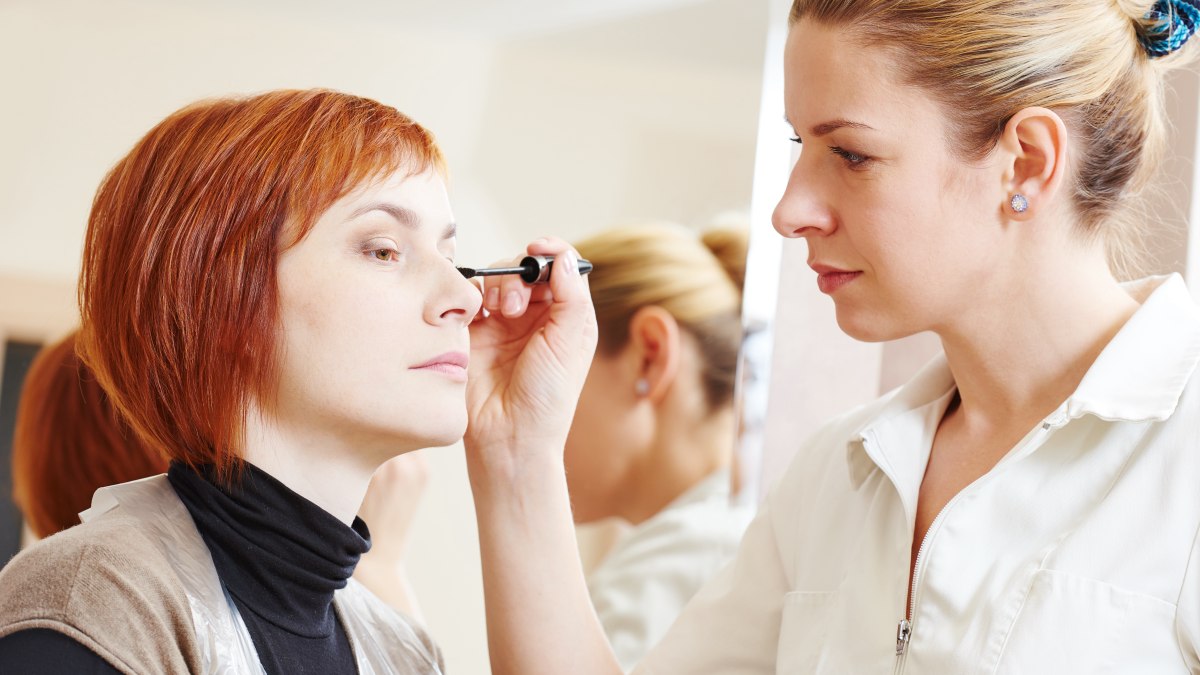
When I say “improperly” I mean that they seem to use it in order to manufacture a look rather than enhance the natural appearance of the face. This is the most common mistake made by women as it regards their make-up.
When she came to the campus cafeteria for breakfast on the first day of camp, she his herself away in a distant corner and kept her face to the wall. She needn’t have bothered. As unbelievable as it sounds, NO ONE recognized her (except her dorm-mate who had witnessed the transformation in reverse the night before). It was such a dramatic difference that everyone asked her about it. Obviously, this revealed that Emily suffered from a common issue for many women: poor self-image.
You see, at seventeen, Emily was convinced that she was unattractive. The truth of the matter is that she was a natural beauty. She’d been plain in her pre-teen and early teen years, had worn braces, and glasses and suffered from very mild acne (one or two blemishes at most).
She’d been a late developer, which added to her sense of unattractiveness. To compensate, she’d begun using make-up at an early age and had become very adept at creating the look she felt was pretty. I just thought it was a shame that a seventeen-year-old would feel that she had to manufacture a look to be attractive.
I learned later that her mother had much the same attitude about make-up and that she’d offered to come and get Emily from camp the first night when Emily called her to say that she wouldn’t be allowed to have her cosmetics. Fortunately, Emily chose to stay, and for a few days at least, she was able to get some positive feedback about her natural looks. Once the cosmetic restriction was lifted, Emily returned to her comfortable look, and we all saw the face she wanted us to see again.
I hope that someone managed to finally impress upon her that she didn’t need so much make-up, but I will probably never know. I do remember that all of our attempts (those made by myself and her other friends) to reassure her that she didn’t need much make-up were met with complete skepticism.
Contrary to what Emily and many other women in the world believe, make-up is meant to enhance the natural beauty of the face. The goal is to minimize features that are imbalanced or out of proportion, to obscure traits that are undesirable and to enhance and emphasize the strongest positive features of the face. Nevertheless, many women instead think in terms of “painting the face” as opposed to enhancing the features, and the results are predictable.
Many women need help in keeping the expectations realistic when it comes to make-up. To that end, let’s look at some common areas where unrealistic expectations seem prevalent:
• It is realistic to apply foundation in order to even out variation in skin tone. It is NOT realistic to expect a natural-looking result if you are attempting to hide skin disorders or severe discolorations. You can minimize the appearance of freckles, and in some cases, blend them away completely, but for dark, high-contrast pigment marks, most foundations will only go so far and remain natural-looking.
• In the case of acne blemishes, particularly severe eruptions, attempting to hide them using foundation is definitely unrealistic, and often makes the condition worse.
• It is realistic to use blusher and contouring make-up in order to emphasize the cheekbones or to minimize the appearance of unflattering areas of the face. It is NOT realistic to attempt to use blusher or contouring make-up to completely change the shape of the face. You will not get a natural-looking effect if you try to make a round face look narrow by shading the sides excessively.
• Eye make-up is especially vulnerable to unrealistic expectations. It is realistic to use eye make-up to enhance eye color, and to make them appear brighter and more open. It is NOT realistic to expect a natural-looking result when you use excessive eye make-up, including liner, shadow and mascara in dark shades, particularly in daylight.
• Obviously, the rules for make-up differ from day to night. Heavier make-up applications are acceptable in the evening when the ambient light tends to be darker and the effects of cosmetics is less visible, but even in night-time application you can easily go too far if you aren't careful.
Of course, there are other problem areas in make-up application, but you get the idea. One simple truism that applies to the subject of make-up application is "less is more". You should always try to remember to use softer colors in daytime and save richer colors for evening wear. You should also know that while you can always easily add more make-up, removing an over-abundant application often requires starting from square one.
If you keep the focus of your efforts on simply enhancing your appearance, you will usually find that your results are both more flattering and more natural-looking.
©Hairfinder.com
See also:
Make-up How To
Common Make-up Mistakes