Lip Make-Up Application
When it comes to the lips, most women content themselves with their favorite tube of wax-based lip color and feel they’ve done enough. In fact, I know women whose entire make-up kit consists of a tube of lipstick and a tube of mascara. Frankly speaking, lipstick is enough for most women, most of the time.
But there are other cosmetics that serve purposes connected to making the lips more appealing. In addition to lip color, we have lip liner products to define the shape of the lips, and glosses to give a smoother, plumper appearance. We also have new products that are designed to actually increase the fullness and appearance of the lips, although the results from these are not yet everything one might expect.
Without going into a lot of dry and boring technical jargon, the lips are made up of skin consisting of flat, scale-like cells in three to five cellular layers (the skin of the rest of the face has up to 16 layers on average). The lips form the border between the exterior skin of the face and the mucous membranes of the interior of the mouth.
The skin of the lips has no hair follicles, no sweat glands and no sebaceous glands. Because of this, there is no production of natural emollients or perspiration to keep the skin smooth, and the thinness means that the lips can become dry and chapped easily.
The thinness of the lips also means that the blood vessels below the surface are more readily visible and in individuals who have pale skin tone, the lips have much fewer melanocytes (pigment cells) and often take on a very pink tone. With individuals of darker skin tone, the lips are often less notably different in color. The tissue beneath the lips can also include fat cells which give the lips their plumpness and shape.
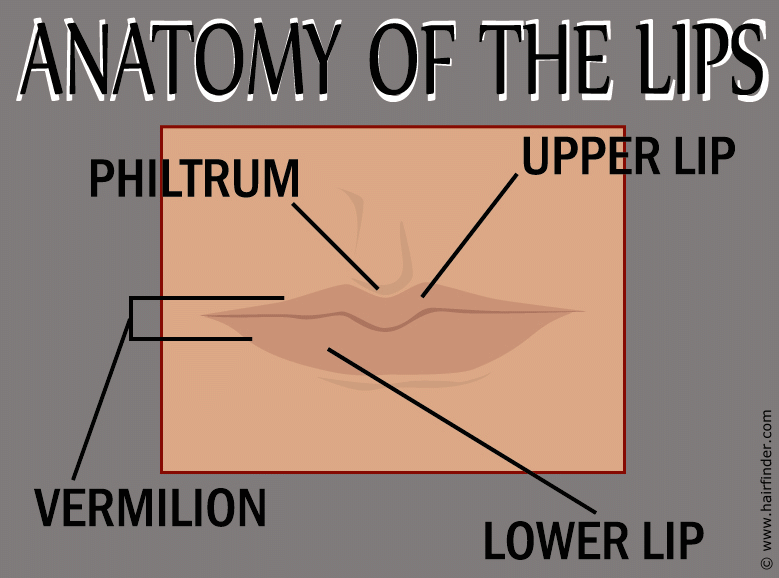
The basic parts of the mouth and lips are as follows:
Upper Lip – (labia superfluous entafada) is the strip of smooth skin that borders the upper edge of the mouth. It is usually thinner than the lower lip and can have pronounced peaks to either side of a groove at the center of the mouth.
Lower Lip – (labium inferius) is the strip of smooth skin that borders the lower edge of the mouth. It is usually wider and vertically deeper than the upper lip.
Vermilion – [ver-MIL-yon] is the border of the skin of the lips and the surrounding skin of the face. In some individuals this is more pronounced, while in others the two skin types seem to almost blend.
Philtrum – [FIL-trum] is the groove-like indentation often found at the center of the upper lip. It is responsible for the biggest difference in shape between the upper and lower lips and becomes more pronounced when the mouth is puckered.
Lips and Ideals of Beauty
Throughout history, the lips have been compared to flower petals and sweet wines or nectars. Young women were praised for the softness, poutiness and plumpness of their lips. When young women blushed in their innocence, their cheeks would color and the flow of the blood would cause their lips to darken and swell slightly as well. The same result was found whenever the individual became aroused.
As cosmetics came into use, the desire was to create a reflection of these alluring traits, and the act of tinting the lips – first with juices of fruit and berries, and later with other longer-lasting preparations – became commonplace. Oils and waxes, and other emollients (like whale blubber) were used to protect the lips and help the color last – even add shine to make the lips look plumper.
Lip Cosmetics and Their Use
Of the three most common lip products (speaking of cosmetics only) there are specific uses and purposes that these products are designed to serve. First is lip liner which is intended to define the shape and borders of the lips as well as to help the lip color wear better.
Second is lip color, whether it’s in a stick, brush-on cream or even a liquid, the primary purpose of the product is to add a flattering tint to the skin of the lips. Finally, there’s lip gloss, which is usually a liquid product that is meant to give long-wearing shine to the lips and keep them looking smooth, and plump.
Continue reading ...