Ponytails, Pigtails and Topknots
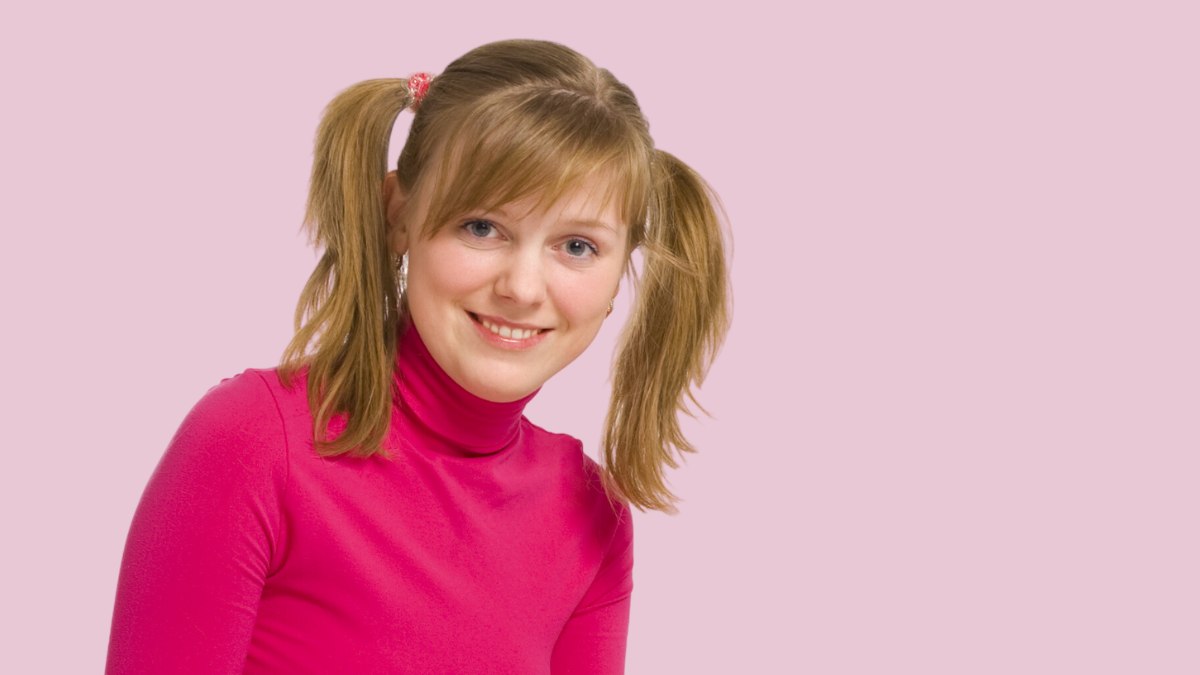
Ponytails are the most utilitarian of hairstyles and have many variations on the theme. They are especially useful for women and men with long hair, to prevent tangling while engaged in activities. They are also a staple for little girls' hairstyling. Most mothers use them to keep the child's hair neat and tidy while they play.
Ponytail:
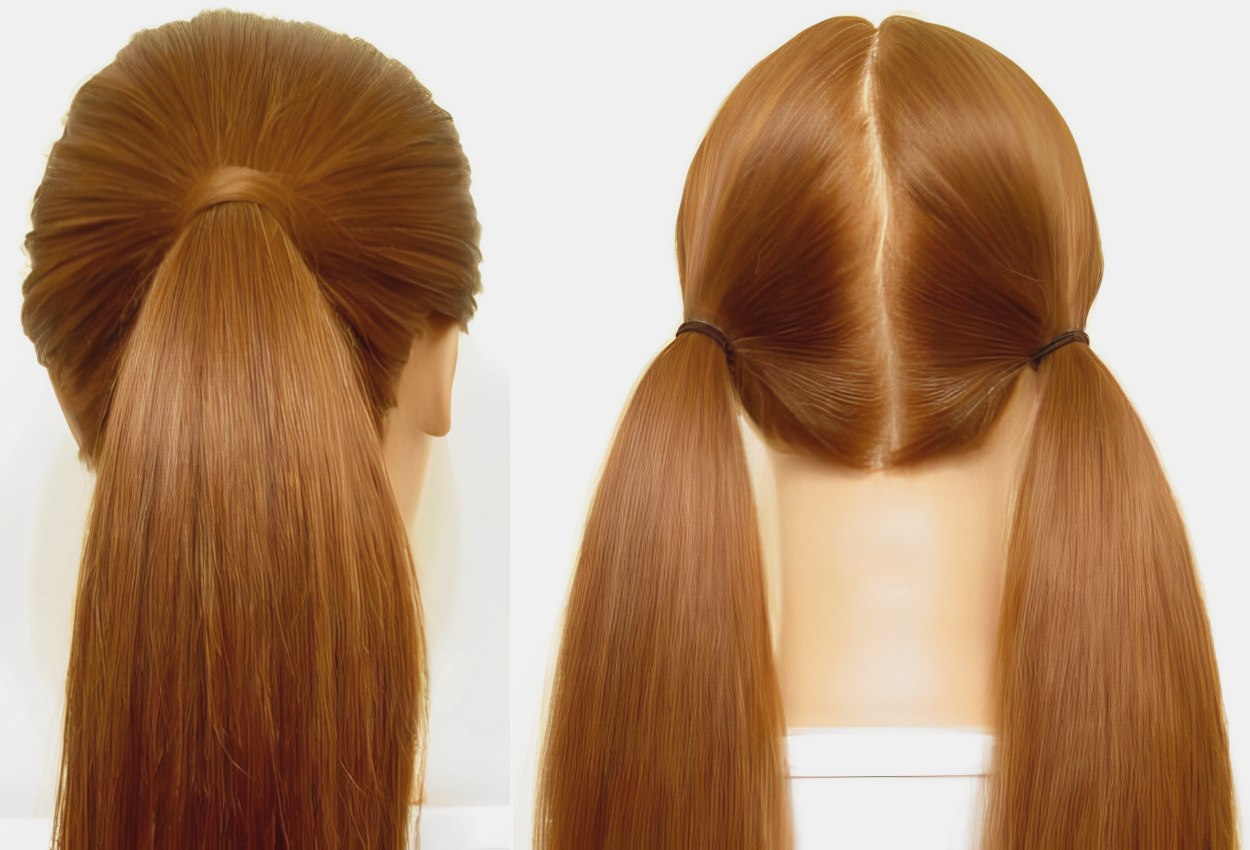
The ponytail is created simply by pulling the hair back and securing it with a band of some sort. The point at which the ponytail is gathered can be virtually anywhere - on one side or the other, but is most often at the back, centered over the occipital bone. The hair is generally left to hang loosely from the ponytail holder. This is the basic ponytail.
However, there are many ways to modify the ponytail and "dress it up". In the photo, we took a thin section of hair from the ponytail and wrapped it around the ponytail holder to hide it, securing the ends of the section underneath using a small bobby pin.
If you wanted to wear a ponytail but wanted it to be dressier, you could use a curling iron on the loose hair and add as much or as little curl as you desire. If you wanted to wear a ponytail to keep your hair tangle-free during some activity, you could braid the loose hair of the ponytail. This is especially useful if your hair is extremely long, or is particularly prone to tangling.
Pigtails:
Pigtails get their name from the fact they were commonly worn by little girls whose hair would form ringlets when pulled up into the two matching tails. The little corkscrew curls looked like a pig's tail, thus pigtails was the name. However, all that is necessary for a pigtail hairstyle is for the hair to be divided and formed into two separate tails.
The positioning and placement of the tails is variable but should always be symmetrical (the same on each side). And as with the ponytail above, the loose hair can be styled however you desire.
The best thing about pigtails is that they can be created with shorter hair. If you have an issue with your hair coming loose from a single ponytail because of the length (or lack thereof) consider using pigtails to secure the hair. While some people dislike the look of pigtails, there is a lot of historical evidence of the style's popularity among Native American tribes and among Nordic tribes of centuries ago.
Topknots:
Some people would argue that the topknot is simply another form of ponytail, and they would technically be correct. However, a ponytail can only be called a topknot when it is gathered at the upper crown area or the top of the head. Topknots sometimes use only part of the hair on the head, and in such cases are generally used to keep long hair pulled back from the face.
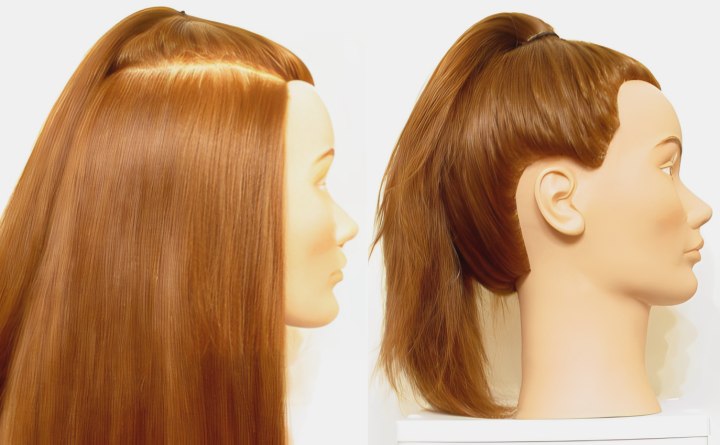
Sometimes, a topknot is used as a base for another hairstyle. The topknot can be wound into a bun at the crown of the head, or in the case of a partial topknot, the hair of the top and sides of the head can be pulled up and bound at the crown, and the loose hair from the topknot and that hair along the back of the head can be curled to create an attractive cascade of curls.
One problem complained of most often by women who wish to wear a topknot is that the hair is sometimes not heavy enough so that it stays in place. In the photos above, you see a technique that will help you to combat this issue. By taking the hair of the top and crown of the head and forming an initial topknot, you create a base upon which to gather the rest of the hair.
The remaining hair is combed upward and smoothed into place around the first knot, and a second binder is used to hold it all together. The inner topknot gives added support and reduces the amount of weight being held by the binders.
Now that we've taken this brief look into ponytails, you have enough information to be able to create a number of different looks for yourself. Just remember, these styles are generally very simple, useful, and can be a lot of fun, so explore the possibilities and have fun.
©Hairfinder.com
See also:
Minimum hair length for a ponytail
How to make a ponytail
How to make a poof ponytail