Hair and the Older Woman (2)
Scalp Care:
The fact that many women lose hair density as they age often leads to a problem that many women fail to anticipate until it's too late - sunburn on the scalp. Older women who notice that their hair has begun to thin should look for conditioners with sunscreen in them, or else use a separate sunscreen applied carefully to the scalp while the hair is wet, then dry the hair and style as desired.
Some women as they get older and enter into menopause or perhaps experience other hormonal issues find they develop adult acne and get blemishes on the scalp. Use of an astringent or acne treatment that contains Salicylic Acid will help to clear up existing blemishes and prevent new ones by helping to keep the pores of the scalp clean and clear of debris. In some cases, an acne cleanser can be used on the scalp before shampooing, but make sure to rinse thoroughly.
Dealing with Gray Hair:
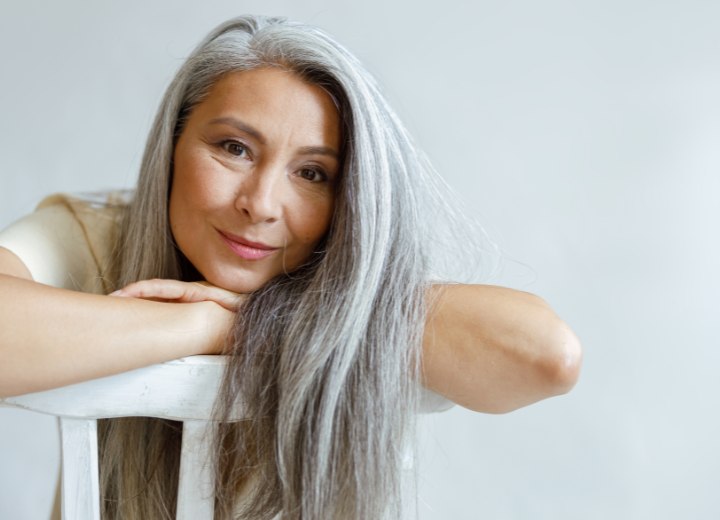
Gray hair, while not necessarily an indicator of someone's age, does tend to occur as a part of the aging process. For some women, gray hair is no big deal and they choose to go gray gracefully. For others, it is a major issue and sends them running to the salon or the pharmacy for hair color. However you feel about gray, there are a few things you should know.
When pigmented hair turns gray, it changes more than just the color of the hair. The hair's cuticle layer becomes more compact, making the hair more resistant to penetration.This means that often the hair becomes more difficult to curl, takes longer to process for chemical services like perms and straightening, and may resist hair color services. This latter feature of gray hair is ironic when you consider that covering gray is one of the most common reasons people color their hair.
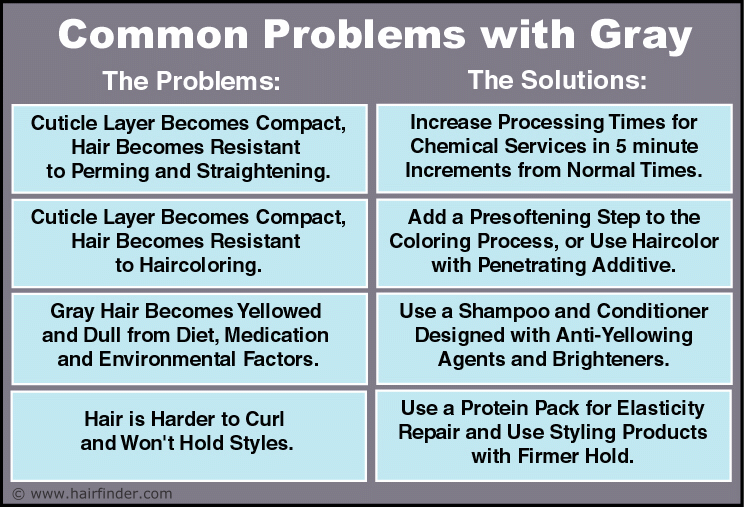
Gray hair's resistance to hair color can be worked around by pre-softening - the process of swelling the cuticle layer before applying the color. This allows the hair color to penetrate the cuticle layer and be deposited in the cortex. Without pre-softening, you could find yourself sitting through a twenty-minute color process, only to watch all the color wash down the drain and your hair remain the same gray as before.
There are many women who like the look of their gray hair, particularly those whose gray is of the silver or snow-white variety, which can be very striking in certain styles. But, a common complaint among women with this type of gray is that the hair sometimes seems "dull", "lusterless" and "yellowed" due to environmental factors, product build-up, medications, and dietary issues.
The solution to this problem is the use of shampoos and conditioners designed to brighten and remove yellowing from gray hair. These products use clarifying surfactants and bluing agents to remove residue and counteract the dingy tone. The result is silver hair that literally sparkles.
©Hairfinder.com
See also:
Hairstyles for middle aged and older women
Hairstyles that make you look younger
Age appropriate hairstyles
Why and how hair turns gray