Hairstyles Tips for Glasses Wearers (2)
Previous page
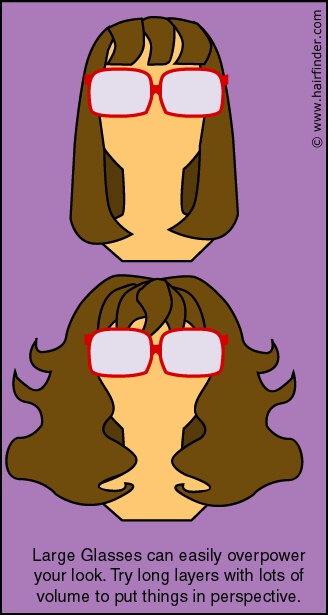
Large-Framed Eyeglasses:
The lenses of this style of eyeglasses cover the entire eye area, usually from the upper cheek to above the eyebrow, although the actual size may vary. When combined with a bold frame style, these eyeglasses become the prominent feature of the face. The lenses can be rounded or squared, but are always large enough to cover the entire eye area. This style is often chosen by individuals with widely-spaced eyes or for whom the eyes are a strong feature, to provide balance or prevent the eyes from being obscured.
When choosing a hairstyle to complement large eyeglasses, it's important to remember that proportion is key. A long, low-volume, or straight hairstyle can make the eyeglasses stand out, often to the point of overpowering the face. Shorter, gamine hairstyles can intensify this effect even further. The best choice is a style that can hold its own. A long, layered style with extra volume on the sides will put large-framed glasses into proper proportion.
Small-Framed Eyeglasses:

This is one of the most popular styles of eyeglasses. The lenses are usually just large enough to cover the eyes themselves, with frames that are delicate and unobtrusive. These glasses most often look best on petite women with narrow or smaller faces. They are also a popular choice for those who only need glasses under specific circumstances (such as while reading or driving) because their size makes them easier to carry than large, bulky styles.
When it comes to choosing a hairstyle, the concern with these styles of glasses is to avoid "boxing in" the facial features, which can make the face seem even smaller and result in a bookish look. It's best to opt for styles that fit the face and head shape and offer enough visual interest to make the eyeglasses a secondary thought. For example, a short, wavy, gamine haircut will highlight the face but leave it open, while the classic, chin-length bob will create a frame around the face and emphasize the eyeglasses, making the face appear smaller.
In the case of non-petite women who choose small-framed eyeglasses, the same rules apply, and the face-framing bob haircut still would not be a good option. However, longer, blunt haircuts with or without volume (depending on the face's width) can be wonderful choices.
Switching to contacts from small-framed glasses will likely not have much effect on how you might need to style your hair, except perhaps to allow you to go with less volume if desired.
Finally, keep in mind that these rules also apply in the case of sunglasses. In fact, in many cases, women spend as much or more on their designer sunglasses as they do on their prescription glasses. If you have both sunglasses and prescription eyeglasses, and they are of different styles, consider ways you can alter your hairstyle to follow the rules for the sunglasses' style, obviously without making a permanent change. Outdoor parties, trips to the beach, or amusement parks all warrant long periods of wearing sunglasses, and thus the need to possibly alter your normal hairstyle to look your best.
See also:
How to match hairstyles and glasses
How to find the right glasses