A Brief Look at Braided Hair

Mothers who are adept at braiding their daughters' hair appreciate the fact that they can style the child's hair without worrying that at bedtime or bath-time they will face the headache (often literal) of of combing out tangles and snarls.
Alternatively, it could be that the level of detail and sophistication in modern hairstyling techniques has evolved so much that braided hairstyles may appear less mature in comparison. Despite these observations, there are many exceptions. Some simple yet sophisticated looks created using braids are suitable for any occasion and complement a woman's facial features. Nevertheless, the widespread opinion that most braided styles are more flattering on younger women persists. However, this was not always the case.
We are aware that hairstyles have evolved throughout history, a fact well-documented in paintings, tapestries, and other artworks. Modern women benefit from changing social norms and advances in styling technologies, allowing them the freedom to wear their hair in virtually any style they desire. In earlier historical periods, long hair was the norm for women. Artworks from the Medieval and Renaissance periods depict many women wearing their hair in elaborate braids and styles, with hair often reaching well past their hips.
It should be noted that these elaborate hairstyles were not typical among the general population. Despite their prevalence in portraiture artwork from these eras, they were not commonly worn by average women. We, as viewers, must remember that artists rarely depicted 'common' women in their works. Most artists were commissioned by wealthy merchants and nobles to immortalize favored family members.
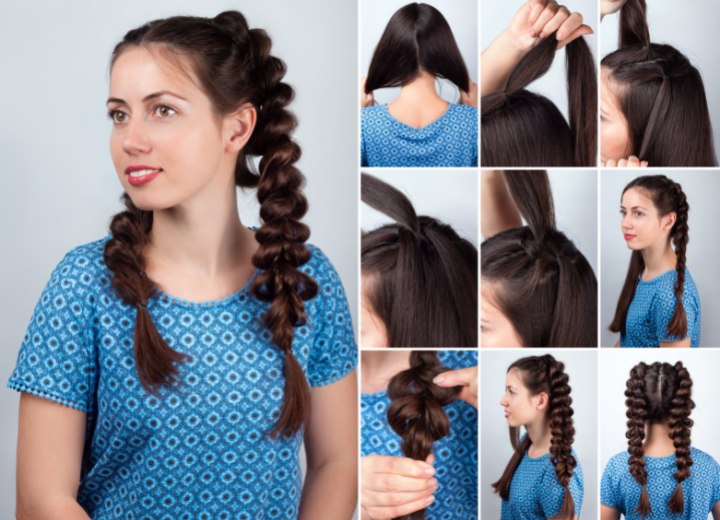
As a result, intricate and complicated braids would often be created and worn for days at a time. This practice seems less unusual when considering that women's dresses of the period were typically sewn directly onto the wearer, with detachable portions such as skirts and sleeves that could be removed for sleeping. Especially in Medieval periods, braids were fashionable due to their longevity. The presence of grooming maids helped reduce the time required to braid hair, which was often several feet long.
As mentioned earlier, women today wear their hair much shorter than in eras of the past. Even the long hairstyles of the modern woman would be less than half the length of what would be considered "long" in ages gone by. Furthermore, modern styling techniques and advanced understanding of the chemistry and physical properties of the hair allow modern stylists to create varied and attractive styles that last without hours of weaving, twisting, and binding the hair into elaborate braided patterns.
It's because of this that most of today's braiding styles are much simpler overall than in previous times. It also accounts for the fact that the basic styling techniques like braiding have been relegated to use on young women and girls for whom chemical services and high-maintenance styles are not suitable.
Just remember, if your hair is long enough for a braided hairstyle, you shouldn't be afraid to wear it. These styles can be practical as well as flattering, and can serve you well in a variety of situations. Do your homework and look at the many intricate styles available in braids, and go for it. You will be pleasantly surprised.
See also: More about braiding hair