Hair and Eyes Color
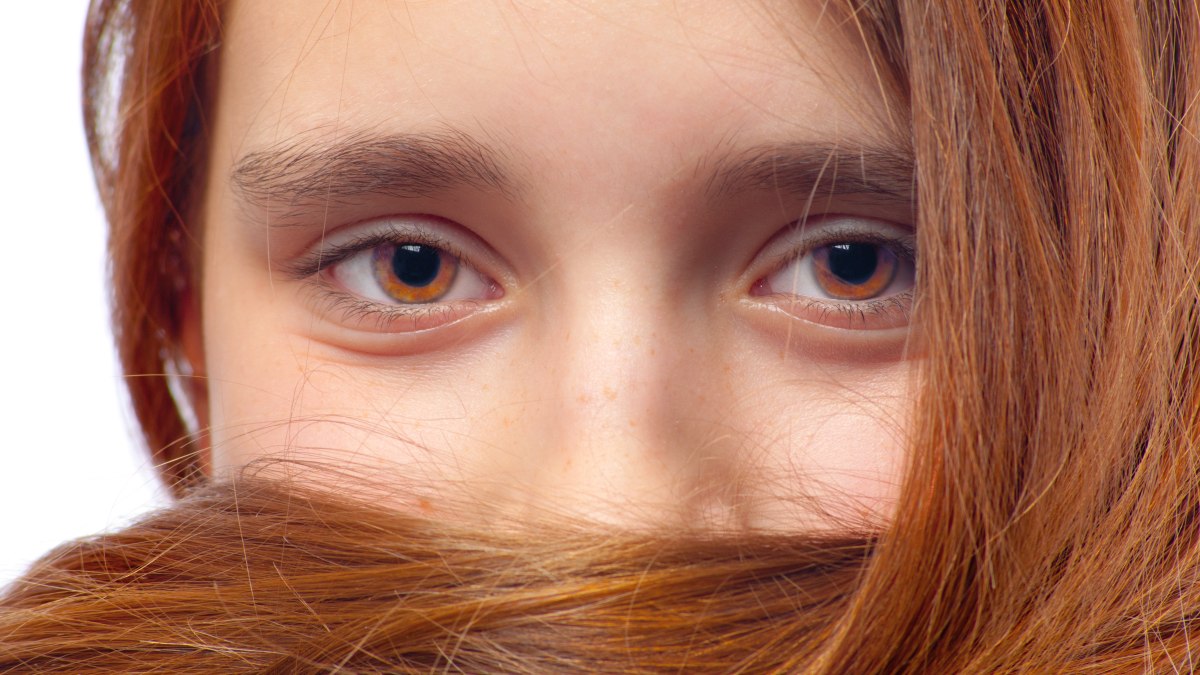
A: Choosing hair color is a matter of understanding what your color profile is. In times past, people were categorized by seasons: Summer, Winter, Spring and Autumn. Spring and Winter were cool tones and often had interchangeable colors. Summer and Autumn were the warmer color palettes.
The benefit of this change is that it is accompanied by a new method of determining the categorization. Simply take a piece of gold jewelry and silver jewelry and lay them against the skin. Compare the two and the way they look against the skin. The one that appears brightest against the skin is the appropriate metal and gives you your category.
Those who are golds, favor warm tones, while silvers favor cooler tones. But to make the eye color stand out, you need to have a complementary color in the hair. This means a color that is opposite the color of your eye on the color wheel (or at least whose base color is opposite your eye color).
For instance, if your eye color is brown, the complementary color is blue, so while you may not want blue hair, you can choose a color with a blue base (like platinum or ash blonde, and ash browns or even blue-black).
If your eyes are blue, the complementary color is orange, which means that many of the red hair and brown hair shades whose base color is orange are perfect for making your blue eyes pop.
With green eyes, the color base is red, so the colors that veer more toward the red tones work better, while with violet eyes, you want to use a golden base color.
©Hairfinder.com
See also:
Cool and warm hair colors
How to use the hair color wheel
Hair colors and our color palette
Draw attention to the eyes without coloring your hair