Aging Dark Hair
A: You are correct that the ideal hair color shade for an individual is always dependent on his or her skin tone and undertones. However, the rule of thumb regarding dark hair making mature skin look older generally holds true due to light contrast.
At the same time, the complexion changes. Skin loses collagen and elasticity, undertones often lose natural warmth, and fine lines, wrinkles, and uneven pigmentation become more noticeable. These changes alter how hair color interacts with the face. A hair color that looked vibrant and flattering at age 25 may appear harsh at age 55, even if the skin tone remains similar.
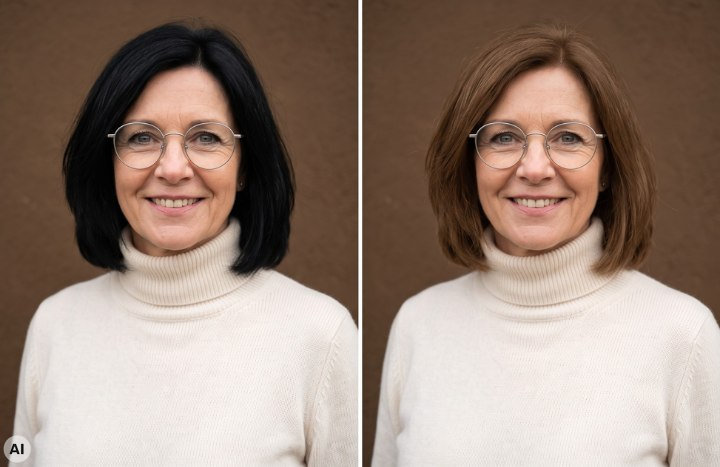
When a person has visible signs of aging, keeping hair the same stark dark color as in their youth makes lines and shadows appear more pronounced. Very dark, monochromatic hair creates sharp visual contrast against mature skin, drawing the eye directly to facial features, under-eye hollows, and fine lines that a softer hair color would minimize.
This does not mean everyone must avoid dark hair entirely. People with naturally dark complexions or deep olive and tan skin tones can wear darker shades beautifully throughout their lives. However, even for warm or deep skin tones, the most flattering choice is usually a slightly softer version of the original color rather than a flat, solid black or harsh dark brown.
Most hairstylists advise choosing a hair color shade one to three levels lighter than your original shade, or incorporating highlights and lowlights. Face-framing highlights brighten the complexion, soften the transit between hair and face, and reduce high-contrast boundaries that emphasize signs of aging.
©Hairfinder.com
See also:
Hair tips to look younger
How to match hair color to your skin tone
The changing hair of older women