Medications & Hair Falling Out
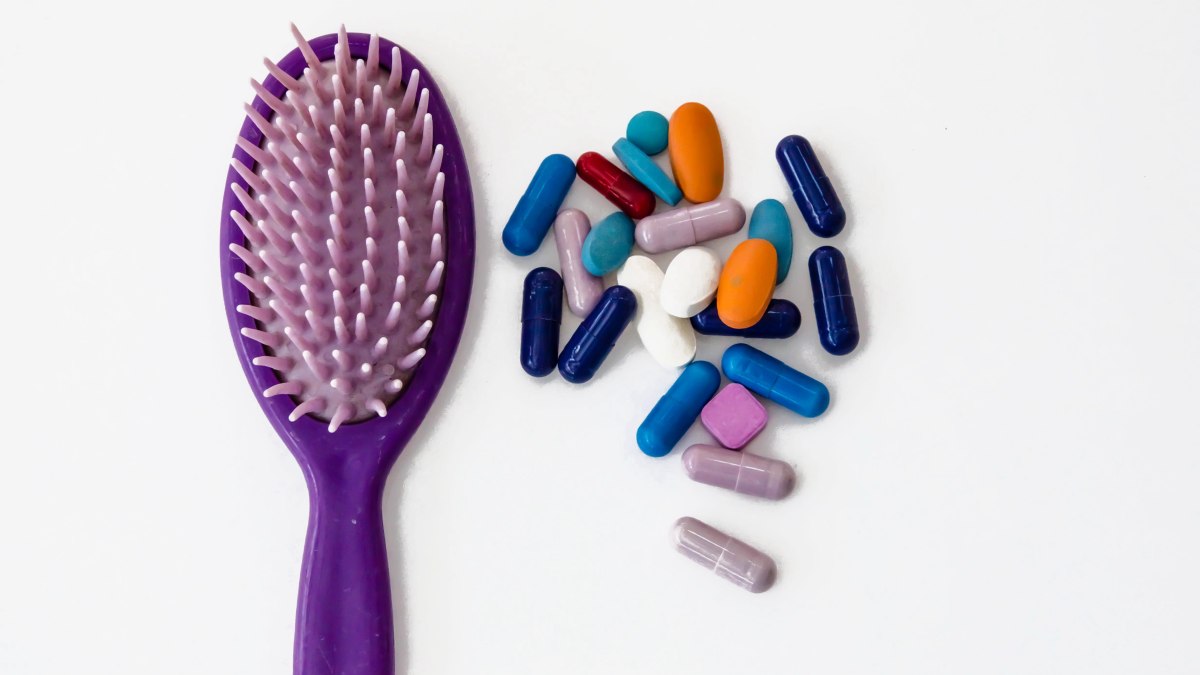
I have been on numerous medications, and doctors are continuously changing doses. I do have an Iron deficiency also. About 1 year I started to notice my hair falling out more than normal with a great change in thickness, it feels very thin and limp. I have always had frizzy hair and bought products for frizz, dry, damaged hair. I did dramatic things in my time including coloring, straightening, etc. over three years ago.
I wash my hair every 2-3 days and keep it loose in a ponytail when I'm at work (hospital). I also try to just use the flat iron one to two times per week to help with the frizz. To confirm, my hair breaks and does fall out. I notice it more around the hairline on my forehead especially. At the beginning of the scar and there's a lot of breakage around the ears.
What should I do? I have tried everything. Something may work well for about a week, then it's like my hair gets immune to it and it stops working. Please help me with a step by step guide. Do I use product for dry/damaged or fine/limp hair or what?
Your doctor may be able to give you different medications that will have fewer adverse effects (if it turns out that the side effects do relate to your hair problems). In the meantime, the important thing is to establish a healthy routine for caring for your hair. You appear to be aware that the hair doesn't need to be shampooed every day, and that it should only be shampooed when it becomes dirty.
However, you need to condition the hair daily, either by applying a rinse-through conditioner to the hair (as you would after shampooing) or by using a leave-in conditioner. In many cases, conditioner can be used in place of shampoo to remove the level of daily soil accumulation for those women and men who have less physically demanding jobs.
You will also want to give your hair a deep-conditioning treatment once a week using your favorite conditioner. Apply the conditioner to damp hair, comb it through with a wide tooth comb, and cover the hair in plastic and wrap the head in warmed towels (heated in the clothes dryer).
The specific product type you choose should be determined on what you perceive as your biggest problem. If your biggest problem is dryness or damage, then use a shampoo/conditioner for dry and damaged hair. If breakage is the bigger problem for you, use a protein-rich formula to help strengthen the hair.
©Hairfinder.com
See also:
Hair loss
How to deep condition your hair
Medications with side effects that affect your hair